
Joining a live online guided meditation is different from pressing play on a recording. The teacher and other participants may continue while you move, answer the door or decide you have heard enough. You still have choices. You can listen with your eyes open, change position, leave the call or return your attention to the room without waiting for the broadcast to pause.
This guide is for someone attending a session, not making one. Its aim is a workable first experience: understand the format, arrange a comfortable place and keep your own stopping point. Keep your participation within the session's stated arrangements, while retaining the choice to stop an instruction or leave. A live session can offer a shared starting time and a voice to follow; it cannot promise how you will feel afterward.
Quick answer: keep your own stopping point
Read the current session's participation and recording arrangements before joining. Choose a comfortable setting, know how to leave the call and retain your own stopping point while the broadcast continues. After an interruption, follow only current instructions you understand. Ask about missing context or stop rather than reconstructing it.
Know what live means before you join
A scheduled event, a replay and a self-paced audio track can all be described as guided meditation. Check which one you are opening. A live event has a start time and may include a teacher responding to the group. A replay follows a recording even if other people are listening at the same time. Neither format automatically tells you whether participants are visible.

Look for the expected duration, joining instructions and whether there is conversation before or after the practice. If the page is unclear, ask the organiser rather than assuming. You might want only a short listening practice; another event might include introductions, discussion or a much longer period of silence. Choosing a suitable format is more useful than trying to adapt to a surprise.
UCLA Mindful provides an example of a service offering virtual drop-ins as well as recorded practices. Its current event page explains its own arrangements. That example illustrates the distinction; other providers may work differently. Check the particular session you intend to attend rather than relying on a general description of online meditation.
Decide what participation will involve
Before entering, find out whether your camera and microphone are optional, required or used only during discussion. A camera-off place may suit a shared home, but do not assume it is available. Ask about recording, including whether participant names, video or spoken contributions could be captured. You can choose another session if its arrangements do not fit your privacy needs.
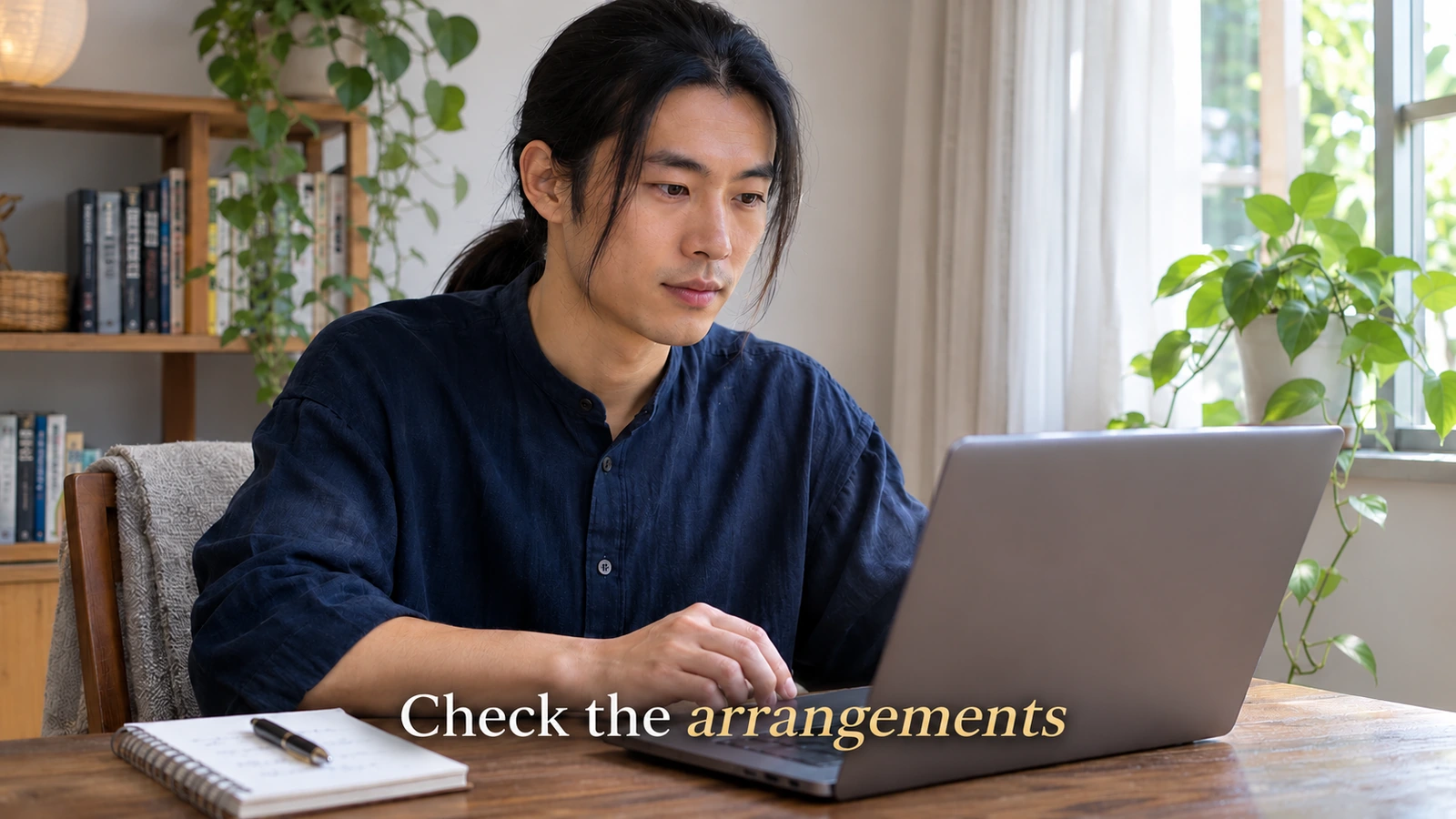
Keep these questions practical. Will I be invited to speak? Can I join quietly? Is a recording made? Where can I ask for help? A preference for listening can be stated without sharing personal history. An organiser should be able to describe the format without requiring you to disclose something private in a public chat.
If a friend sends a link, read the event information yourself. A practice that suited them may have different expectations from the ones you imagined. Where arrangements remain uncertain, attending later or choosing a recording is a reasonable decision. Choose participation deliberately, even when a session is readily available.
Make a place that supports your choices
Choose a familiar seat from which you can stand or move easily. A chair is enough; the floor is not a more advanced option. Put the screen where you can see necessary instructions without holding it throughout the session. Keep the device stable, with cables away from where you will step. Ordinary comfort matters more than making the room look like a studio.
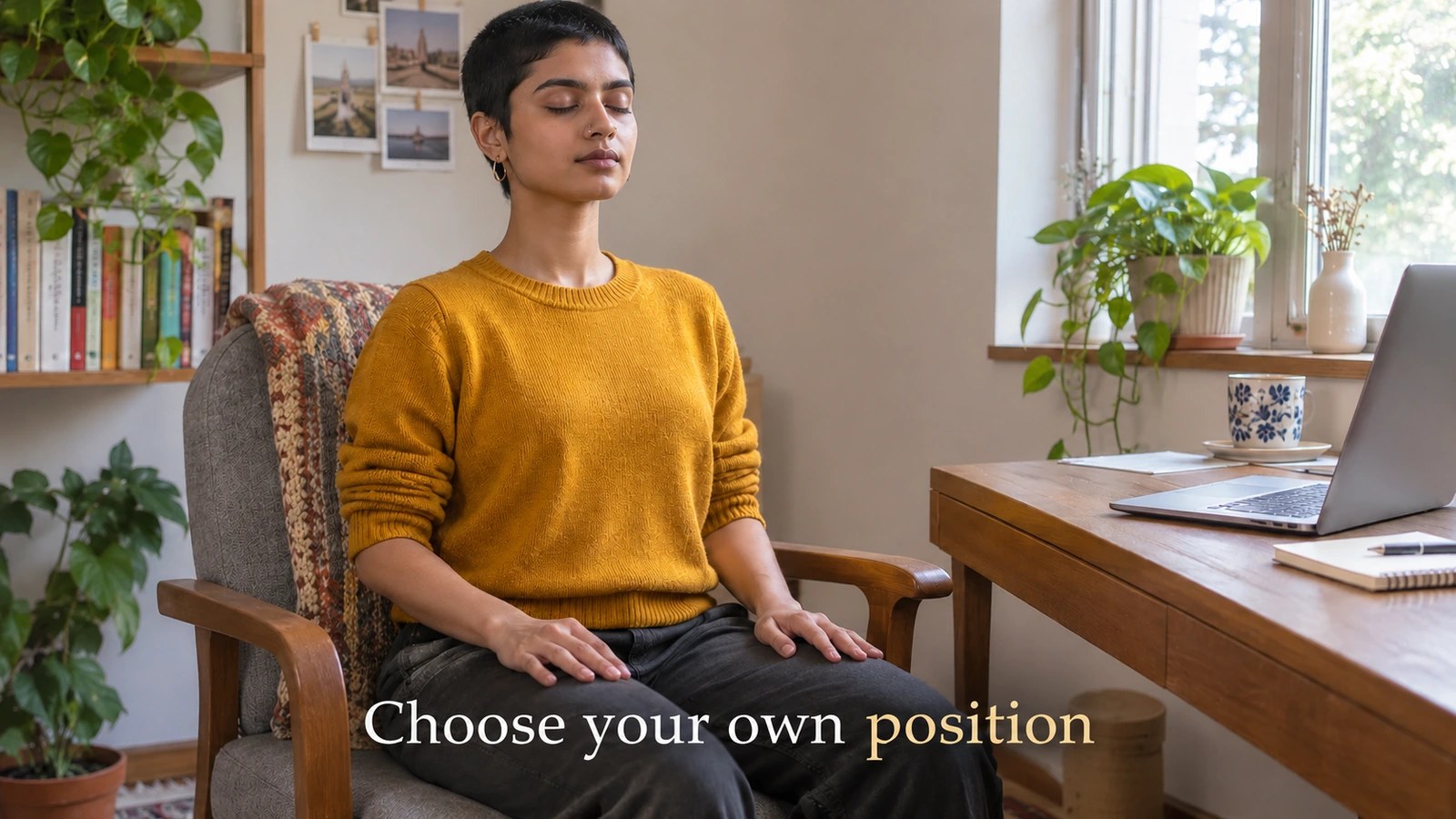
Listen at a comfortable level before the practice begins. Headphones can offer privacy, while speakers may let you stay more aware of the room. Pick according to your surroundings. If you need to hear someone calling you, keep that responsibility in the plan. Keep relevant responsibilities within reach.
Tell others only what they need to know: perhaps that you will be occupied until a particular time, or that interruptions are still welcome when necessary. If that arrangement is not possible, choose a place in the session where you can leave quietly. A realistic plan for your home is more useful than a perfect plan that nobody can follow.
Start with one simple intention
An intention can describe what you will do rather than what you must feel. For example: I will listen for a few minutes and notice whether this format suits me. That leaves room for boredom, distraction or an ordinary mood. Trying to guarantee calm before you begin can turn every wandering thought into a disappointing result.
When the teacher offers a focus, try it if it feels workable. You can also keep your eyes open and notice the chair beneath you or sounds in the room. You are not required to follow an inward focus that feels uncomfortable. If a particular instruction does not suit you, stop that part instead of pushing through to keep pace.
The teacher cannot see every participant's experience, especially in a large online session. Their general words are an invitation, not an individual assessment. You may need a different position, a shorter practice or a complete break. Those choices remain yours even when the voice on the screen sounds confident and the group continues.
Choose guidance for your available time
If you prefer a recording you can stop and restart, explore the guided meditation options in SoulFul GLO. Choose an available practice that fits your time and surroundings, without expecting a particular emotional outcome.
Keep your own pause button
A live broadcast may not have a usable pause control. Your own pause is to stop participating for a moment: look around, change your focus, mute the sound or leave. You can make that choice before deciding whether you want to return. Take that break when you need it.
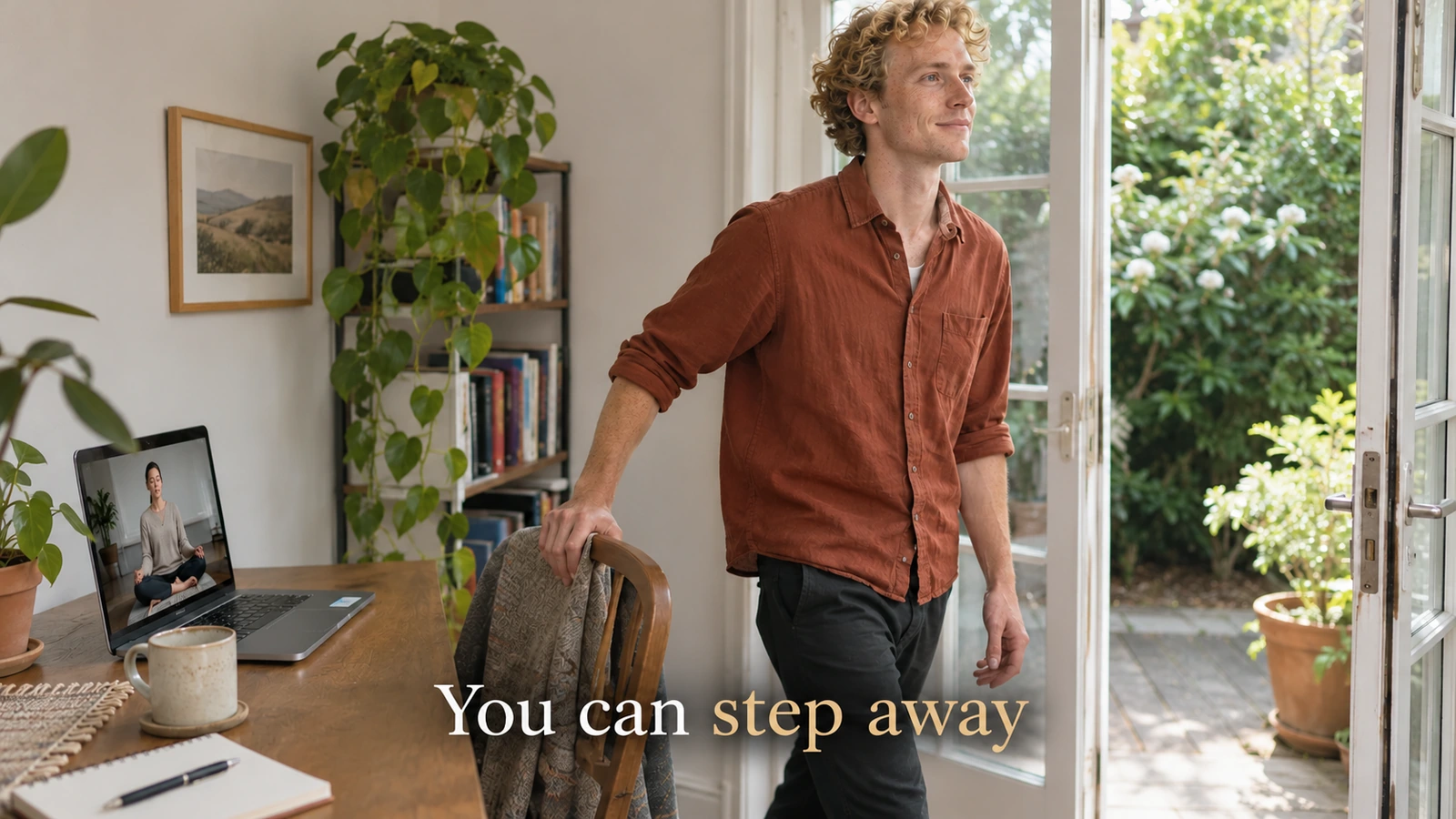
Suppose an instruction asks you to close your eyes, but you would rather see the room. Keep them open. Suppose sitting still becomes uncomfortable. Move. If the audio becomes distracting, lower it or stop listening. These are ordinary ways to adjust participation, not evidence that you are doing meditation incorrectly.
NCCIH notes that meditation research has limitations and that unpleasant experiences can occur. This guide does not treat a live session as treatment or a substitute for care. If a practice feels distressing, stop and seek appropriate support rather than making endurance the goal. You do not need to explain your decision to the whole group.
Handle interruptions without catching up
If the doorbell rings, attend to it. If the connection drops, first decide whether you want to reconnect. Missing several instructions can remain a gap in your participation. When you return, listen for the current invitation and consider whether it makes sense without the missing part. You can remain an observer until it does.
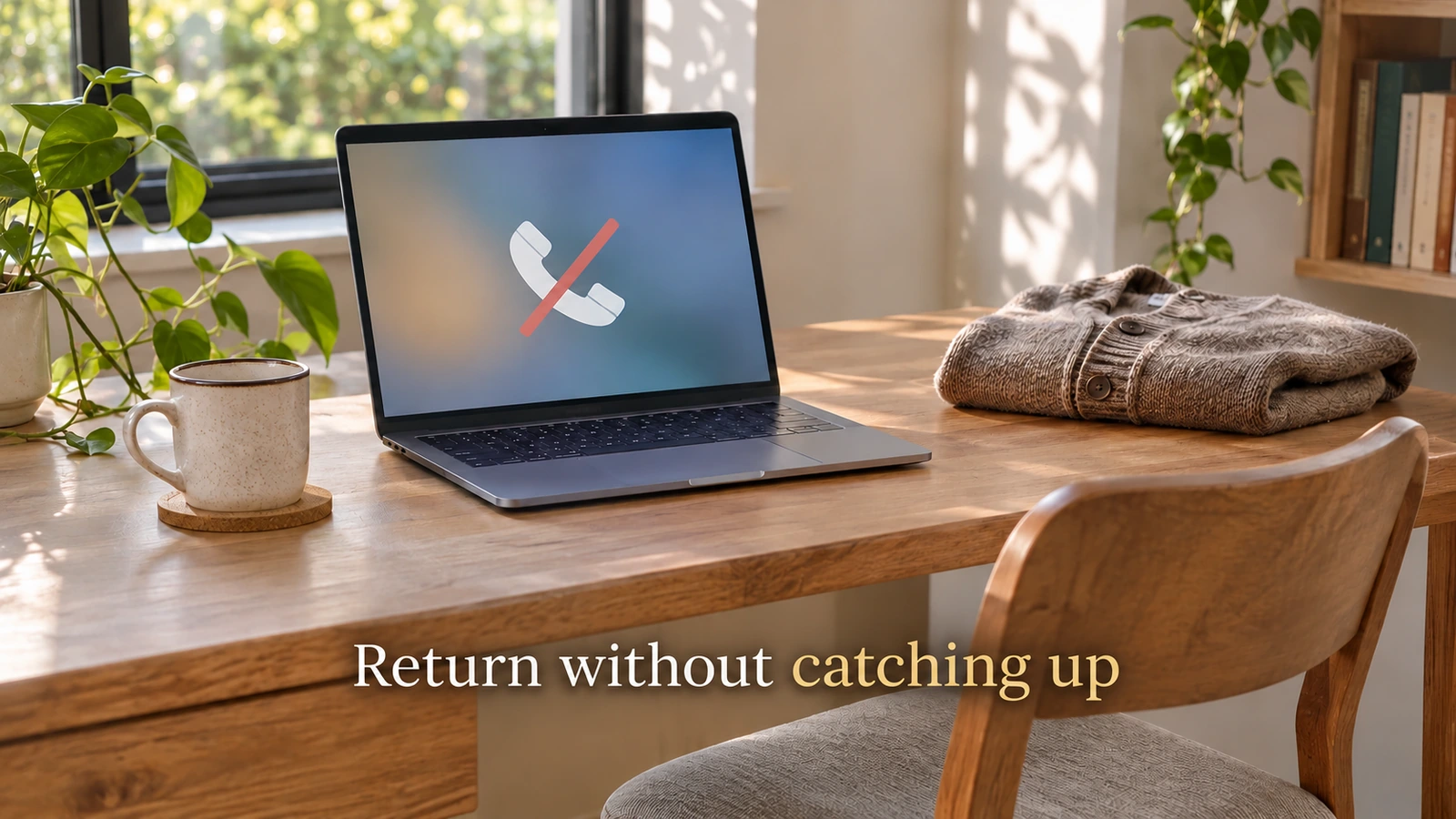
Do not rush through movements or breathing instructions you think the group may have completed. You cannot reliably reconstruct them from a few words. If the session depends on information you missed, ask the organiser afterward or stop for today. Listening to the present moment of the event is different from trying to repair its entire timeline.
A shared home may mean you come and go more than once. That might make this particular live format inconvenient. Notice that practical fact without turning it into a judgement about your attention. A shorter event, a different time or an ordinary recording may fit your next day better.
Finish when your participation is finished
Before closing the call, check whether there is an announced ending, optional discussion or practical information you need. You can stay for conversation if you want to, but it need not become a public report of how you felt. A simple thanks is enough when you have nothing else to share.
Give yourself a moment to notice the room and your next activity. Put the device down, change position and return to what needs doing. There is no requirement to preserve a special feeling. Some sessions end quietly; others leave you distracted or unchanged. Your next ordinary action does not cancel the time you spent listening.
If you want to remember something, record one useful practical observation: the session length suited me, the speaking portion was unexpected, or I preferred having my camera off. Keep that observation practical and specific. That observation can help you choose another session more thoughtfully.
Decide whether this format is worth repeating
Consider the arrangements as well as the meditation itself. Did you understand what you were joining? Could you make comfortable choices? Did the schedule fit the rest of your day? A shared starting time can be helpful for one person and inconvenient for another. Neither response establishes that live guidance is generally better than recorded guidance.
Try changing one practical feature if you return. You might choose a shorter event or ask an unanswered question beforehand. You do not need to keep attending an unsuitable group to prove commitment. Equally, one distracted session does not require you to abandon the format if you would like to try again.
A useful result may simply be learning what kind of guidance you can use. Keep that conclusion modest. The session did not need to produce insight, calm or a new habit to give you information about your preferences.
For example, an evening session might begin at exactly the time your household gets busy. Rather than asking everyone to work around an arrangement that repeatedly causes friction, look for a different time. You can value meditation and still decide that this event is not a good fit. The same applies when an optional discussion regularly runs longer than you expected. Check the full commitment, not just the advertised practice time, and decide what portion you can realistically attend.
For a separate preparation task, SoulFul GLO's first-group guide covers questions before selecting a group. Its meditation transition guide addresses returning to ordinary activity after a sitting. Those tasks differ from managing participation while a live broadcast continues.
Questions about live online guided meditation
Do I need to turn on my camera?
Check the organiser's stated arrangements. Some sessions allow it to remain off and others include visible participation. Ask before joining if that matters to you. Do not assume the rules from one event apply to another.
Can I leave before the session ends?
You can stop participating. If possible, find out beforehand how the organiser prefers early departures to be handled. You do not need to continue an uncomfortable practice while waiting for permission from the group.
What if I miss the start?
Check whether late entry is permitted. If you join, listen to the current guidance rather than trying to recreate missed instructions. If important context is missing, choose another session or ask for clarification afterward.
Is live meditation better than a recording?
The formats offer different arrangements, not a guaranteed difference in benefit. Live sessions have a shared schedule; recordings usually allow personal playback controls. Choose according to what you can use comfortably.
Keep a self-paced option available
Choose a guided meditation in SoulFul GLO when you want a self-paced option alongside live sessions. Keep the choice practical: a suitable length, a comfortable setting and permission to stop when you need to.