
A familiar walk from the living room to the kitchen can become a short attention practice. If ordinary walking is comfortable and appropriate for you, choose one feature of the movement to notice along the way. The route can belong to a trip you already intend to make, with an ordinary task waiting at the other end.
This guide describes an optional everyday practice. It is not instruction for changing how you walk, improving balance or managing a medical condition. Keep your usual movement and supports. If walking or turning raises a question about your individual needs, get appropriate guidance instead of using this article to work it out.
Quick answer
Choose a familiar, unobstructed indoor route where walking already works for you. Keep your eyes open and remain aware of the space. Walk at a comfortable pace while noticing one ordinary feature, such as the contact of your feet with the floor. At an endpoint, stop before deciding whether to turn and return. Finish whenever you choose.
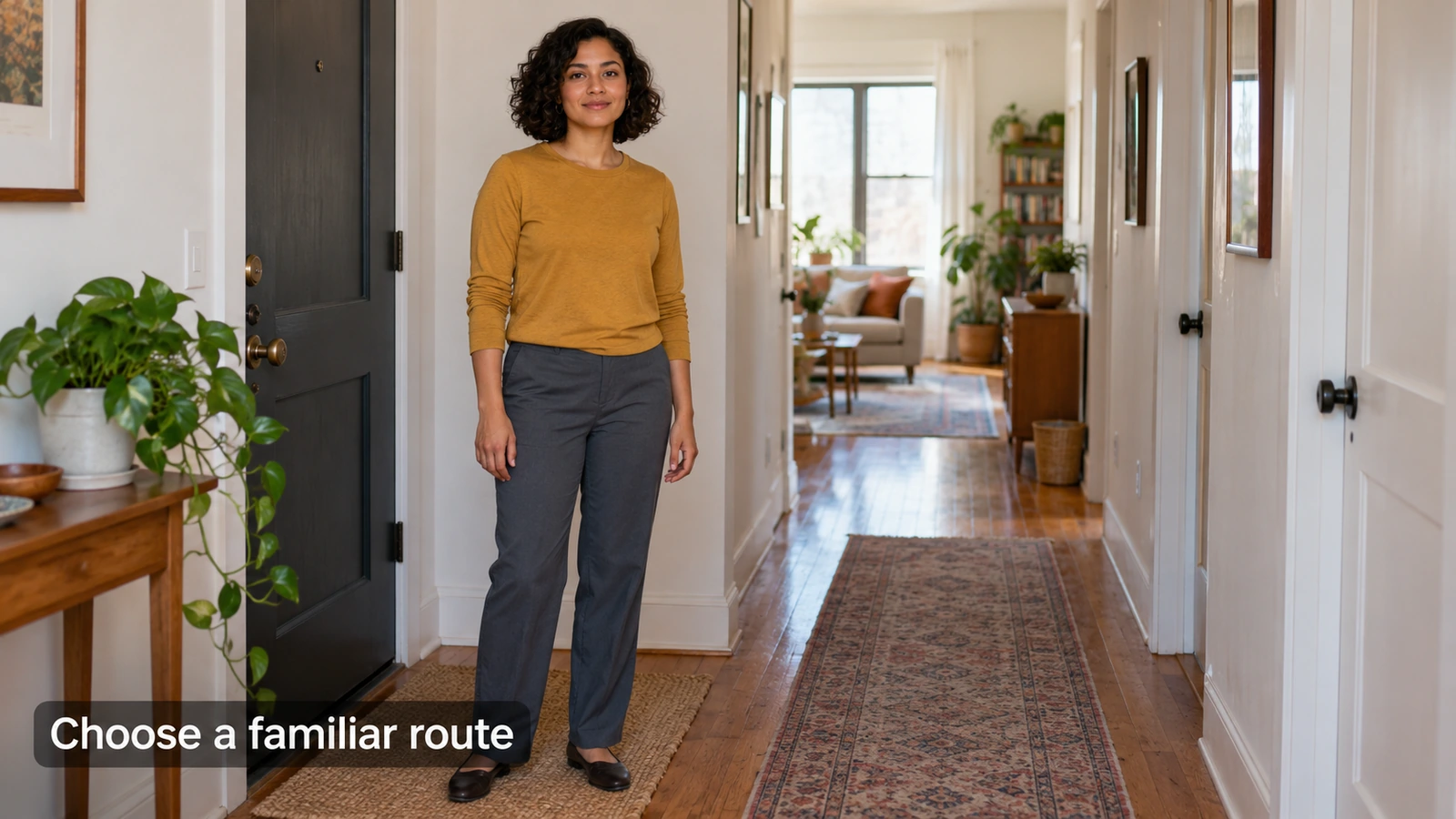
The framework is route, attention, endpoint. Decide where the walking will happen, choose one feature of the movement to notice, and identify where the practice ends. That last choice separates the attention exercise from whatever you do next. These are editorial organising questions, not a tested treatment protocol.
Start with a route you already use
Look at the actual route before beginning. Use a familiar, level indoor area with a clear passage. Check the whole route, including its far end: belongings by a doorway may be out of sight from where you stand. Choose another opportunity if it involves stairs, squeezing past furniture or stepping around objects. A route that usually works may be occupied today.
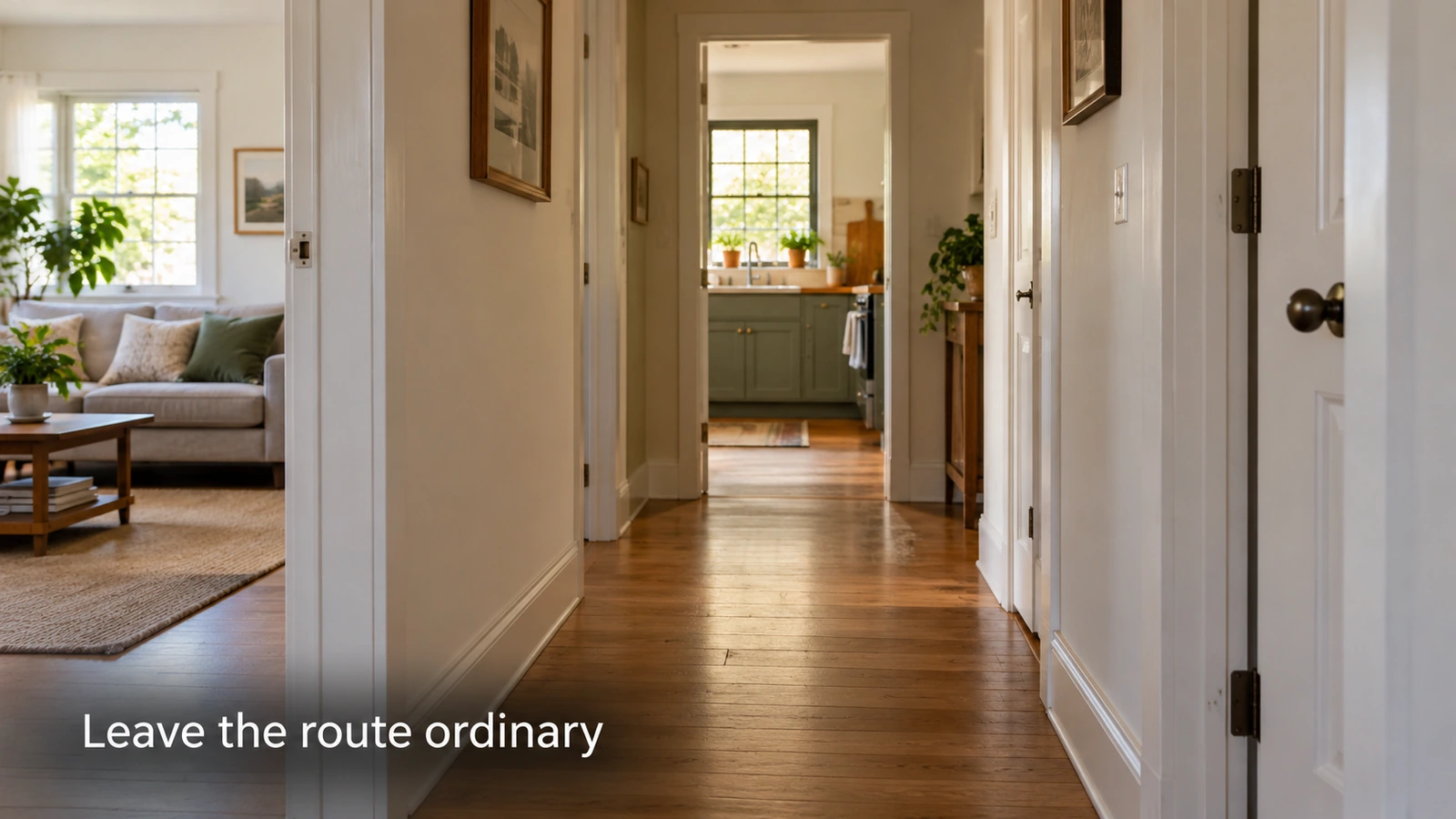
Compare the routes available now. The hallway might be clear but shared; the living-room-to-kitchen trip might end where someone is preparing food. Ask about shared use if necessary. Choose the route whose passage and endpoint are both available, and keep everyday access open. If neither works, leave the walking practice for another occasion.
Decide on a visible endpoint where you can stop normally, clear of a door that may open into you. For a trip to the kitchen, you might finish the practice before getting water. For an out-and-back walk, stop before deciding whether to return. Use the room's existing features to recognise the endpoint; leave loose markers off the floor.
Choose what you will notice
For this practice, keep attention connected to the walking that is actually happening. You might notice the contact of a foot with the floor, the rhythm of successive steps or the movement of your arms. Choose one feature rather than trying to observe every part of your body at once.
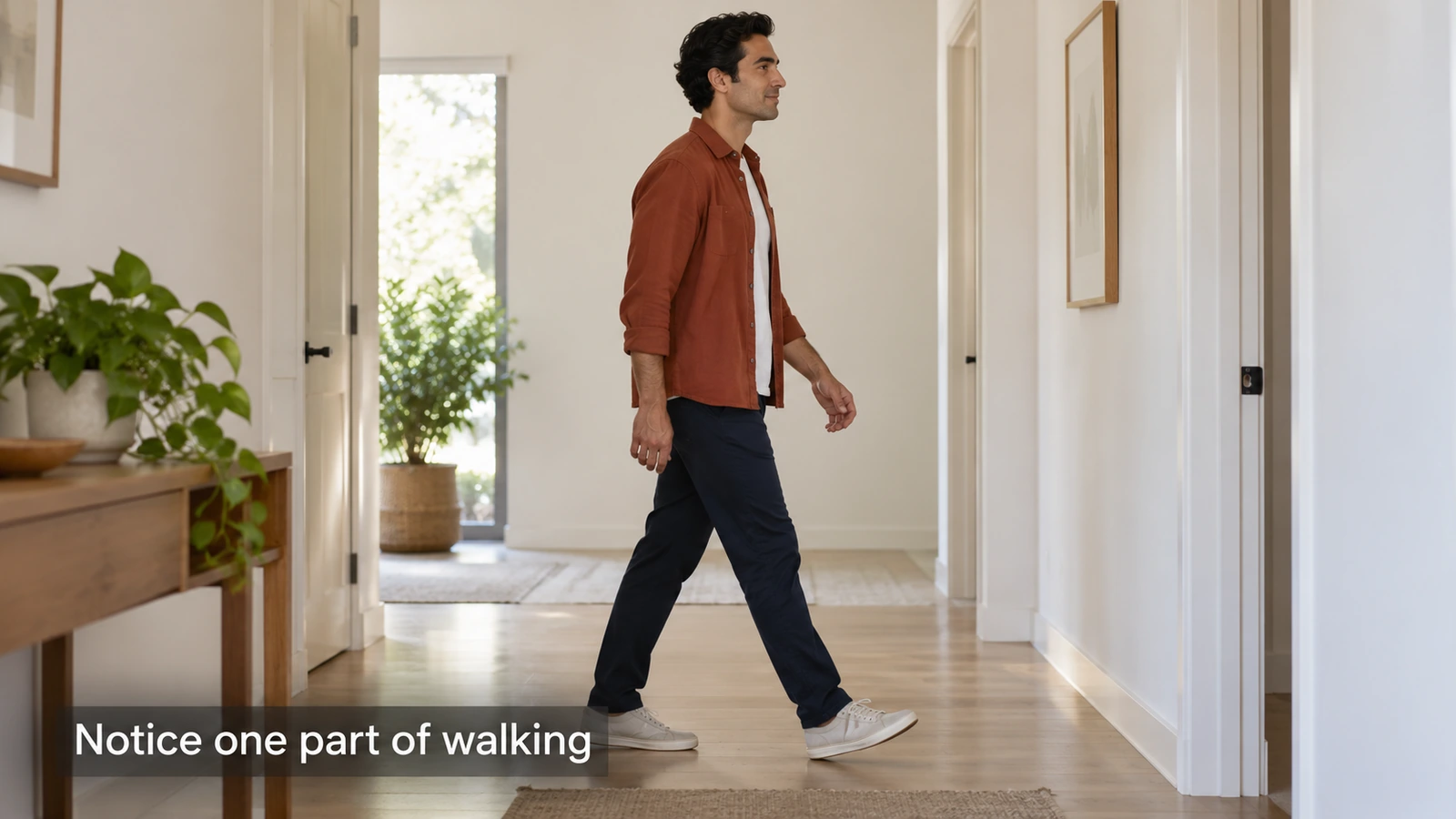
For contact, notice a foot meeting the floor, then the next contact. For rhythm, notice steps following each other without assigning a count. Choose one feature before starting. If you find yourself deciding how each foot should land, leave that analysis and walk normally to a place where you can stop. Review the choice there. For a later trip, you might choose rhythm instead, noticing the succession of ordinary steps. There is no need to create a stronger sensation or alter a step to make the practice work.
Your surroundings still matter. Look where you are going and notice other people, changing access or anything that needs your response. Attention to a foot does not require looking down at it continuously. If concentrating inward makes it harder to negotiate the room normally, stop the practice and return to ordinary activity.
Try one short walk before planning repetitions
Read these suggestions while stationary, then set the instructions aside. Start from a place where standing already feels comfortable. Look along the route and confirm where you intend to stop. Let your arms rest or move as they ordinarily do, with your eyes open and breathing naturally.
Begin walking at a pace that feels natural enough to manage comfortably. You may prefer a little less hurry, but there is no requirement to move extremely slowly. Notice the feature you selected for a few steps. Keep breathing naturally, without matching each step to an inhale, exhale or count.
When a thought takes your attention, notice that you are thinking and return to the walking if you want to continue. You may remember an errand or start planning lunch. Resume with the step you are taking now, keeping awareness of the route as you go.
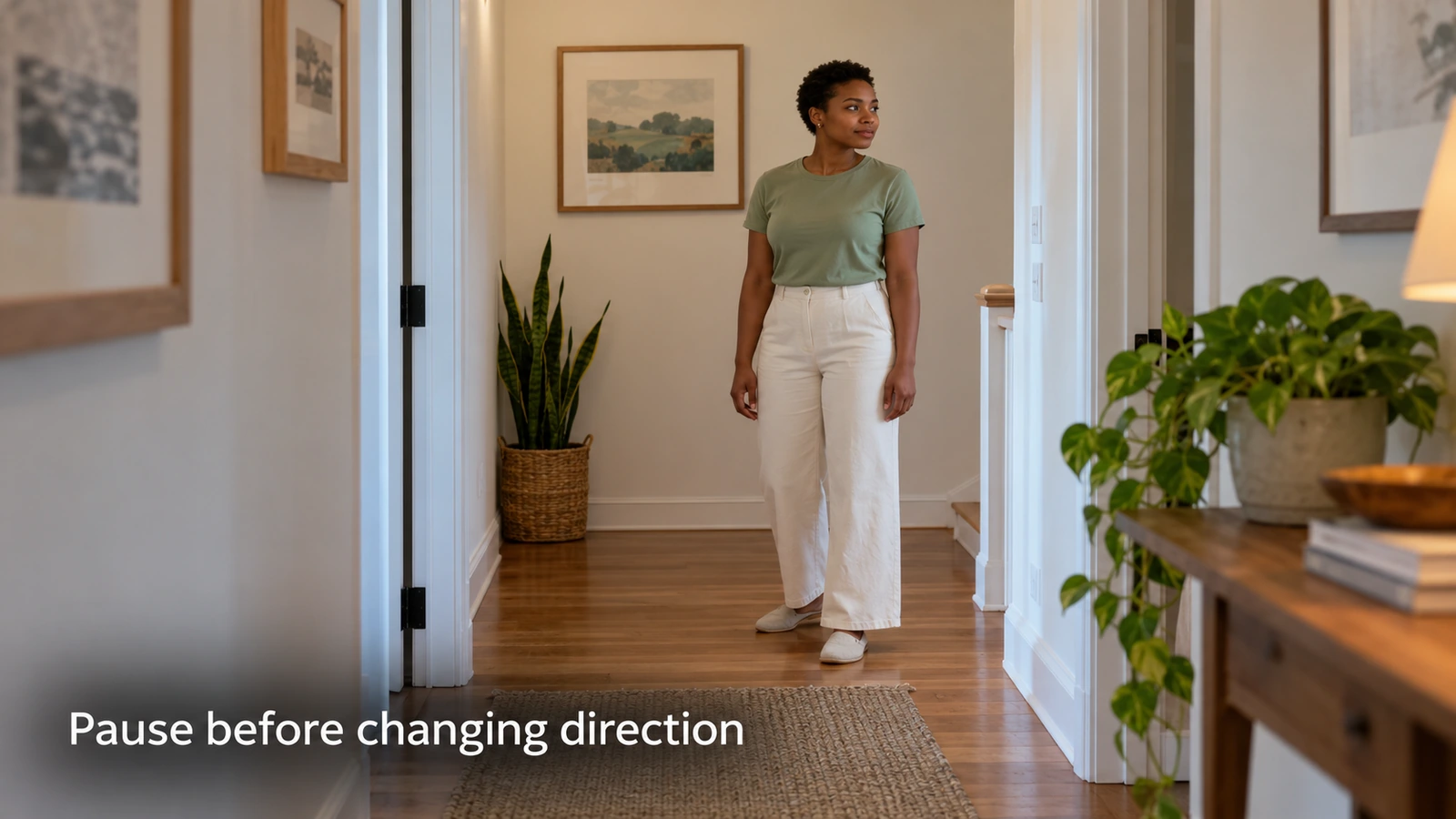
At the endpoint, stop normally. Check the space before changing direction. If you want to return, turn in your usual comfortable way, pause and begin again when ready. Alternatively, finish there and move on to the ordinary task you chose the route to reach.
Use that pause to check what has changed. Someone may have begun using the doorway, or the return route may now be busy. A clear outward passage does not establish that the way back remains available. Make the next decision from the room as it is now.
Use an ordinary trip or a dedicated route
A room-to-room walk can fit an ordinary errand. Before leaving the living room, choose to notice a few steps on the way to the kitchen. At the destination, finish the practice and do what you came to do. The transition can be explicit: stop at the chosen place, then reach for the glass or begin making tea.
An out-and-back route suits an occasion when you want another pass along a familiar passage. Perhaps you noticed contact with the floor on the outward trip and want to use the same feature on the return. Keep the original route rather than adding distance or selecting extra rooms mid-practice.
If you want other examples of attention during ordinary activities, explore SoulFul GLO's mindfulness guide for busy people. It includes standing, doorway and everyday listening anchors that you can consider separately from a walking practice.
When attention follows something else
You may notice a sound, a patch of sunlight or a thought about the next room. Choose whether to return to the walking or give that other thing your attention. If you want to examine an object or respond to a sound, stop first so the new activity has your attention.
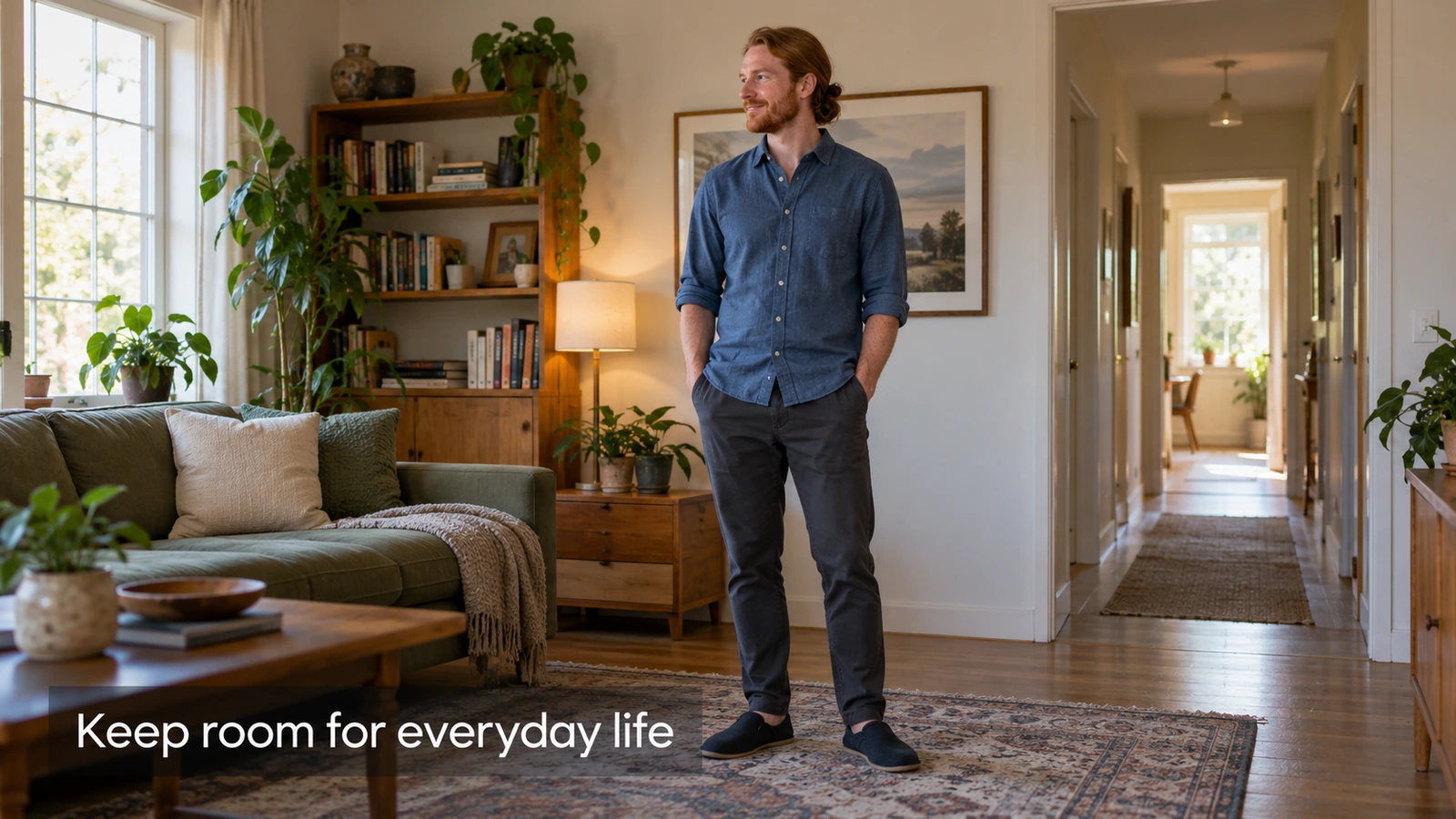
An interruption that needs a response takes priority. Suppose someone asks a question as you approach the kitchen. Stop to speak, then check where the conversation has left you. If you are already at your destination, finish there. If you still intend to cross the room, check the passage again before resuming. Afterwards, record the route you actually used if that information will help another choice, rather than reconstructing the steps you had planned.
Discomfort is also a reason to stop. Do not use an attention exercise to override pain, dizziness, unsteadiness or distress. This article cannot assess the cause or recommend a movement adaptation. Seek appropriate qualified advice for concerning or persistent symptoms. Choosing an activity without walking remains available without first proving that you tried hard enough.
Two fictional examples
Mina is a fictional reader who has a clear route between her living room and kitchen. Before collecting a glass of water, she makes a three-part plan: "Route: living room to kitchen. Attention: contact of my feet with the floor. Endpoint: stop in the kitchen before starting another task." She leaves her phone on the table and walks normally, looking along the route. The plan identifies this one ordinary trip; it does not require returning along the route afterward.
Halfway across, Mina remembers an email she has not answered. She notices the thought and returns to the next step. Inside the kitchen, she finishes the practice and gets her water. Her endpoint has served its practical purpose: it marks the handover from the attention exercise to the errand.
Owen, another fictional reader, considers walking back and forth along a shared hallway. His housemate is carrying laundry through it, so he waits. Later, when the route is available, he chooses an endpoint and tries one pass, noticing the rhythm of his steps rather than trying to examine each movement.
At the endpoint, Owen finds that turning repeatedly is more interruption than he wants. He stops there. For another occasion, he might choose a single trip between rooms or a seated activity. Both readers are fictional illustrations of route and endpoint choices; their experiences establish no expected result for someone else.
Keep a useful observation, if you want one
After finishing, record one practical fact if you want to retain a note: which route you used, what you noticed or why you stopped. "The hallway was busy; one trip to the kitchen suited the occasion" preserves the setting as well as the choice. Date the note if you expect to compare it with another occasion.
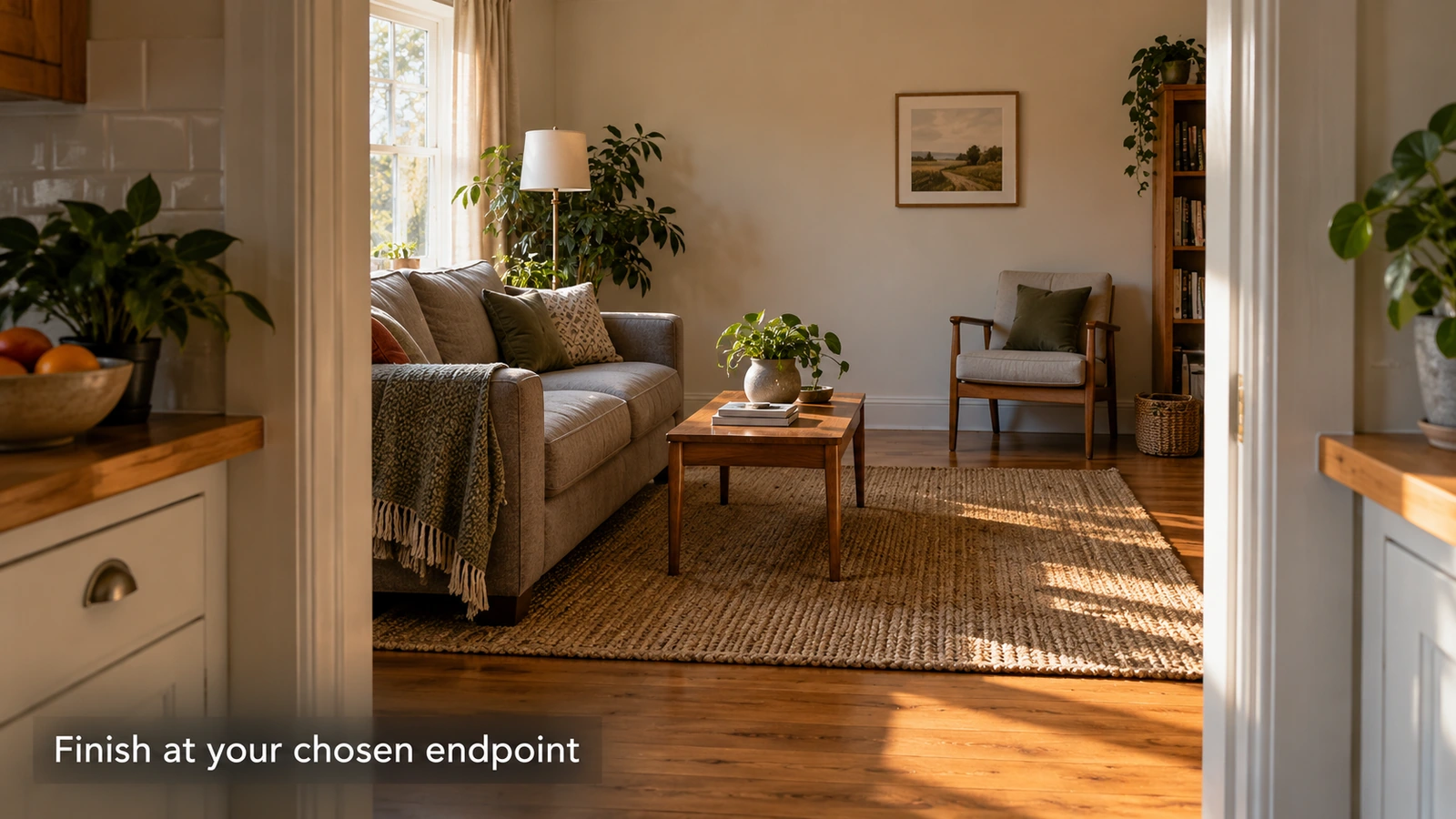
Make the note specific enough to inform another choice. 'The return doorway was occupied' suggests checking whether that route is available before another attempt. 'I kept planning lunch' describes attention rather than a fault in the route. You might retain the same route and attention feature, choose another ordinary occasion, or leave the practice there. Keep the decision beside the observation that informed it. One attempt does not establish that a route will always be clear or that concentration must improve.
Frequently asked questions
How slowly should I walk?
Use a pace you can manage comfortably in the actual setting. This guide sets no speed, step length or minimum time per step. Slower is not automatically better. If deliberately changing the pace makes walking awkward, return to ordinary walking and finish the attention exercise.
Do I need music or spoken guidance?
No recording is required for this example. Reading the suggestions before starting lets you leave the screen aside. If you choose external guidance, check its actual instructions while stationary. Do not assume a seated recording is intended for walking, or that an app contains a walking-specific session.
Can I keep counting until my mind becomes quiet?
This practice does not require counting or a quiet mind. Notice a feature of walking and return when you choose. If counting turns the activity into a target you must complete, leave it out. You can finish while thoughts are still present.
What if my home has no suitable route?
Choose another activity. You do not need to move heavy furniture, use a stairway or negotiate a crowded passage to make walking meditation possible. The available setting is part of the decision. A seated pause or an everyday listening exercise may be more practical for that occasion.
Sources and wellness boundaries
VA's Live Whole Health introduction describes walking meditation and gives a living-room-to-kitchen example. It offers context for the practice category, rather than validation of the particular household framework or fictional examples in this article.
Insight Meditation Center's walking instruction supplies context for pausing at an endpoint before turning. This article uses no fixed path length or specialist stepping technique. NCCIH notes limits in meditation safety research and advises against replacing conventional care or delaying medical attention. An optional attention practice is not a treatment or a guarantee of relaxation.
If walking is not the activity you want, explore SoulFul GLO's practice chooser for a broader comparison of meditation, sound and movement. Check the actual guidance for any session you consider, then choose according to your circumstances and preference.