
You put a small craft project away and know that something became confusing halfway through. Next time, the finished piece may remind you of the problem without reminding you what you actually did. A short learning note can preserve the attempted step, the instructions you used and the question you want to bring back.
This guide concerns a hobby session that has already happened. Use it to retain a small part of the making process and the guidance you were following. The examples use ordinary paper crafts and illustrate recordkeeping rather than instructions for making an item or correcting a technique.
Quick answer
Name the small step you tried, identify the instruction source and record the materials or conditions that matter. Describe what you intended and what actually happened. Keep an explanation tentative unless you have support for it. Finish with one question to revisit, or close the notebook without planning another session.
Use four headings if they help: attempted step, source and conditions, intended and observed, next question. The first keeps the entry about an action. The second makes that action intelligible later. The third separates your aim from your account of the attempt. The last gives an unresolved detail somewhere to remain.
Make the unit smaller than the whole hobby
A note called "paper weaving went badly" leaves several questions unanswered. Were you choosing colours, following a row diagram or trying to keep the piece in place? Name the part you actually attempted, using a step number or a few words that distinguish it from the rest of the project.
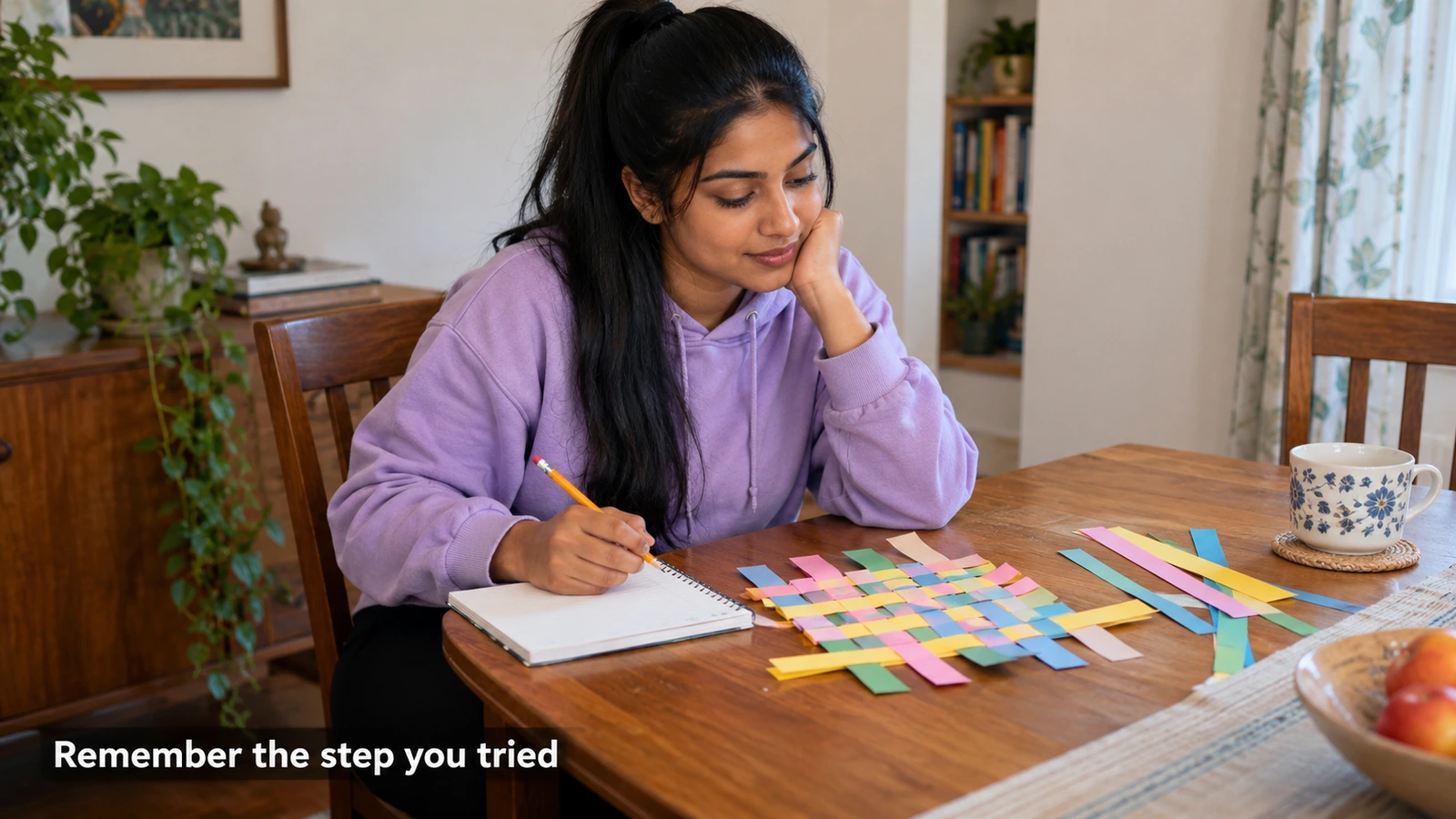
A useful unit might be the first section of a paper weave or one fold from a beginner sheet. Describe it in terms you can recognise. If you stopped before completing the step, say where you stopped. "I reached the third picture but did not understand the next change" is more specific than a verdict about your ability.
If you tried several things, choose the part you want to find again. Perhaps you first followed a diagram, then changed your approach. Give those attempts separate lines so a later question can point to the right one. Retain the order you remember and label a gap where the sequence is unclear.
Keep the actual instruction source findable
Write enough to locate the guidance you used: creator or provider, title, page or step, and a version or date if relevant and actually known. For a video, an approximate point can help you return. Do not invent a precise timestamp after the session if you did not retain one.
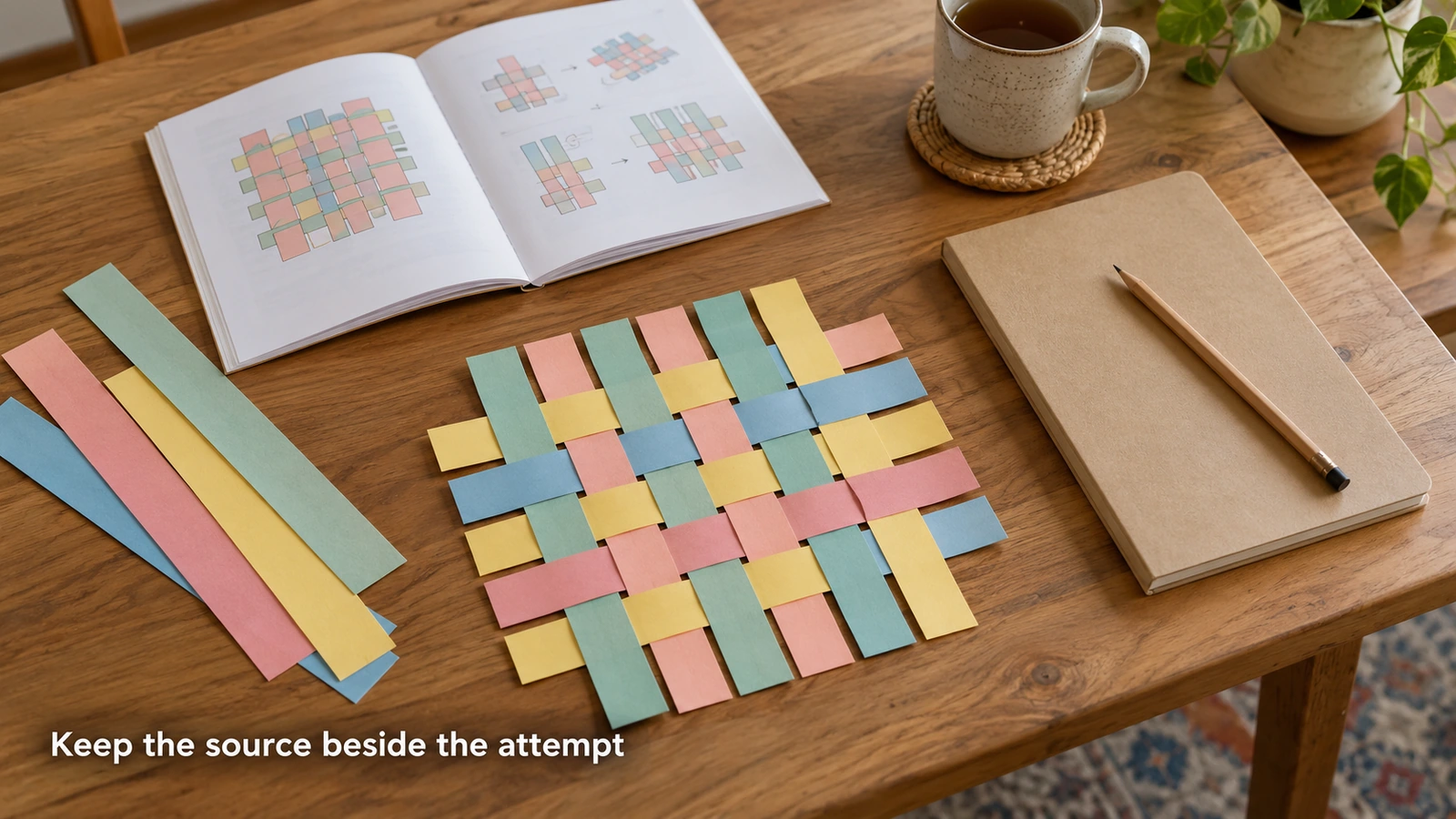
Separate what the source asked from what you remember doing. You might have intended to follow the illustrated sequence, then repeated a step from memory instead. That distinction can explain what needs checking without declaring the instructions wrong. If you cannot remember, write that uncertainty rather than reconstructing a confident account.
Keep a reference rather than copying the whole lesson into your notebook. A short phrase in your own words can identify the issue. If you need to quote, distinguish the exact wording from your paraphrase. A cropped image of a step may lose context, so retain a way to find the original guidance.
Record conditions that change the meaning of the attempt
Materials can matter to the question you are keeping. "Used the precut strips supplied with this kit" describes a different attempt from "used leftover strips from another project." Record what you know about the materials, without assuming that a substitute is equivalent or that it caused an unexpected result.
Include an interruption or change of approach when it helps explain the sequence. Perhaps you put the project away and resumed from memory, or changed both the paper and the guide. A line such as "after the break, I continued without reopening the sheet" locates that change within the attempt.
Keep the precision you actually have. If a strip looked wider, describe it that way unless you measured it. If you do not remember which pencil you used, omit the detail or mark it unknown. A later measurement belongs in a later note, alongside its date.
Put the intended result beside the visible result
State the immediate aim in ordinary language: "I wanted the pattern in the first diagram" or "I wanted the two corners to meet as shown." Then describe the attempt as it was. "One corner remained beyond the other" tells you more about the question than "I am terrible at this."
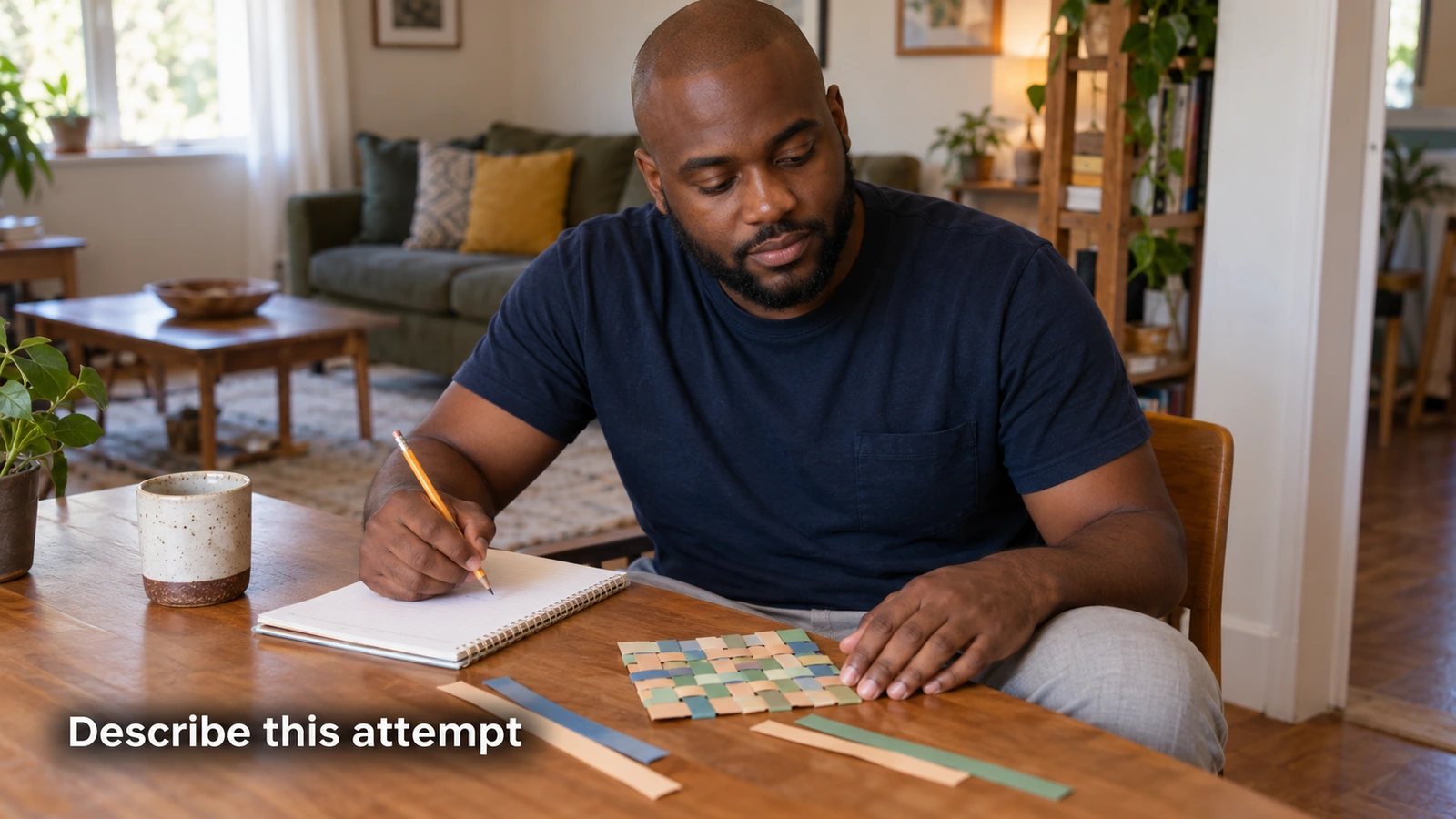
Locate a partial result within the sequence. "I followed pictures one and two; at picture three I lost track of the orientation" preserves both the completed part and the unclear part. If the piece looks satisfactory but a step remains confusing, record that question beside the result.
Label a possible explanation as a possibility. "I may have started from the wrong edge" gives you something to check against the instructions. Keep the observed result beside it so that a later answer can address the actual attempt rather than a conclusion you have already written as certain.
This method stays with ordinary, low-risk leisure activities. Do not use a journal experiment to work out procedures involving power tools, hazardous materials, exercise technique or other consequential risks. Use appropriate instruction for the activity. A clear description of an uncertain step does not make improvising that step appropriate.
Choose a question that belongs to the next learning moment
A specific question points to information you can inspect: "Which side does the diagram start from?" or "Does this step use the same sheet orientation as the previous picture?" Include the relevant page or step beside the question when it appears far from your source note. Bring both to the guidance or a suitable instructor when you want to continue.
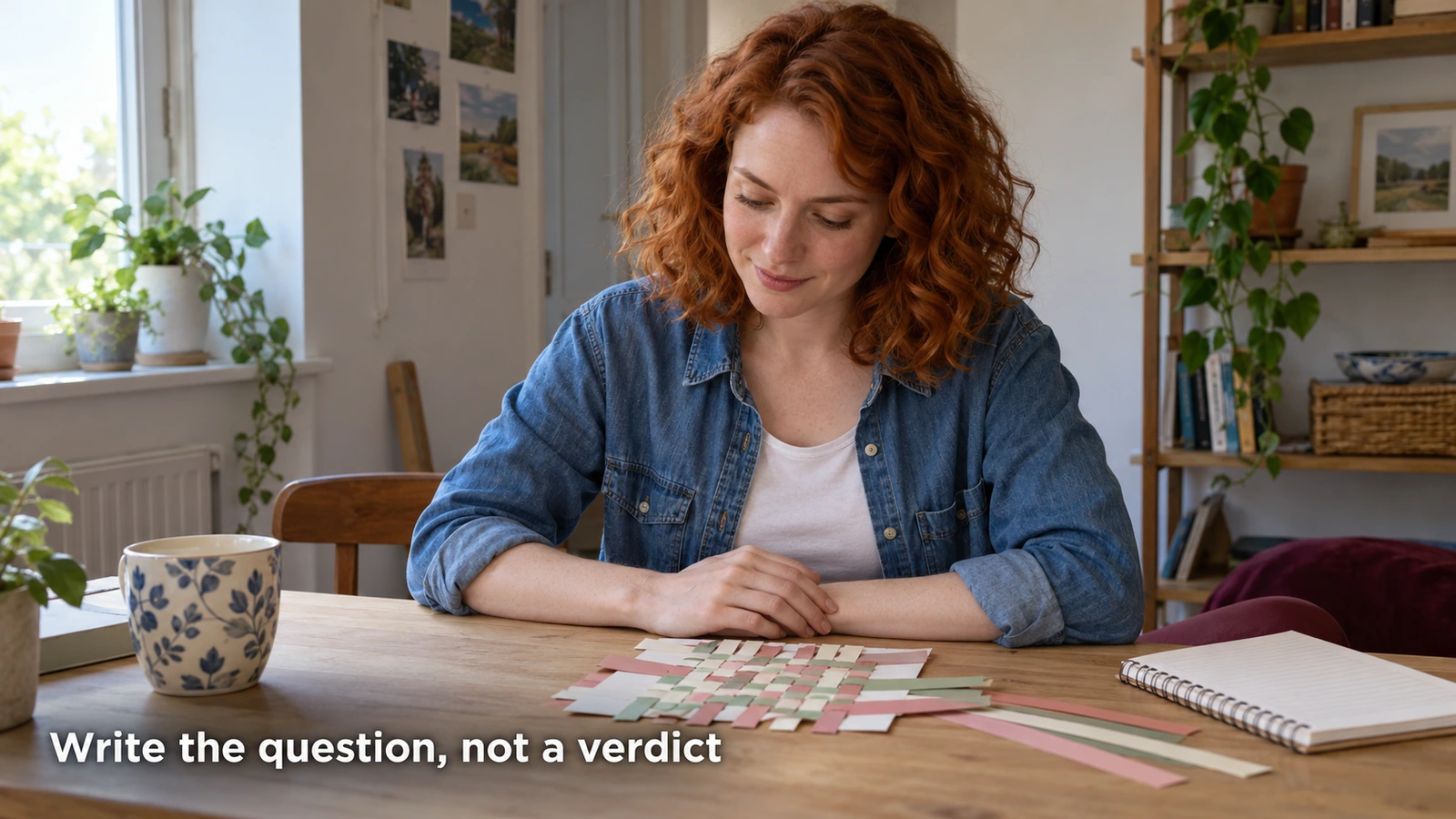
Some questions concern your record rather than the technique. "Did I change paper between these two samples?" might remain unanswered. That is useful to know before comparing them. You do not need to repeat an attempt solely to repair a missing note, and another sample would not automatically resolve what happened earlier.
Keep a practical reminder separate from the learning question. 'Find the printed sheet' names a task; 'which picture shows the change of orientation?' names the uncertainty. On returning, add a small answer record: Checked source and location; What it clarified; What remains open. For Amara's fictional example below, she could record the actual picture she checked and whether she can now identify its starting position. Leave the answer open if she still cannot. Finding the sheet completes the reminder, but does not by itself answer the learning question.
If reflection keeps becoming a list of assignments, explore SoulFul GLO's guide to journaling without a to-do list. It offers a separate way to distinguish descriptive writing from practical reminders when the purpose of the page begins to shift.
Fictional example: finding the unclear part of a paper weave
Amara is a fictional beginner using a fictional kit with precut paper strips and a printed sheet. Her entry reads: "12 June. Attempted step: first woven section. Source: the kit's sheet, First paper weave, page 2, pictures 1 and 2; no version date printed. Materials: supplied strips. I followed those pictures, then continued from memory. Intended result: the alternating pattern shown. Observed result: two neighbouring strips appear in the same sequence. I do not know where I stopped following the diagram."
Her next question reads: "At which picture should I check the starting position of the next strip?" The fictional title and page reference show what a findable pointer can contain. In her own guidance, Amara would retain the information actually printed and leave an absent date unrecorded.
On returning, Amara can place the note beside the sheet and locate the two pictures she named. If she finds the starting position she needed, she can add the picture number and a dated account of what she checked. If she uses a different guide or materials, she records that difference beside the new attempt. The two samples alone would not establish which change mattered.
Fictional example: a folded-paper attempt with a missing detail
Ben is another fictional reader, following a fictional beginner paper-folding sheet. He writes: "Sunday afternoon. Tried the fold beside picture three. Wanted the corners to meet as in the image. One corner extended beyond the other. I had already folded and opened this paper several times. I do not remember whether I began from the same orientation as the picture."
Ben initially wants to record, "The paper caused the problem." He changes that to, "I do not know whether the paper, my starting position or another detail mattered." His question is whether he can explain the picture's starting arrangement before another attempt. He can check the actual guidance rather than invent a correction from the journal.
Ben leaves the question with his account of the attempt. If he returns, the note identifies what he wanted to check; it makes no commitment to complete the model. Both readers, their materials and all quoted entries are fictional illustrations.
Use an earlier note without turning it into a grade
When you return, read the attempted step and the question before comparing finished objects. Check whether the source, materials and approach still match. If they differ, preserve the difference. Two pieces can be interesting to compare without becoming a controlled test or proof that a particular change produced the outcome.
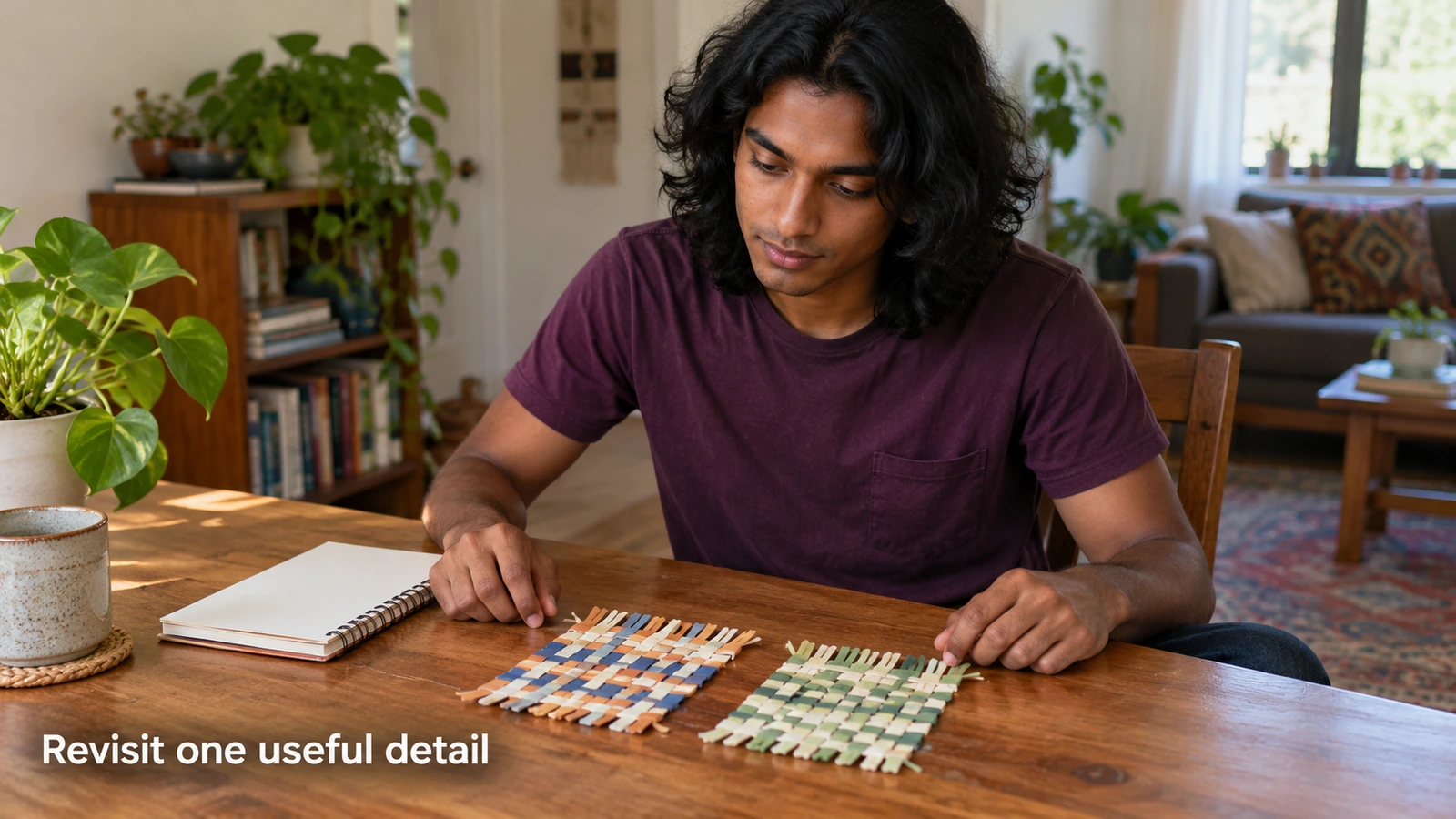
Keep the old entry intact. If you later understand a direction differently, add a dated note explaining the new information. Avoid rewriting the original as though you knew it all along. That distinction makes it possible to see what question the earlier attempt actually left open.
An earlier question can become a useful record even after it is resolved. Keep the original question, then add what you found and where. For example, "Checked picture three on Tuesday; the starting arrangement is clearer now" records a particular check. Leave broader judgements about ability or progress out of that small factual note.
Frequently asked questions
Do I need a photograph of every attempt?
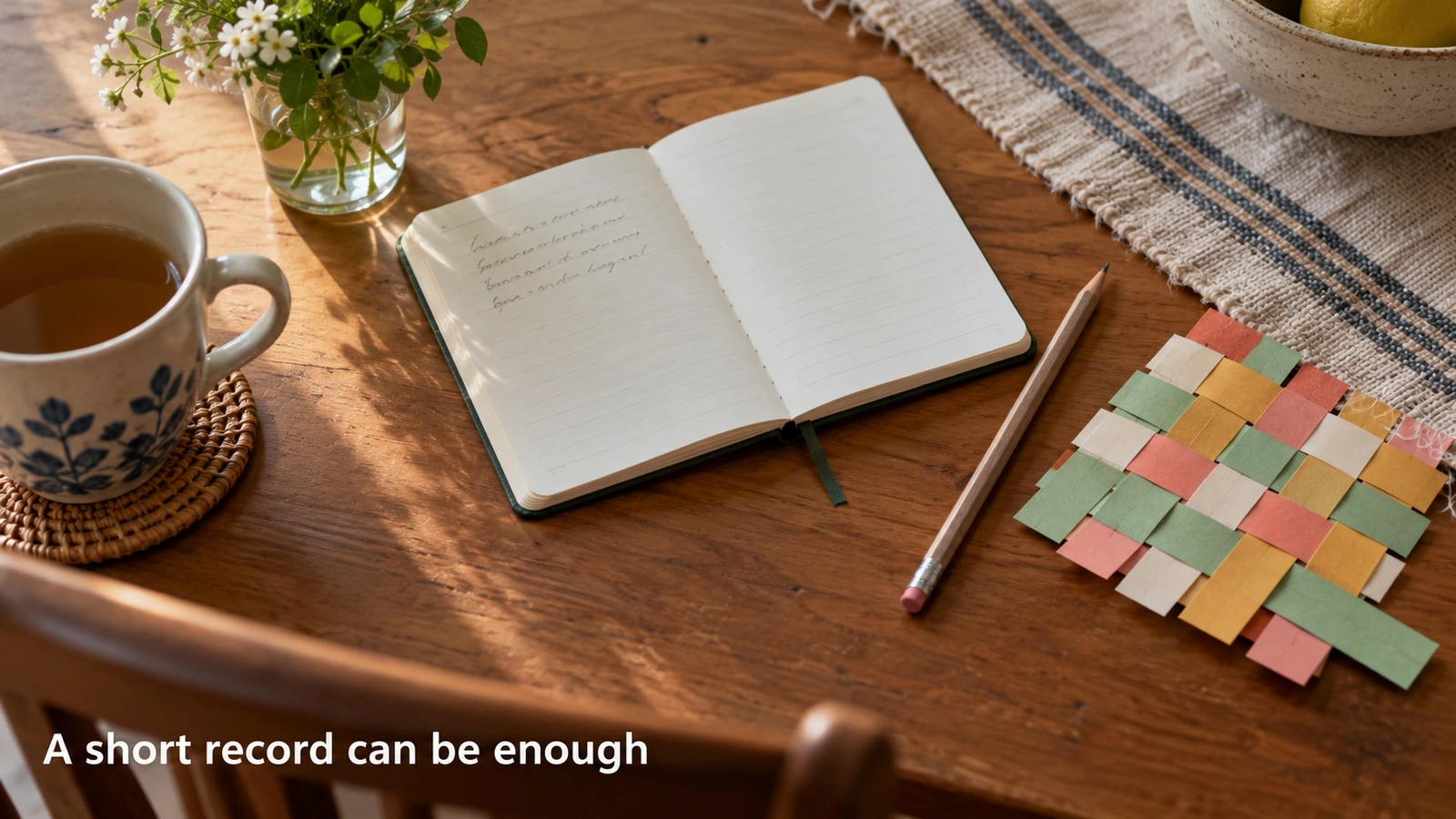
A photograph is optional. If you keep one, identify the step it shows and retain the practical source reference beside it. The picture may preserve the corner that extended too far while leaving the preceding sequence unknown. Consider permission and context before including another person or their work.
Can I include frustration or enjoyment?
Feelings can sit alongside the attempted action under a clear label such as "My response." For example, you might enjoy choosing colours while remaining confused by the sequence. Keep both parts of that account rather than using the mood as a verdict on the technique. A separate reflection can give feelings more space.
Should every entry end with a next step?
An entry can finish with the unresolved question or with the result you wanted to retain. If you choose a practical reminder, identify it separately. That keeps a possible return visible while leaving the timing and decision to resume with you.
Can this replace a course or instructor?
No. A notebook records your account and questions. It cannot verify that you understood the instructions or performed a technique appropriately. Consult the actual guidance or a suitable teacher when that is what the question requires. This is an optional personal exercise, not an assessment or treatment.
Source context
The University of Edinburgh's Reflection Toolkit presents models for considering an experience, its meaning and possible future action. Its CARL model distinguishes context, action, results and learning. These are educational reflection resources. This article's hobby-specific headings and fictional examples are editorial adaptations, without an efficacy claim or university endorsement.
For an entry centred on your feelings and needs, explore SoulFul GLO's emotional wellness journal guide. Choose that purpose when it fits, while keeping a hobby-learning note focused on the attempt and the question you want to retain.