
You may have a few quiet minutes between errands and nowhere you want to sit. Or you may be at home, with a clear patch of floor and a chair nearby, and simply prefer to stay upright. A guided meditation can work in that position if the instructions fit. The first thing to check is what the recording assumes you will do with your body.
A guide may ask you to sit on a cushion, relax into a backrest, or close your eyes before giving any other instruction. A different recording might leave posture open and direct your attention to sounds you can hear or where your feet meet the floor. Preview the first practical cue. Choose a recording that lets you remain steady and comfortable in the place you already have.
Quick answer
Look for a recording that allows standing or leaves the posture up to you. Preview the first instructions and check that you can follow them with your eyes open in a stable place. Use a cue available while standing, such as a steady sound or the contact of your feet with the floor. Keep the player easy to pause. Sit down, use another position, or end the session if standing stops being a comfortable choice.
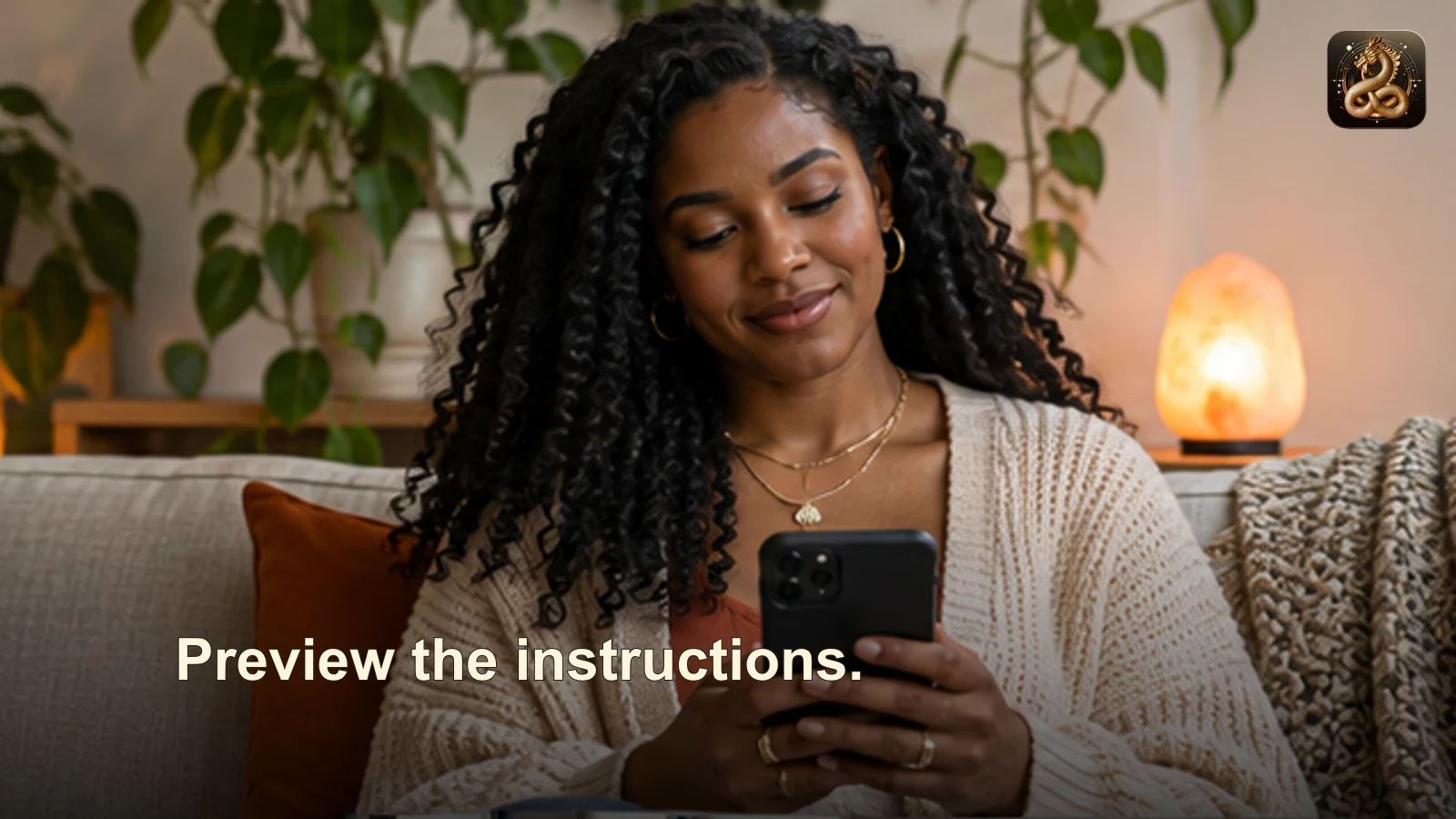
Start by deciding where you can stand
Choose a place where you can pause without blocking anyone, needing to move suddenly, or losing track of something that needs your attention. A clear area at home may work well. A crowded platform, a moving vehicle, or a space where you are looking after something on the stove calls for different attention. Save the recording for another moment if the place needs your full awareness.
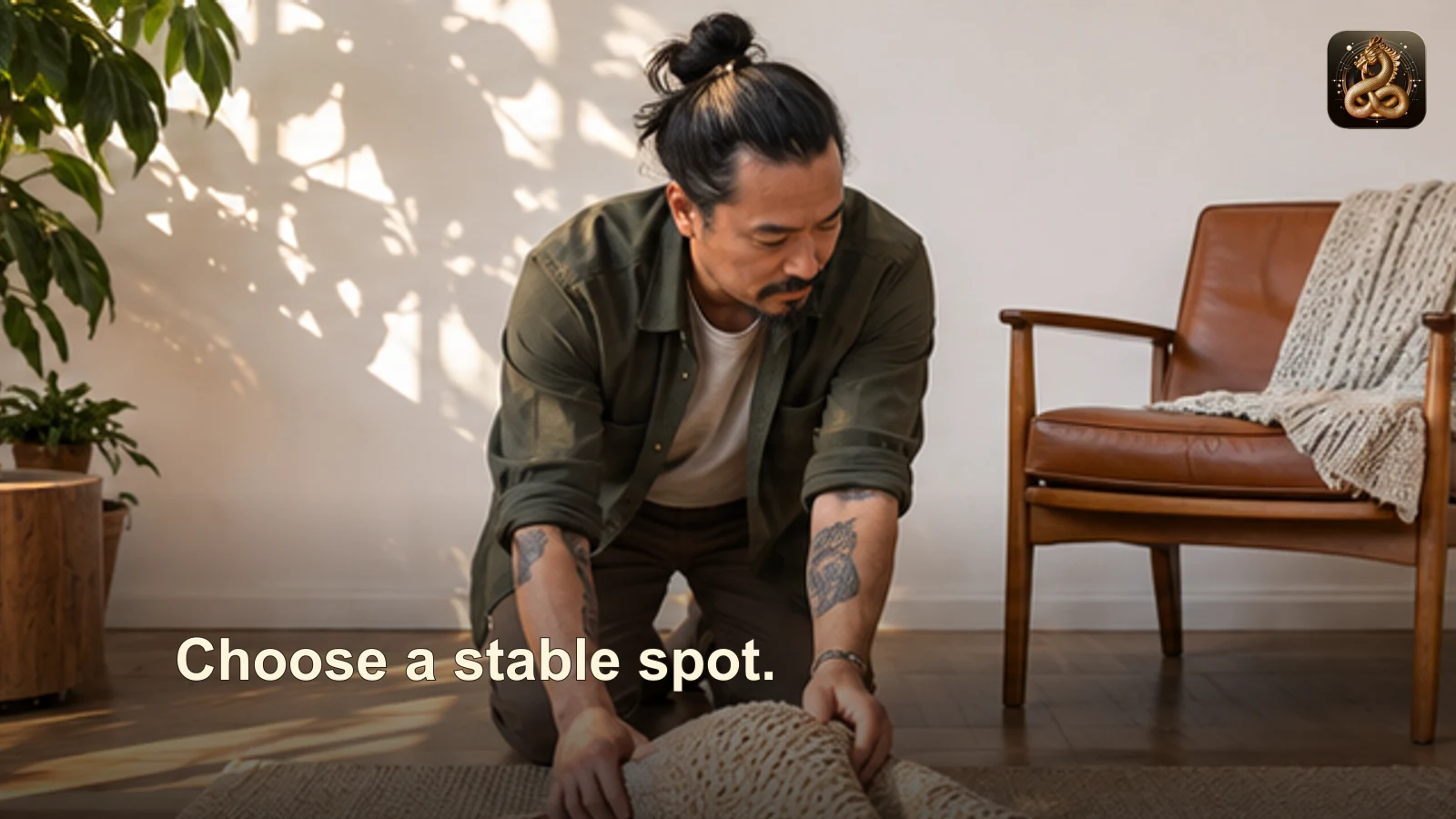
Check the floor before you put your phone away. Is there an object you could step on if you change your footing? Would a door swing into the space? Can you reach the controls without leaning or moving past someone? A few seconds spent on those questions makes it easier to choose a recording you can use. You can also decide that sitting in a nearby chair suits this particular moment.
If you will use a speaker, set it at a level that lets you hear anything you need to respond to. If you use headphones, make the same judgment before you start. Your surroundings should shape how you listen. There is no obligation to create a private bubble around a short practice, especially when other people are using the room.
Preview what the guide asks you to do
Read the description for a position and any equipment it assumes. Words such as seated, lying down, and floor practice are useful information. A recording may also say that you can sit or stand. If the description only gives a title and a duration, listen until you hear the first instruction you would actually have to follow. Some recordings spend a while introducing the theme before they mention posture.
Notice what the instruction depends on. A cue to feel your feet where they touch the floor can be available from several positions. A cue to feel your back supported by a chair assumes there is something behind you. A body scan might invite you to feel the weight of your whole body on the ground. It may be simpler to choose another recording than to translate a long sequence of cues into a different position.
Check whether the guide asks you to close your eyes. Pick a recording that is usable with eyes open, or leave that instruction out if it is clearly optional. You can keep an easy view of your surroundings while listening. If the wording repeatedly depends on closed eyes or imagining that you cannot see, a different guide may fit your intention better.
Choose a cue that is easy to find while standing
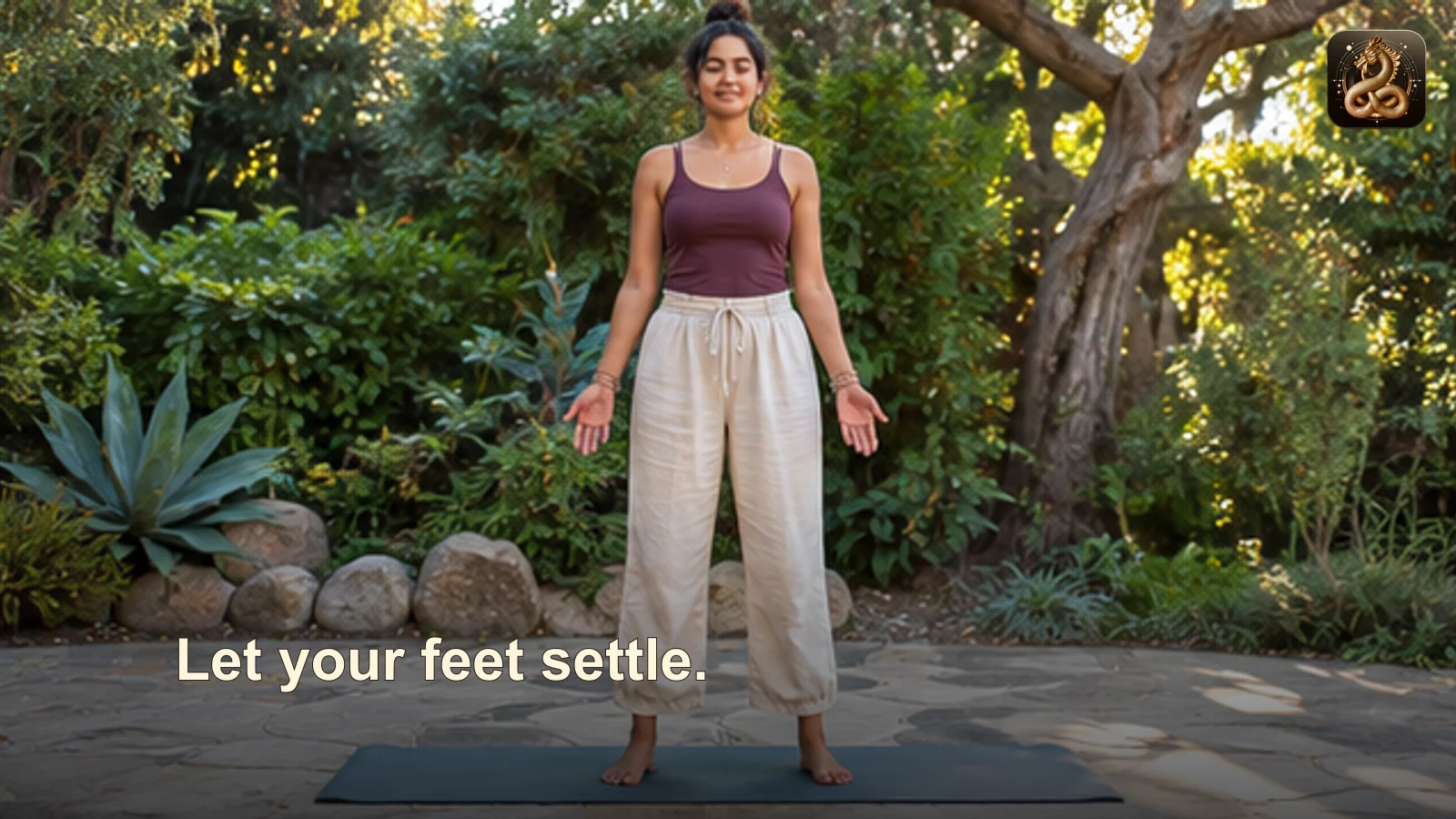
Your feet meeting the floor is one possible cue. A guide might ask you to notice that contact briefly and return to it when your attention moves elsewhere. The instruction can be simple enough that you do not have to change how you stand. You can also let your attention move to the guide's voice when it resumes.
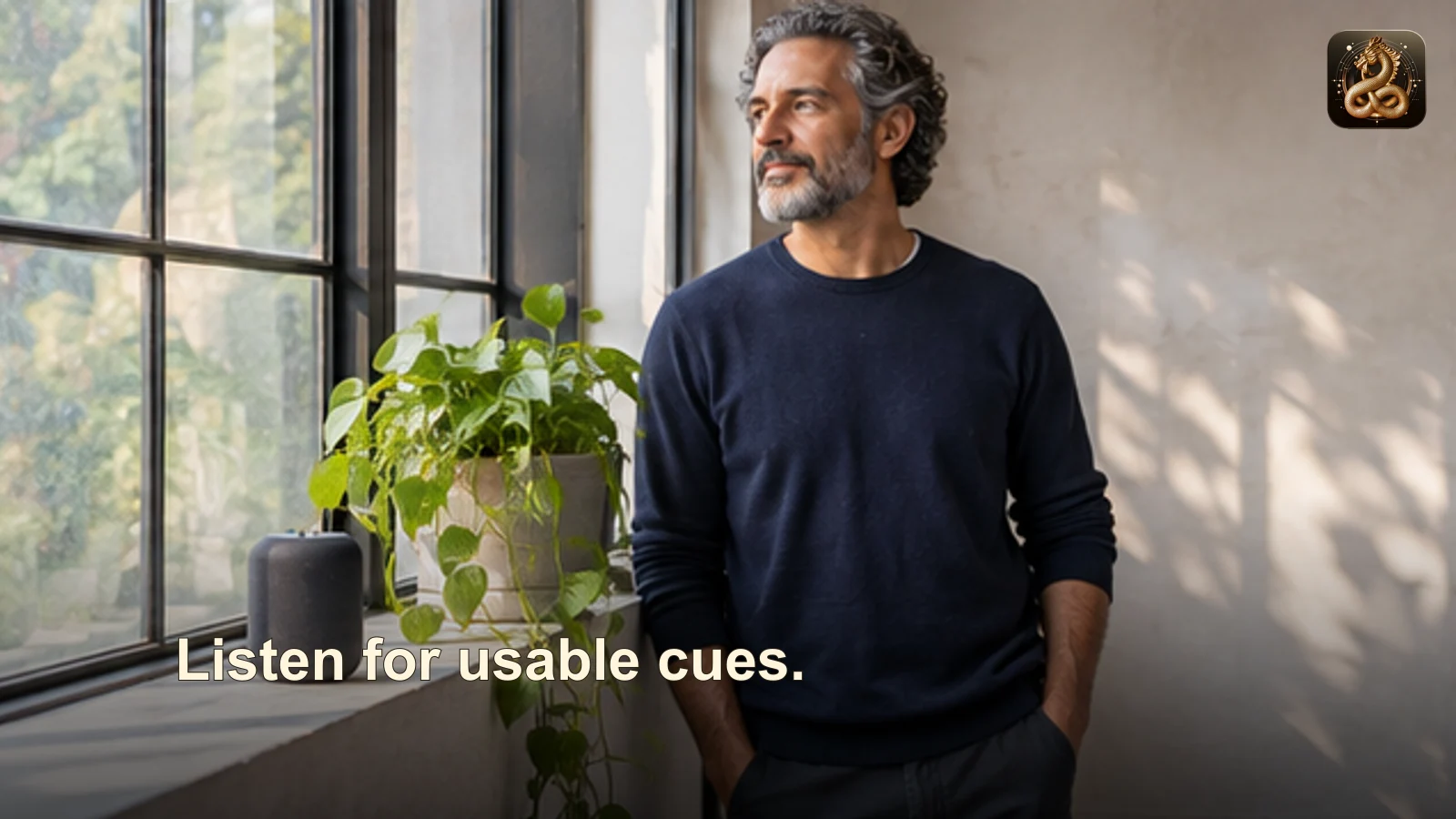
An ordinary sound can work if you would rather pay less attention to your position. In a quiet room, you might hear a fan, the guide speaking, or sound beyond a window. Pick something you can hear without turning your body or looking for its source. You can leave the sound alone when it fades and notice the next part of the recording.
A phrase is another option. If the guide repeats a few plain words and leaves time after them, you can listen without having to follow a physical sequence. Some people like to repeat the words quietly. Others prefer to hear the guide say them and let them pass. Preview enough of the track to see which approach it expects and whether there is room to do what works for you.
Give yourself an easy way to pause
Put the player somewhere you can reach comfortably or use controls you already know how to operate. If you are testing a new recording, choose a short one or listen to a section first. You can check what happens when you pause. The track may return to where you left off, or the app may make you find that point again. A simple player reduces the work of changing your mind.
Decide what you will do if you want a different position. You might pause the guide, sit on a nearby chair, and continue from the same point. You might stop and come back to it later. The recording can stay in the background of that decision while you choose how to use the space. There is no need to keep following instructions while you are moving into a position you prefer.
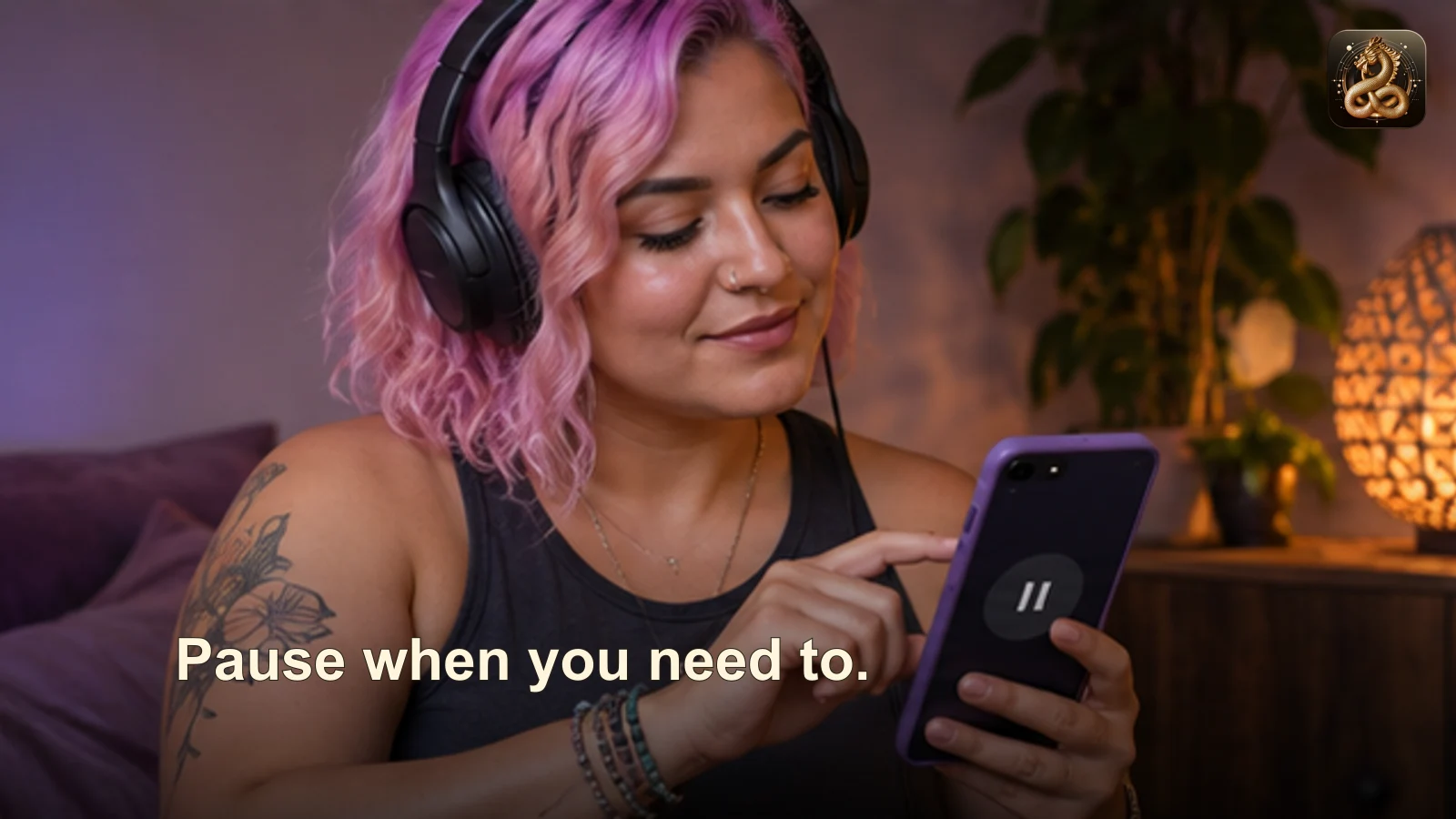
If you want to move while a guide assumes you are seated, it may help to think through whether that specific cue can still work. The guide to moving during a seated meditation addresses that situation. For a standing session, it is often easier to start with a recording that already gives you the option.
Try the choice in two everyday situations
At home you might have a few minutes before you leave. You stand in a clear room with your shoes off and put the player where you can see it. The first guide asks you to imagine sinking into a chair. The second invites you to look toward a fixed point and notice the contact of your feet with the floor. The second gives you a usable instruction while you are standing. You can listen to a short stretch and put the device away when it is time to go.
In another situation, you might be waiting for the rest of a group to arrive at a room you are setting up. You can stand off to one side, keep an eye on the door, and hear a brief voice cue quietly. A guide that asks for several uninterrupted minutes with closed eyes would be awkward here. An open posture and a short, simple cue give you an easier way to stop when someone arrives.
A third choice is to save the recording for later. If you are tired of standing, waiting somewhere busy, or concerned you will miss a call, find a chair if one is available or spend the time as you normally would. You can use the standing option another time without needing to make the current situation fit it.
Keep the session short enough for the position
A recording's duration tells you how long the audio lasts. It does not have to set how long you stay in one position. Previewing for a minute may be enough to learn whether the instructions fit. If you do choose a full track, pick one that leaves you free to stop when you have heard enough. A guide with a clear ending may make that decision easier than a track that runs on into another recording.
Notice whether you can listen comfortably without spending the session managing where you stand. If your attention is mostly on moving out of the way or waiting for the instruction to change, you have learned something about the setup. Choose another place or try a guide that asks less of the situation.
You can also preview the ending. Some guides bring you back by asking you to open your eyes, stretch your legs, or rise from a chair. If you have been standing with your eyes open, a simple closing phrase may be easier to use. Notice how the guide signals that the practice has ended, especially if you will need to leave promptly. You can stop when you hear that signal or decide in advance to end after the last cue you want to follow.
Frequently asked questions
Can I use a seated recording while standing?
You can use the parts that make sense in the position you chose. A guide that mainly refers to sounds or a short phrase might be easy to follow. If it repeatedly relies on a chair, a cushion, or contact with the floor in a seated position, a recording that allows standing will be simpler to use.
Should I close my eyes?
Choose an eyes-open option, especially when you need to stay aware of the room. A guide can invite you to listen to a voice or notice your feet with your eyes open. If the recording's instructions depend on closed eyes, select one with wording you can follow comfortably.
What if I want to sit down halfway through?
Pause and sit if a suitable place is available. You can continue when you are ready or stop there. Before starting, consider whether the player is easy to pause and whether you have somewhere you would be comfortable sitting.
Does a standing meditation need to include movement?
No. A recording can use a stationary cue, such as contact with the floor or the sound of the guide. A walking practice or a movement sequence asks something different of your space and attention. Read the instructions before choosing which kind to try.
Save the wording that helped you choose
After trying a recording, write down the first instruction you could use and anything the guide assumed about your position. “Eyes open, feel feet, no chair needed” is a useful note. So is “Starts with feet but moves to a seated exercise later.” A few specific words make it easier to choose a track the next time you have a clear place to stand.
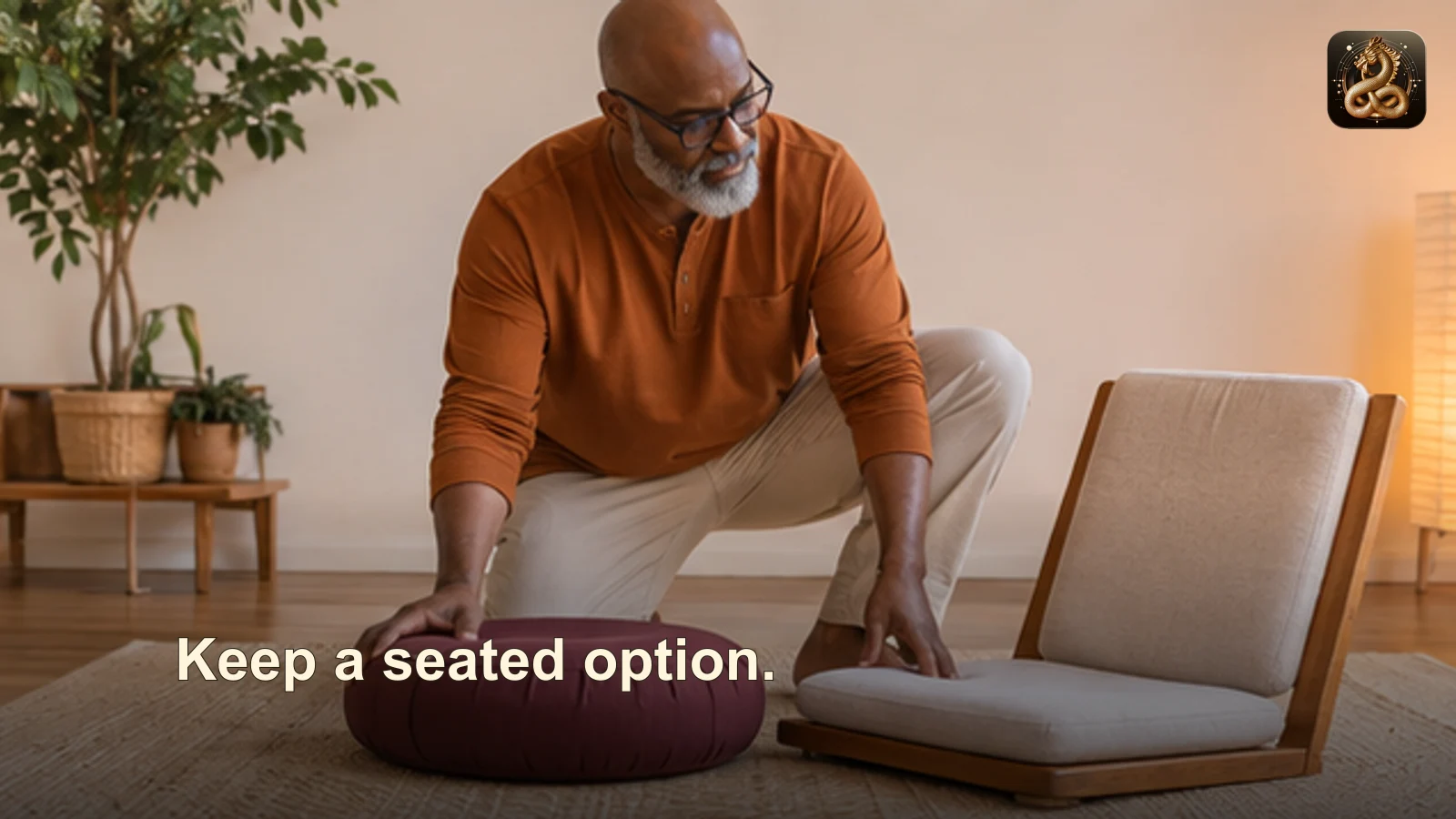
You can also keep a short seated option beside it in your list. When the time comes, check the room and how you want to spend those minutes. Pick the recording whose instructions fit where you are and give yourself an easy way to finish.