
You sit down for a meditation and, partway through, want to change how you are sitting. Perhaps your hands would be more comfortable elsewhere, you want to shift in the chair or the position simply no longer suits you. The wish to move does not need to become a contest between following the session and responding to yourself.
For an optional personal practice, you can pause the attention task, make an ordinary familiar adjustment or finish. If you choose to continue afterwards, return only to guidance you understand. The time before the adjustment does not disappear, and the recording does not require a second attempt without movement.
This guide offers participation choices, not posture, stretching or transfer instructions. It cannot assess pain, symptoms, mobility needs or individual suitability. Follow appropriate professional advice and ask an instructor about a class's actual arrangements rather than using a general article to improvise a physical technique.
Quick answer: give the adjustment your ordinary attention
Pause the meditation task when you want to change your arrangement. Make a familiar adjustment using your usual judgement, or stop the session. Once settled, decide whether you still want to continue. Recover the actual instruction and context before following it; if that is unclear, choose a clear starting point or finish.
There is no requirement here to remain motionless, make movement unusually slow or restart a timer as a penalty. A simple practical choice is enough. You can leave a preference unexplained instead of interpreting it as evidence about your ability to meditate.
Begin with a position you can choose freely
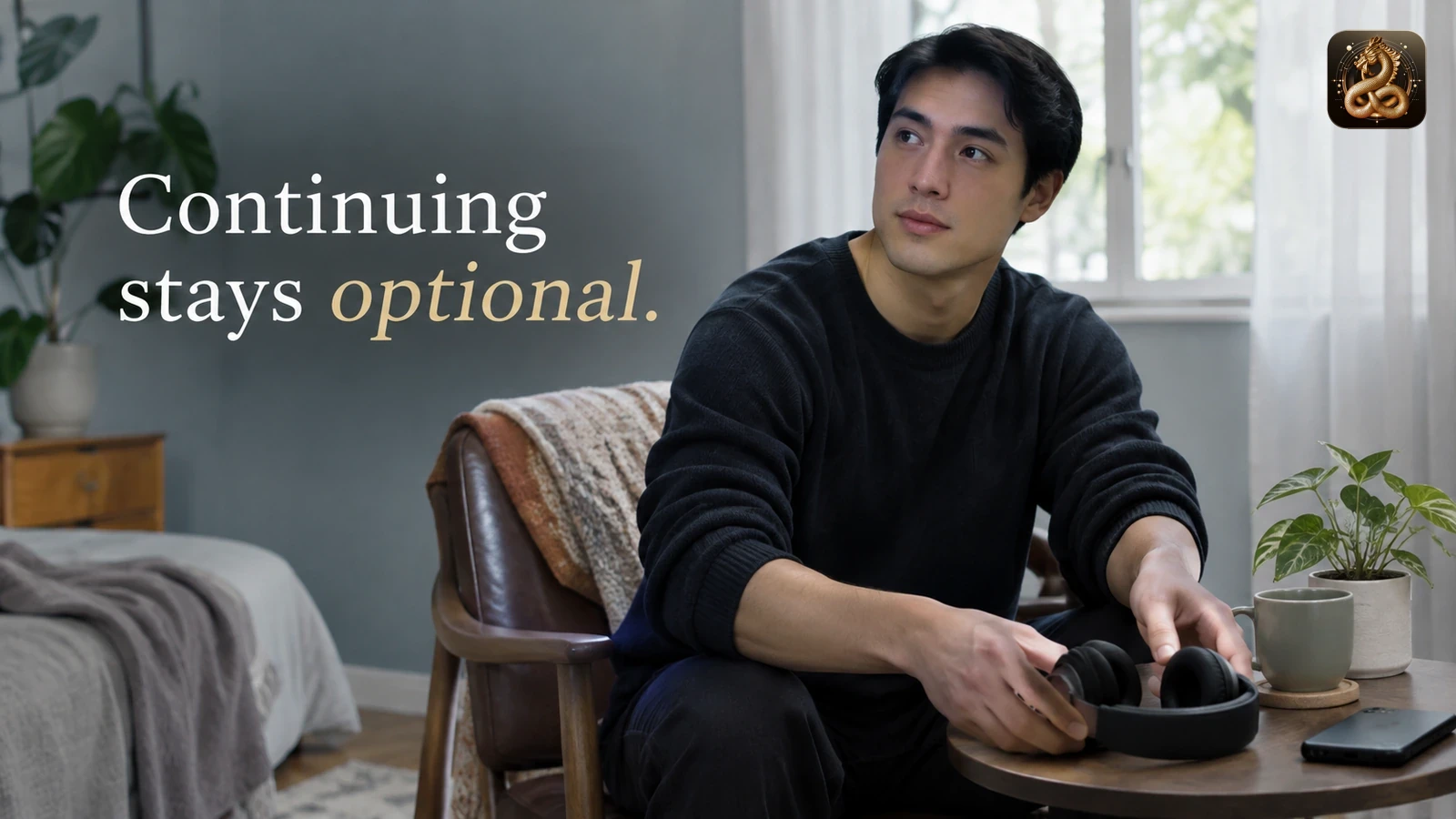
Before starting, select an ordinary arrangement that fits your circumstances. A familiar chair may be sufficient. A photograph of somebody on the floor does not establish that you should use the same position or that it is more advanced.
Read the actual guidance if the practice specifies a physical arrangement. Check whether you understand the instruction and want to use it. If the source relies on teaching you have not received, ask for clarification or choose a different practice.
Consider ordinary access. Can you reach a playback control if you need one, respond to a responsibility and leave the activity when you want? This guide does not assess a room or prescribe a way to move between positions. Keep those practical questions within what you already know is workable for you.
You can make a choice before any discomfort occurs. Perhaps holding a device throughout the session already seems inconvenient. Put the guidance in an arrangement you can use normally or choose another format, rather than treating inconvenience as a necessary part of practice.
Notice the wish without turning it into a test
A thought such as “I would rather move my hands” is enough to identify a preference. You do not need to decide whether it is restlessness, distraction or a meaningful signal. A personal meditation does not require you to diagnose an ordinary change of mind before responding.

Keep the observation specific. “I want to sit differently” tells you something about the present arrangement. “I cannot meditate” makes a much broader judgement that this moment does not establish. You can act on the smaller statement.
Likewise, moving does not prove that the recording is unsuitable for everyone. You may like the guidance and still want another position. Preference, physical arrangement and the content of the practice can remain separate questions.
If pain, concerning symptoms or distress arise, stop and seek appropriate advice when needed. This article does not instruct you to observe symptoms until they pass, decide their cause through meditation or continue to demonstrate commitment.
Pause the attention task while you change the arrangement
Let the practical action have your attention. There is no need to keep counting, following a phrase or listening for every word while dealing with the position you want to change. If trying to do both becomes awkward, stop the meditation task.
Use the ordinary movements and arrangements you know to be appropriate for you. This guide supplies no sequence for standing, stretching, transferring to the floor or using a prop. A qualified instructor or relevant professional can address individual questions that a general article cannot.
You can also finish without making a new meditation arrangement. Perhaps another activity now fits better, or the time you had is nearly over. Changing a seated position does not create a requirement to locate a perfect replacement before leaving the session.
If equipment is involved, use its actual controls when needed. A recording may pause differently from a live session. Do not assume that closing an app, turning a screen away or removing headphones has the same effect in every arrangement.
Decide whether to return before choosing where to return
Once the practical change is complete, ask whether you still want this activity. Continuing can be an option, but it is not the automatic next step. You may prefer to keep sitting normally, speak with someone or move on with the day.
If you continue, begin with the present arrangement rather than trying to reproduce how the session felt before. An adjustment can change what you notice. You do not need to recover an earlier feeling or prove that the attention task remained uninterrupted.
A timer, if you use one, is administration rather than a score. Check its actual state if that matters to your available time. You can keep the original ending, finish earlier or make another practical choice without treating movement as time that must be repaid.
Choose another practice separately if the current one no longer fits. There is no requirement to turn every position change into a new routine, add a movement sequence or combine meditation with yoga.
Choose the activity for the occasion
SoulFul GLO's practice chooser introduces broader sound, meditation and yoga options. Use it when you want a different activity, then inspect the actual guidance. This article does not establish that any particular session supplies an individual adaptation.
Recover understood guidance rather than chasing missed words
A prerecorded session may have continued during your adjustment. If you missed a direction, do not reconstruct it from the speaker's last few words. Use a supported pause or replay arrangement where available, and recover enough context to understand the invitation.
A new cue may depend on an earlier instruction. Hearing “continue with that” is insufficient if you do not know what the speaker is referring to. A clear earlier point, another resource or finishing can all be more workable than guessing.
In a live group, the teacher may continue while you attend to your arrangement. Ask about rejoining when a question can be addressed, or wait without following an unclear physical direction. The group's pace does not establish that you should copy another participant.
If long pauses between spoken cues are the main uncertainty, read the separate guided-meditation pauses guide. Here the question is recovering context after your own practical change, not filling every quiet interval.
Ask about a class's arrangements before relying on an alternative
A teacher may explain options for a particular practice, but a generic label such as gentle does not tell you what those options are. Ask what participation looks like when someone needs to change position, pause or leave.
Make the question practical and proportionate. “How should I let you know if I need to pause?” may be enough to establish a communication arrangement. You do not need to disclose private history just to ask what the class actually offers.
Keep permission to stop separate from the suitability of a suggested alternative. An option named in a class description is not automatically appropriate for every person. Ask relevant individual questions and follow appropriate advice rather than treating any listed prop or position as a guarantee.
The teacher's explanation may also show that another format fits better. You can choose guidance with arrangements you understand without turning that preference into a judgement about the tradition or everybody else's experience.
Two fictional adjustments with different endings
The following people and events are invented. They illustrate practical participation choices, not customer experiences, physical instruction or evidence of a health result.
In the first example, Leela begins an optional recording in a familiar chair. Partway through, she wants her hands in a different ordinary resting place. She lets the attention task pause, makes the adjustment she wants and checks whether she still wishes to continue.
Leela missed part of the next spoken cue. She uses the actual controls she understands to return to a clear point rather than inventing the missing request. The session finishes at the ending she originally selected. She does not add minutes to compensate or describe the movement as a failure.
In another invented example, Owen finds that the sitting arrangement no longer fits the occasion. He stops the recording and decides he would rather return to an ordinary household activity. He does not begin a second practice to give the first one a tidier ending.
Owen can consider another arrangement before a future session if he wants. That future choice remains separate from today's decision to finish. Neither example establishes that one position, duration or response is universally better.
Keep any later observation practical
If you want to remember the occasion, retain a small useful detail: the screen was awkward to hold, the chair arrangement changed or a cue was missed. Recording the observation is optional. The practice does not need to become a journal task.
Keep the explanation limited to what you know. Moving during one session does not establish a persistent attention problem, the cause of a symptom or a need for a more demanding routine. A practical question can remain a practical question.
You may choose the same arrangement another day or something different. The article supplies no schedule, progression or promise that practice will eliminate the wish to move. Your choices can stay responsive to the actual occasion.
Source context and limits
NCCIH's meditation and mindfulness overview discusses research limitations and safety, including that meditation should not replace conventional care or postpone medical attention. Its findings do not validate the particular adjustment choices in this article or establish suitability for an individual.
The workflow and fictional examples are original editorial suggestions about optional participation. No physical technique, clinical programme or guaranteed relaxation effect is supplied. Respond to health concerns through appropriate qualified care rather than using stillness or movement as a self-assessment.
Frequently asked questions
Does changing position mean I must begin again?
This guide supplies no such requirement. Decide whether you want to continue and recover a clear instruction if needed. A practical adjustment does not erase the time already spent or create an obligation to complete a second attempt.
Should I keep following the voice while I adjust?
Give a practical action the attention it needs. You can pause the meditation task and return only when the actual instruction is clear. If the recording continues and context is missing, avoid reconstructing a physical direction from fragments.
Can this guide tell me which position is best for me?
No. It offers participation choices rather than an individual posture assessment or movement sequence. Use relevant professional advice and ask an instructor about the actual practice when individual suitability is uncertain.
What if I want to finish instead?
You can end an optional session. There is no required replacement practice, reflection or compensating duration. Choose what fits your actual circumstances and responsibilities.
Return to the day in an ordinary way
For a separate transition question, read SoulFul GLO's guide to ending meditation before returning to work. Within this session, keep the immediate choice simple: respond to your arrangement, recover only guidance you understand and continue only when you want to.