
You are having a pleasant day and still feel like listening to a guided meditation. Nothing needs to be fixed first. Perhaps you enjoy a familiar voice, want a short period with fewer competing activities, or are curious about noticing the room without planning the next part of the afternoon. Those can be enough reasons to consider an optional practice.
For this occasion, the useful question is what you would enjoy doing: following a voice, noticing present sound or spending a little time with one understandable focus. The recording is an activity you can choose while feeling well. It offers no promise to preserve happiness or prevent a later difficult mood. Choose its task, then leave the emotional result open.
Quick answer
Choose a session whose actual attention task interests you, rather than one whose title promises to change a feeling you do not want changed. Set aside a workable period, follow understandable instructions and let your present mood be part of the setting. You do not need to become neutral, solemn or deeply relaxed. Finish without requiring the experience to improve on how you felt beforehand.
Preview the resource if its framing matters to you. A cheerful day does not establish that every recording will suit the occasion. Some guidance asks for personal recollection, movement or imagery; other sessions use ordinary sounds or a repeated word. Decide from the instructions you actually have, and keep the choice to pause or stop.
Choose an activity rather than a promised mood
Ask what you would like to do during the available time. You might want to follow a speaker's simple directions, listen to sounds in the room or use a plain attention anchor. This gives you a practical selection criterion. A broad desire to make the good mood last cannot tell you whether a particular recording offers an activity you want.
Look for a description that tells you what happens after the introduction. Does the speaker invite present listening, a repeated word, imagery or personal reflection? Check the length and any preparation alongside that task. A session can sound appealing in a collection listing while asking for an activity you do not want today. Use the individual description or preview to decide.
You may choose the same recording you use on less pleasant days, provided its instructions suit this occasion. Familiarity can make finding the controls easier; it does not guarantee a familiar response. Alternatively, a new resource may interest you. Neither novelty nor repetition has to become a test of how well you are using a good day.
For the separate choice between a guided practice and another listening activity, SoulFul GLO's practice-selection guide offers a broader starting point. Keep this article's narrower question in view: choosing a meditation without first defining yourself as stressed, distracted or in need of repair.
Let a pleasant mood remain ordinary
Notice the difference between arriving with a feeling and making that feeling the assignment. You can be glad about a conversation or enjoy the afternoon light without turning the session into a project to hold the feeling still. The meditation can concern its stated attention task while the rest of your experience remains present.
Avoid supplying an invented difficulty because the recording opens by referring to stress. You can understand that framing without claiming it describes your day. If the whole practice depends on a problem you are not trying to address, another session may fit better. You do not need to manufacture a suitable starting state to follow a friendly voice.
You can start as you are, including with a smile or an ordinary interest in what comes next. Follow the recording's practical setup rather than adopting a solemn expression to look ready. If you want to keep your eyes open or use a chair, check the guidance and its alternatives. A pleasant starting mood is part of the occasion, not an instruction to perform.
You might notice that your mood changes while listening. A thought, sound or interruption can alter the moment, and this article cannot explain why in an individual case. You can decide whether to continue the optional activity without treating the change as evidence that meditation worked or spoiled something valuable.
Make room without turning the pause into an obligation
Choose a period that genuinely fits. If you are about to leave, another person is waiting or a practical task needs attention, account for it first. An enjoyable day does not require adding every available wellness activity. You can listen later or leave the recording unopened without wasting the mood you already have.
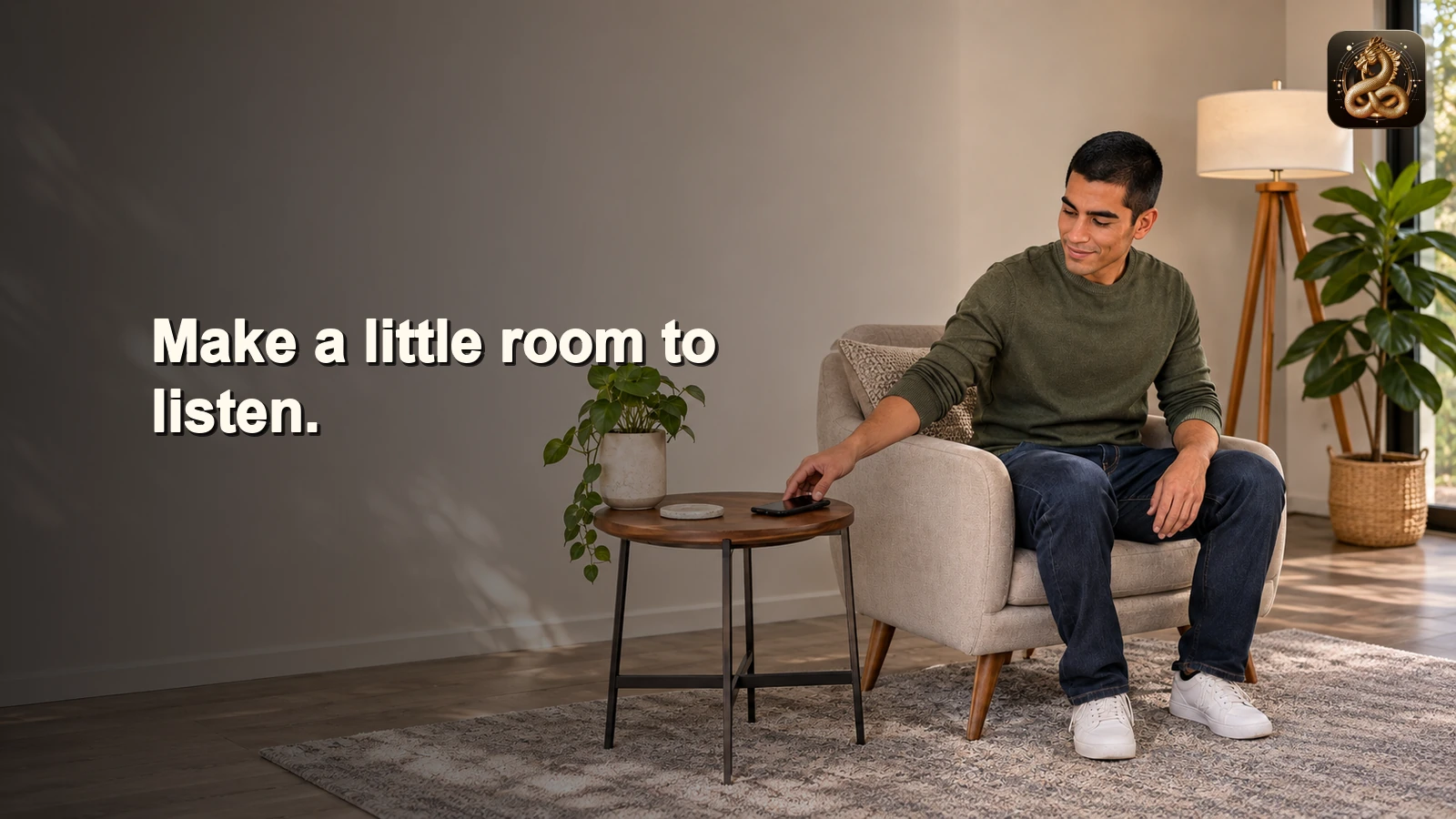
Put the controls where you can reach them and choose a place that fits the session's instructions. If other people will hear the audio, agree on that arrangement first. Preparing can be as ordinary as finding a seat and setting the device down. Save elaborate additions for another occasion if they would turn a welcome pause into a preparation project.
If you want a clear endpoint, know how the player behaves when the recording finishes. Another track may start, depending on your setup. Stop or change the queue using the controls you understand. A planned listening period can end even when you would be happy to keep enjoying the sound.
The separate guide to ending meditation and returning to an activity concerns that transition. Here, the return does not have to demonstrate a successful reset. You are allowed to move from one ordinary enjoyable activity to another without a performance measure between them.
Follow the actual instruction, including an easy return
Begin with an instruction you understand and want to follow. If the speaker invites attention to present sound, notice something you can currently hear. If it uses a repeated word, follow the explanation supplied. The aim is to do the offered task, rather than silently converting every session into an exercise about appreciating a pleasant event.
A happy thought may attract your attention. You can recognise that you were thinking about the event and return to the current instruction when you choose. There is no need to reject the thought as a distraction that ruined the practice. Nor must you keep replaying it to protect the good feeling. Thinking and listening can be noticed as different activities.
If the guide includes an instruction you do not understand, pause or preview rather than guessing. A pleasant mood does not make missing information irrelevant. Ask the provider when appropriate, choose clearer guidance or stop for now. Another resource can fit your preference without being a corrected version of the first one.
Notice which invitations you are willing to follow today. A guide may offer a choice of gaze, focus or reflection; use the alternative it explains if that suits you. If it asks for something unfamiliar without enough context, pause to clarify or choose another recording. Feeling good does not make an unclear instruction clearer, and it does not commit you to finishing.
Explore guidance for the task you want
Browse SoulFul GLO's current practice descriptions if you want another starting point. Look for the actual format and instructions available. This article does not establish that a particular session is designed for maintaining happiness, and it makes no claim about an individual recording's effect on your mood.
Do not make the recording a way to save the day
A good afternoon may make you wish for a reliable way to return to the same feeling. A recording can be available again, but a repeated setting does not promise a repeated experience. Keep those facts separate. You can enjoy using a resource without treating it as a container for a mood you must reproduce later.
If you take a note afterward, keep it descriptive: you liked the pace, the instructions were easy to follow or the seat was inconvenient. Such observations may help another selection. They do not prove that the recording caused the pleasant day or that using it again will prevent an unwelcome feeling.
You can leave the experience without a note. If you do want to remember the resource, its title or an available saved-item control may be enough to find it again. Keep the next choice simple: use it again because its task appeals to you, try another format or continue with the day. No streak or mood comparison is needed to keep that option available.
For a different repeated-use question, SoulFul GLO's guide to familiar guided meditation separates knowing the resource from chasing a new experience. Neither repetition nor a good starting mood supplies a required emotional outcome. Choose the activity you want on the day you actually have.
Two fictional ways to use a pleasant afternoon
In this invented example, Laila has enjoyed visiting a friend and has no urgent task afterward. She chooses a short guided session because she wants to follow its listening instructions. A thought about the visit comes up. She notices it and returns to the room's sounds without deciding that the thought is a problem or a special meditation result.
When the session ends, Laila feels much the same. She makes tea. The example illustrates choosing an attention activity without a required change of mood. It is not a real customer account or evidence that meditation helps preserve enjoyment. A different person might prefer to keep talking, read a book or do nothing additional.
In another fictional example, Ravi opens a session whose introduction assumes the listener wants to recover from a difficult experience. That is not what he wants today. He chooses another recording with a clearer present-listening task. He does not need to disagree with the original resource's purpose to decide that its framing does not fit this occasion.
Laila keeps a recording whose task she wants; Ravi changes one whose framing does not fit. Those are two useful selection outcomes even though neither example reports a mood improvement. On another day, either person could choose differently. The practical sequence is to inspect the task, make room for it and decide whether it remains welcome while it is playing.
Keep possible benefits realistic
Guided meditation may offer a chosen period with one main activity and instructions you find useful to follow. You might enjoy that arrangement, find it ordinary or prefer something else. These are possible experiences, not promises of more happiness, improved emotional control or protection from future stress. This guide is a resource-selection exercise, not a treatment recommendation.
Research about a defined meditation programme cannot establish the effect of an unrelated recording or this particular good-mood scenario. Do not use a pleasant response as proof of a health claim. If any optional practice feels unwelcome, you can stop and attend to your circumstances rather than persisting to achieve a better result.
If you have a health concern, seek appropriate qualified advice instead of treating this article as an assessment. An enjoyable starting point and an appealing recording do not settle an individual care decision. Ordinary wellbeing preferences can remain separate from medical questions and from claims that a practice works for everyone.
Frequently asked questions
Do I need to be stressed to use guided meditation?
No starting difficulty is required by this guide. Check what the chosen resource asks you to do and decide whether that activity interests you. A recording aimed at a particular problem may be less convenient when that is not your purpose; another session or another activity can fit better.
Should I focus on the happy event throughout?
Follow the actual guidance rather than inventing a different exercise. You can notice a pleasant thought and return to the stated task. If you specifically want reflection on an event, choose a resource that explains that activity instead of assuming every meditation includes it.
What if I feel no different afterward?
You do not owe the session an emotional change. You chose to spend some time on an activity, and you can finish it without comparing a before-and-after score. A neutral outcome does not require extending the recording or trying to find a missing feeling.
Can meditation make a good mood last?
This article does not establish that result. You can reuse a resource because you like its instructions, but the next experience may differ. Keep an optional practice separate from a promise to prevent ordinary changes in feeling or circumstances.
Choose a session without a problem to solve
Read SoulFul GLO's guide to sampling a meditation if you want to inspect a recording before practising. Bring one practical preference about its task or format. You can use guided meditation because the activity interests you, while letting a good day remain a good day without extra proof.