
The class is slowing down, but you are not sure what happens next. People begin arranging their mats, someone reaches for a blanket and the teacher mentions a final rest. You may wonder whether everyone lies down, whether the music continues or how you will know the class has finished.
Those are practical participation questions. A closing period can have its own instructions and arrangements, even when it looks quiet from outside. Understanding them before class can be more useful than trying to copy the person beside you. Ask the actual teacher what this session includes and what choices are available.
This guide concerns an instructor-led closing phase. It does not teach a resting pose, decide what position is suitable for you or promise a particular feeling. A gentle class label is a starting description, not an individual assessment.
Quick answer: ask how the class finishes
Find out what the closing rest includes, how it is introduced and how participants return to ordinary activity. Ask about position options, eyes, sound, timing and any equipment actually required. Tell the teacher about a practical need that affects participation, using an appropriate route for personal information. Seek qualified individual guidance for health or movement concerns.
You can ask these questions before booking or before the session starts. If an important arrangement remains unclear, keep the question open rather than assuming a photograph provides the answer. Another class or another activity remains available.
Find out what the closing period includes
Ask the teacher to describe the final part in ordinary terms. Does it involve quiet rest, spoken guidance, meditation or something else? How is it different from the activities earlier in the session? An explanation of what participants are invited to do is more informative than a promise that everyone will feel relaxed.
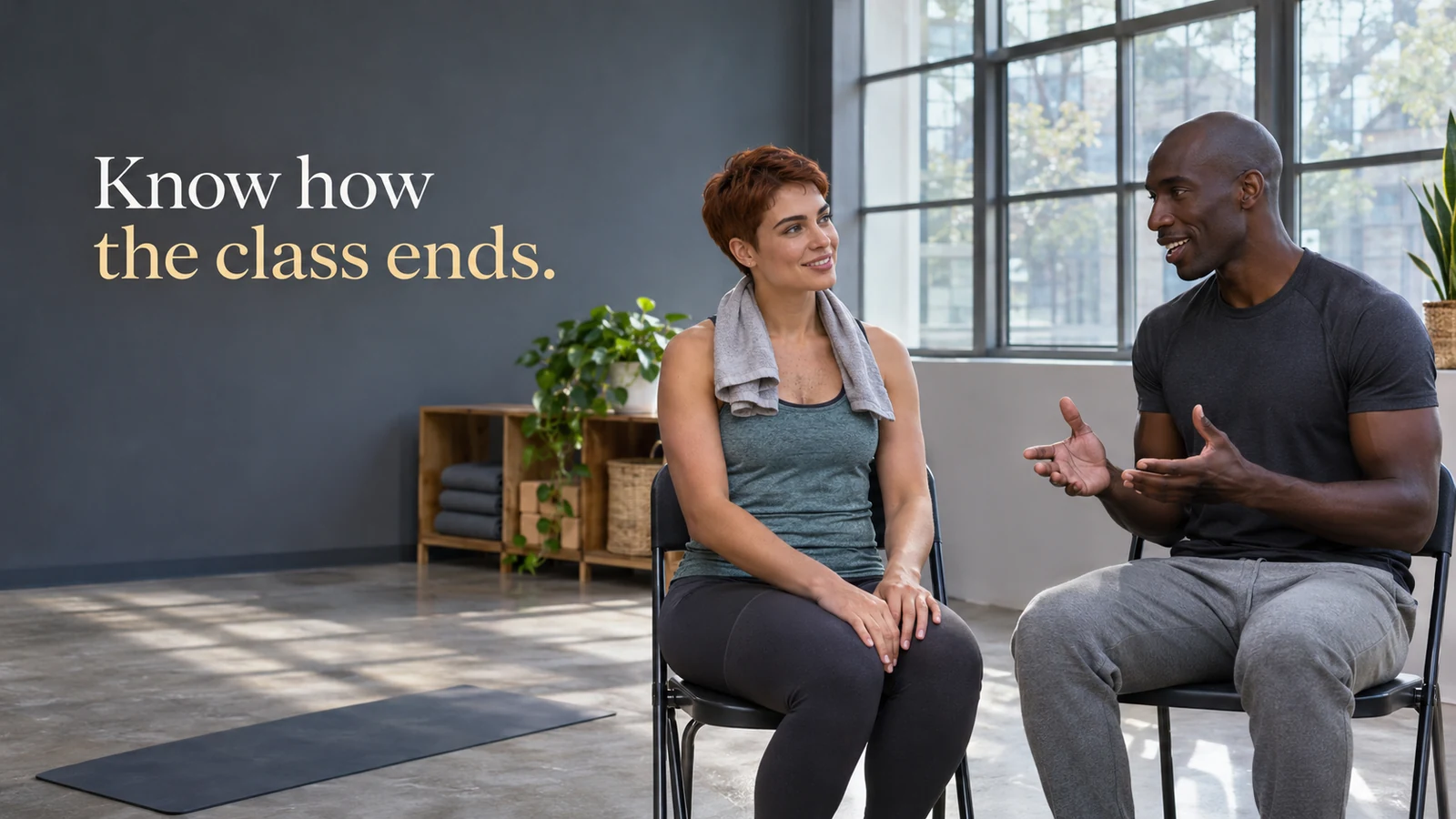
MedlinePlus describes a short closing meditation as a common class feature. That general description does not establish a standard ending for every gentle yoga class. Use the actual provider's information to understand this particular session, including whether it assumes familiarity with earlier teaching.
Keep rest as the activity being offered, rather than an outcome you must demonstrate. You may remain aware of the room, notice thoughts or feel ordinary. A quiet ending does not require you to fall asleep, empty your mind or report a change afterward. Follow the teacher's understandable guidance and keep participation voluntary.
Ask before the class begins
Choose the questions that actually affect your decision. You might ask how long the closing period usually takes, whether its arrangements are explained to newcomers and when you can clarify an instruction. A short, concrete inquiry gives the teacher something they can answer about the class they provide.
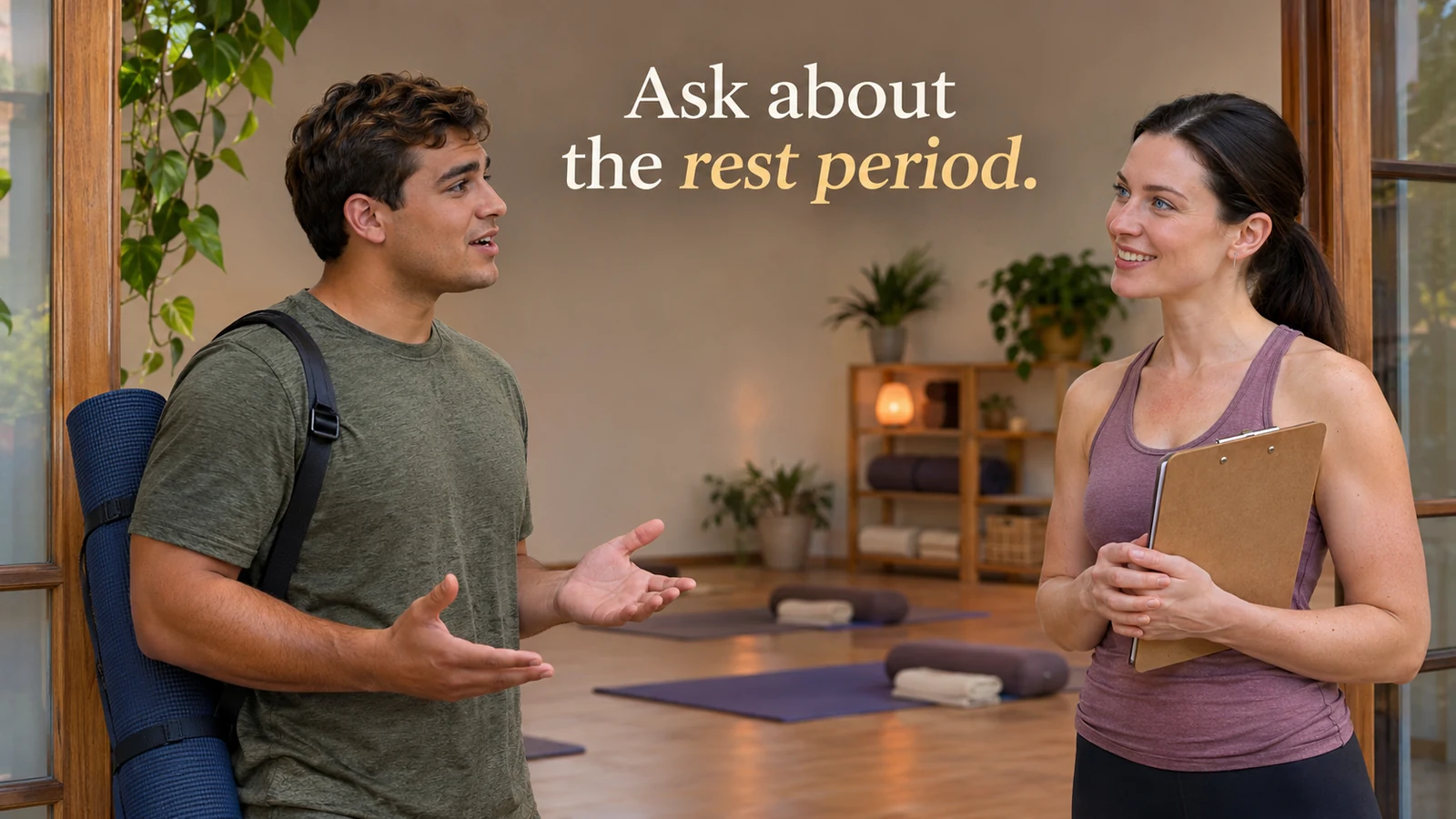
For example: “Could you explain the final rest and the position options you offer? I would also like to know how the class ends.” This is original suggested wording, not a real inquiry or an assurance about any provider's response. Adapt it to what you need to establish.
If the advertised class length matters for your plans, ask whether it includes the full closing period. Also check how arrival and packing away fit around that time. A timetable can help you plan, but it cannot promise the exact minute every session will finish or answer an individual suitability question.
Use an appropriate private route for health information. You do not need to describe a personal medical history in a public booking comment. Ask how the provider handles individual questions, and distinguish an administrative answer about chairs or timings from qualified advice about what you should do.
Ask about an arrangement you can use
Find out what options the teacher actually teaches for the closing phase. A class photograph showing someone on a mat does not establish that this is the only arrangement, or that it is suitable for you. Equally, do not assume a chair option is available until the provider confirms how it is used in that session.
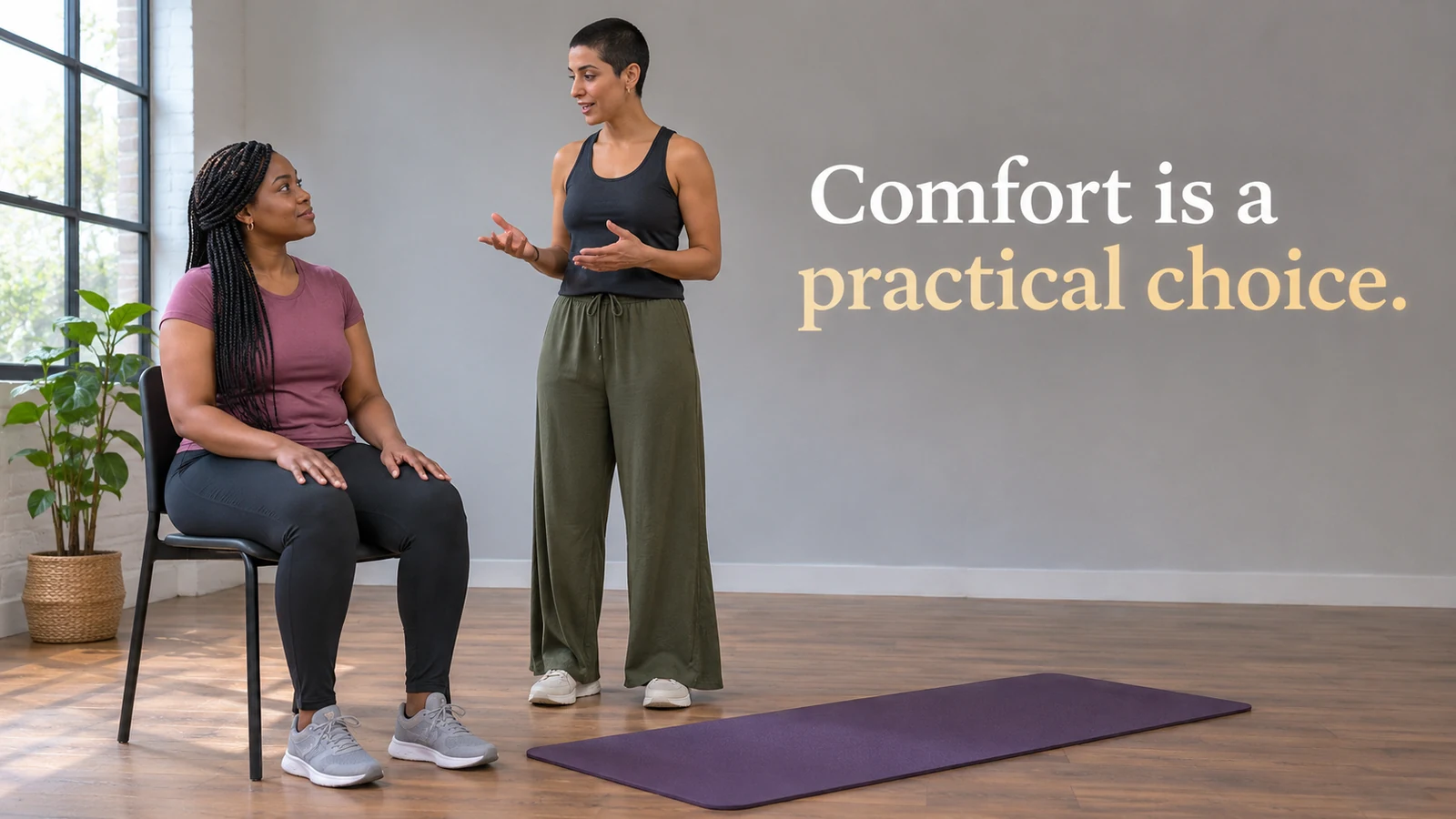
Describe the practical issue clearly enough to get a useful answer. You might need to know whether a stable chair is available or whether the teacher explains alternatives before the closing period starts. This guide does not prescribe how to transfer, arrange supports or change a position.
NCCIH's yoga safety overview recommends qualified instruction and attention to individual circumstances. Follow appropriate personal advice when relevant. A provider's confirmation that equipment exists is different from establishing that an activity fits a health condition or injury.
If a proposed arrangement is uncomfortable or unclear, stop and ask rather than copying a neighbouring participant. Their instructions and circumstances may differ from yours. There is no obligation to remain in a position because the room is quiet or because other people appear settled.
Read the current practice information
Explore SoulFul GLO's current yoga and practice descriptions when considering a session. Check what the actual resource includes. This article does not promise a particular closing format, live teacher response or individual adaptation within the service.
Clarify eyes, sound and surroundings
Ask whether the teacher gives a particular invitation about the eyes and what participation choices are available. You may want to understand whether there is a visual reference or whether guidance continues mainly through speech. Do not infer the whole instruction from a photograph of closed eyes.

Sound is another practical question. Find out whether the closing period uses music, recorded guidance, the teacher's voice or a quieter interval. If the arrangement matters to whether you want to attend, ask before relying on an assumption. The word rest does not establish silence or a particular recording.
Notice ordinary room details while you are still discussing the setup. Can you hear the teacher from the place you are using? Is an essential instruction unclear? Ask for clarification without waiting for the room to become completely quiet. You do not need to understand every sound as meaningful or attach a therapeutic explanation to the atmosphere.
Follow the actual session rather than combining unrelated instructions. A music preference does not supply a pose adjustment, and closing your eyes does not resolve an unclear physical direction. Keep those questions separate so the person responsible can address the one you actually have.
Keep props as options with actual instructions
A mat, blanket or chair can be part of the class arrangement without being a universal requirement. Ask which items are used, which are supplied and whether participants need to bring anything. Avoid turning a simple preparation question into an equipment purchase before you know what the provider expects.
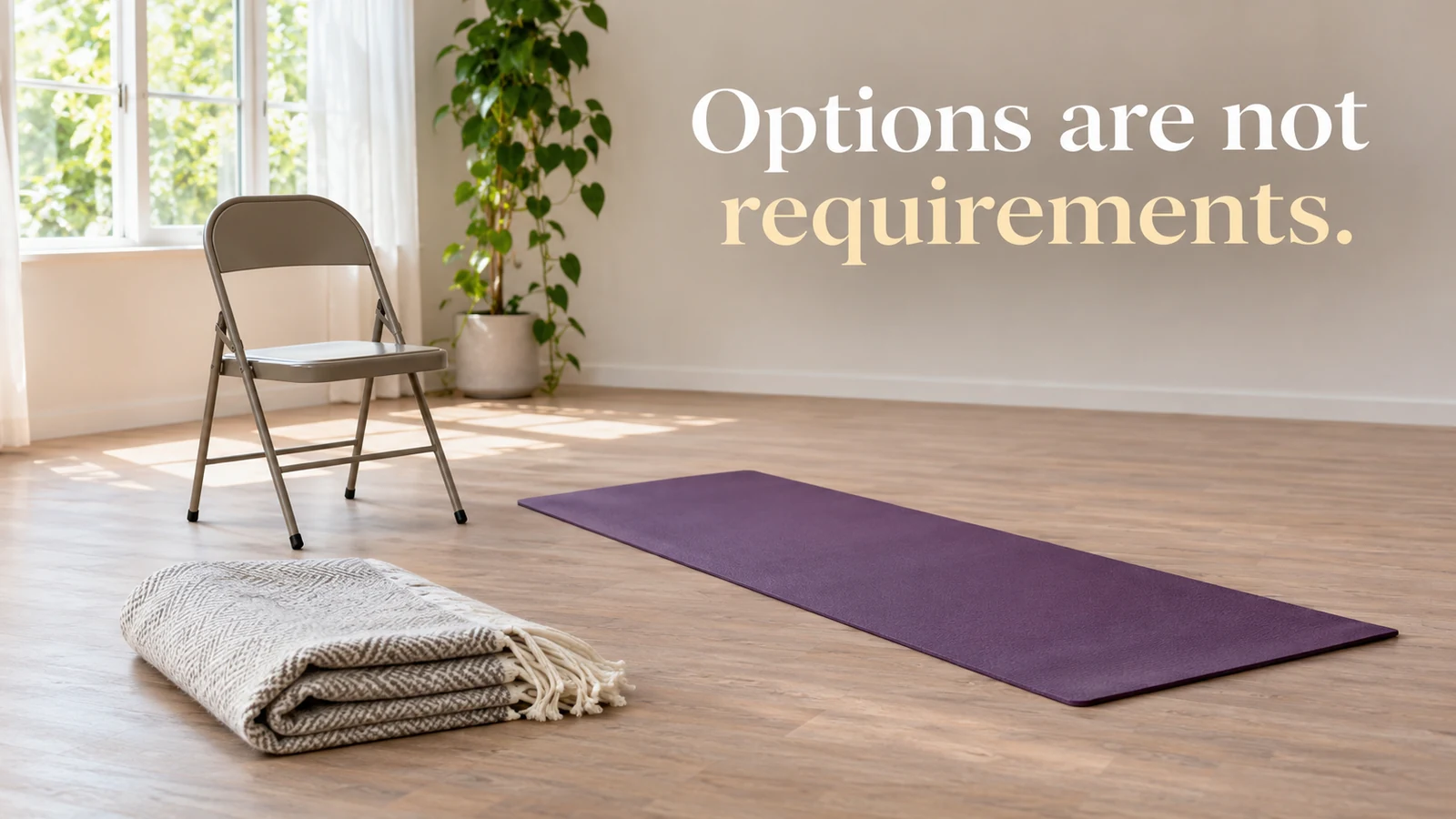
Seeing an object beside someone does not tell you how it is being used. Get the relevant instruction from the teacher instead of experimenting with placement or loading to reproduce a photograph. This article provides no support arrangement, substitution guarantee or product recommendation.
For a separate preparation task, SoulFul GLO's yoga-prop guide explains common categories and questions about borrowing. Recognising the name of an item is different from knowing the teacher's intended use during a closing rest. Keep that use attached to the actual session.
An optional item can remain optional when the provider describes it that way. You do not have to use everything available to make the ending worthwhile. If an essential item or instruction is missing, ask what arrangement the teacher actually offers rather than improvising a substitute from this general article.
Discuss an early departure as a practical arrangement
If you already know you need to leave before the scheduled finish, ask how the provider handles that situation. You might decide another class time fits better. If early departure is accommodated, clarify the route and timing before the session rather than guessing while other participants are resting.
This planning question does not remove the choice to stop an uncomfortable activity or respond to an urgent need. It concerns making a known timetable constraint easier to handle. A polite advance conversation and an unexpected reason to leave are different situations.
There is no requirement to compensate for missed time by doing an unsupervised sequence later. The class is not a debt of minutes. Decide what activity fits your circumstances, using appropriate instruction rather than adding movements because you left before an ending.
Two fictional questions about the finish
In this invented example, Mara is considering a gentle class and wants to know whether its closing period can use a chair. She asks the teacher before attending. In this fictional arrangement, the teacher explains an available option and when its instructions are introduced. Mara can then decide whether to consider that session, with personal suitability advice kept separate.
She does not treat the word chair as a complete demonstration or assume that another participant needs the same setup. The example illustrates obtaining class information, not an actual customer's experience or a claim that a particular arrangement is appropriate for every reader.
In another fictional situation, Elias has a transport connection shortly after class. He asks whether the advertised time includes the closing phase and packing away. He may choose a different session if the timing leaves no practical margin, rather than expecting the teacher to guarantee a departure minute.
Both questions concern information the class description may leave open. Neither asks the teacher to predict how relaxed a participant will feel. A clear answer can lead to attending, postponing or choosing another format.
Leave time for an unhurried finish
Ask how the teacher signals the end and introduces the return to ordinary activity. Listen to the actual instructions, and seek clarification if you need it. This guide does not supply a getting-up sequence or ask you to match the speed of the person next to you.

Keep the space around your belongings workable, following the venue's arrangements. Packing away and leaving can take time even after the guided part ends. A little room in your plans may be convenient, but it does not guarantee a particular physical or emotional transition.
Afterward, you can retain a practical observation: the ending was clearly explained, an instruction remained uncertain or the timetable did not fit. One subjective experience does not establish a health effect. You do not need to write a reflection, disclose a feeling or commit to another class immediately.
Questions about a gentle class's final rest
Must everyone lie on their back?
Ask about the actual options taught in that class and obtain appropriate individual guidance where needed. This general article does not prescribe a position or establish that a photographed arrangement suits you.
What if I do not feel relaxed?
No particular feeling is promised here. Follow understandable instructions without using another person's appearance as a comparison. If the activity is unwelcome, pause or stop and seek appropriate support for concerning difficulties.
Are blankets or other props compulsory?
Check the provider's actual list and explanation. An object can be available without being required. Its presence does not guarantee comfort or replace instruction about how it is meant to be used.
Is the closing rest a treatment?
This guide presents class participation information, not medical treatment. Research about yoga does not establish effects for this particular ending. Do not use a class to replace needed care or postpone medical attention.
Choose a class with a clear ending
Read SoulFul GLO's current practice descriptions if you want another starting point. Bring one concrete question about the finish, check the actual arrangement and choose guidance whose scope and instructions you understand.