
A printed labyrinth offers a route you can follow while remaining seated. Your finger traces the passage, turns with it and may eventually reach the centre. The task can provide a concrete place for attention when you want an activity with visible structure. You can also stop partway or decide that another kind of pause suits you better.
Begin with the pattern and instructions you actually have. A finger labyrinth is different from finding a route across a room, looking at a picture or choosing between branches in a puzzle. This guide explains a small optional tracing practice, with practical choices about visibility, movement and finishing. It supplies no promised emotional or medical result.
Quick answer
Choose a clear single-path labyrinth and identify its entrance. Rest the page or handheld object securely where you can see it and move comfortably. Follow the passage with a finger or a suitable tool if you wish, letting breathing remain ordinary. Pause at a chosen point, including the centre if you reach it. Return along the path or finish where you are. Completing the design is optional.
Check that you have a labyrinth rather than a maze
Veriditas describes a labyrinth in modern usage as having a single path, while a maze presents choices and dead ends. Its resource also describes a finger version as a handheld or desktop pattern traced with a finger or stylus. Those definitions explain the basic task. They do not establish a universal experience for someone who tries it.
Look for the entrance and the passage itself. The printed lines usually mark boundaries around a route, so decide which space the provider’s instructions ask you to follow. A decorative circular drawing may resemble a labyrinth without offering a continuous passage. If the route is unclear, choose a verified pattern or another activity.
You are not required to solve anything quickly. A maze can be an enjoyable puzzle, but it asks a different question: which way should I go? In this suggested labyrinth practice, the route is already supplied. Your practical decision concerns whether and how you want to follow it.
Keep the resource’s context visible. Some providers present labyrinths through prayer, spiritual reflection or particular traditions. Read their actual explanation and decide whether it fits what you want. The simple attention variation here does not claim to reproduce every provider’s practice or give a pattern a guaranteed healing property.
Choose a pattern you can actually follow
Begin with legibility. Can you distinguish adjacent passages without leaning awkwardly, guessing at a narrow gap or repeatedly losing the entrance? A larger print may be more workable than a small image on a phone. Choose from what is available rather than making size or complexity a measure of commitment.
Use a provider’s legitimate printable resource or an object you already understand. Check any reproduction terms before copying or distributing a design. Personal use and permission to republish an image are separate matters. This article does not supply a pattern file or establish rights to somebody else’s artwork.
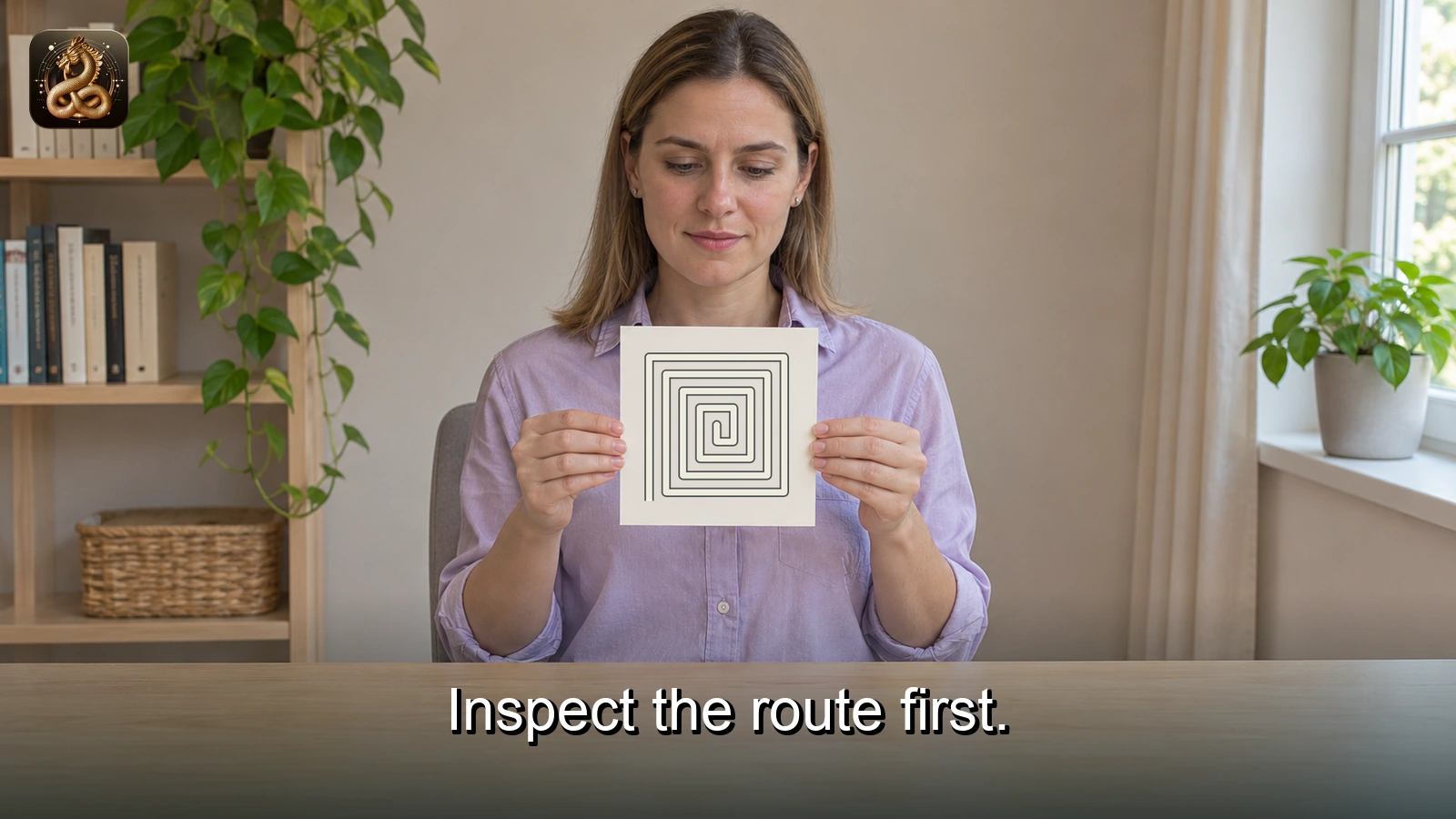
A raised or recessed route changes what is available to notice compared with a flat page. You might follow visible boundaries on paper or a groove on an object. Read the relevant instructions and choose a form that is comfortable for you. Greater texture does not establish a stronger meditation effect.
If you want guided participation, Veriditas lists finger-labyrinth resources and sessions. Inspect the current resource and its actual instructions before using it. This guide does not confirm a particular session’s availability, booking arrangements, access features or personal suitability.
Arrange the page and your hand before starting
Put the pattern on a stable surface or use an ordinary support that does not slide. Leave enough room for your hand to travel without pushing other objects aside. A supported forearm may be more convenient than holding the page in the air. Choose the arrangement by actual comfort and visibility.
Select a hand and a way of tracing that work for you. This guide assigns no special intuitive ability to one hand and requires no particular finger. If the resource gives a hand convention, distinguish its stated tradition from a claim about your nervous system. Ask its provider when the purpose is unclear.
Light contact may be enough on a flat print. If touching the page is uncomfortable, you could follow a short portion visually or choose another activity. A stylus is an option only when suitable for the object and comfortable to use. Avoid pressing harder to make the task feel more effective.
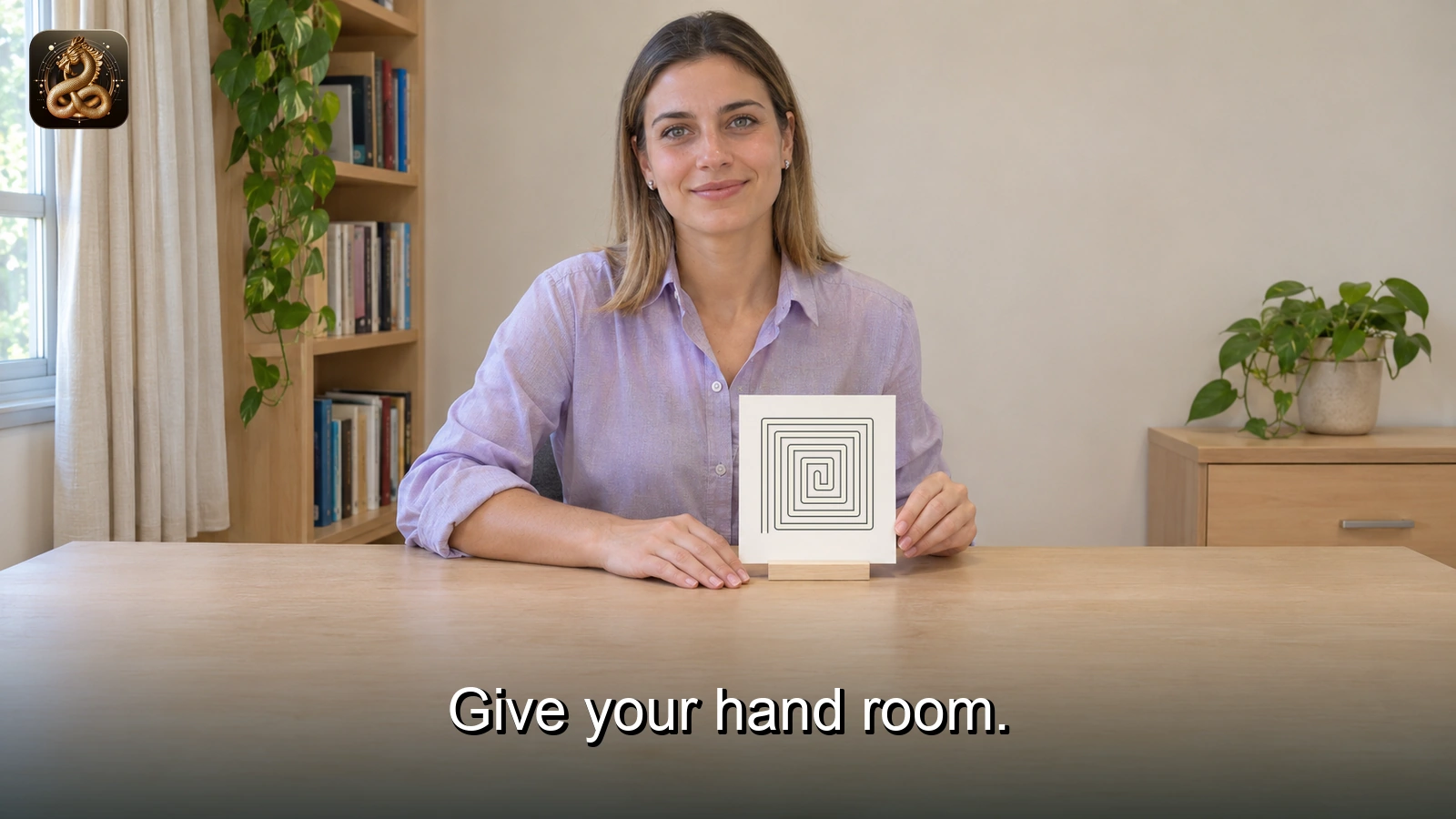
Choose an ordinary place where a brief attention task is appropriate. Keep responsibilities requiring vigilance separate. The pattern needs no music, candle, special breathing rhythm or personal disclosure. Add nothing merely because it appears in a promotional photograph.
A practical plan for one attempt
Find the entrance before tracing
Locate the opening and the first stretch of passage while stationary. Notice where the route begins to turn. You can read the instructions first and set them aside, or keep a short cue nearby. Learning the arrangement is part of choosing whether to try it.
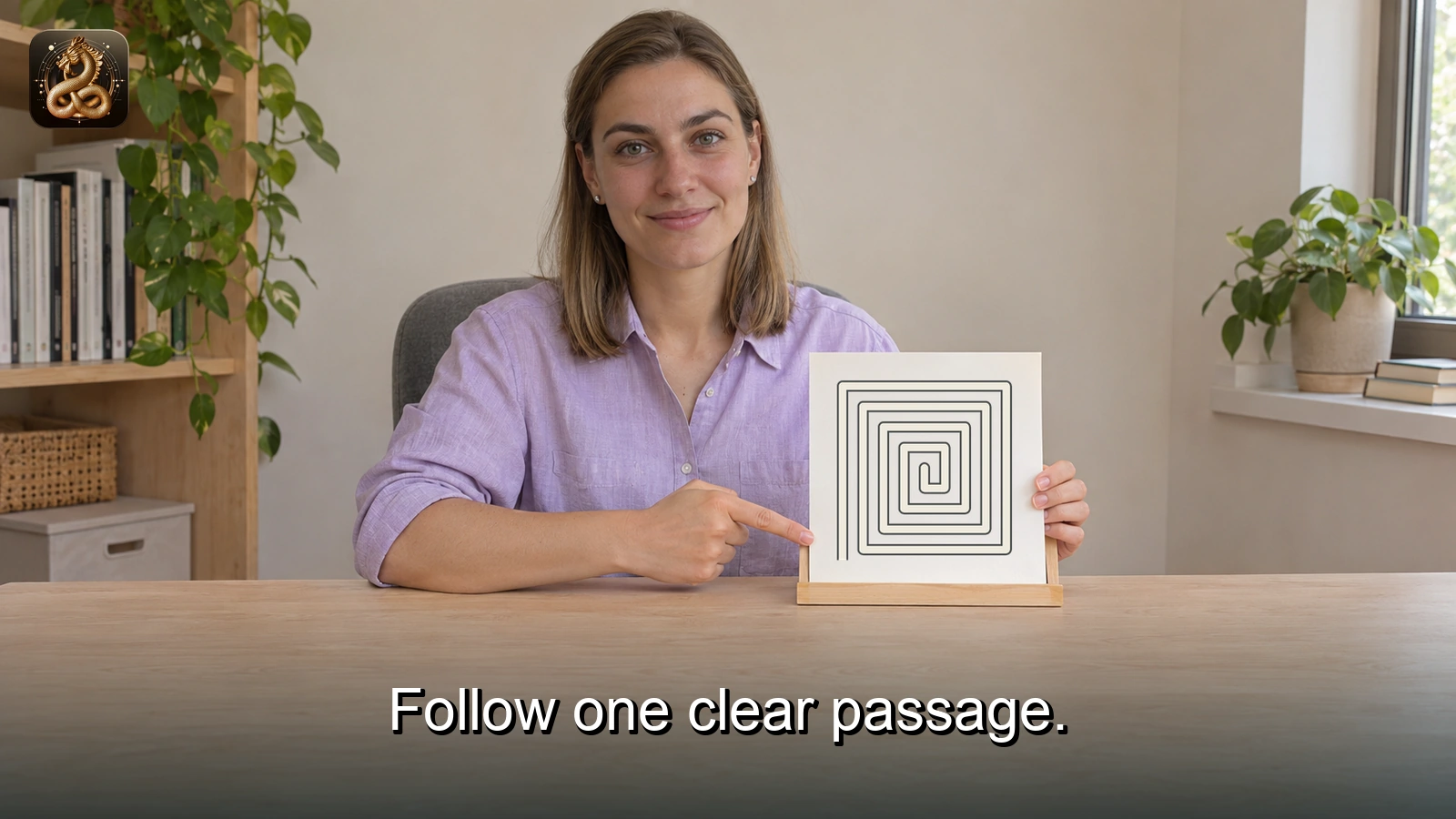
Follow the passage at an ordinary pace
Move only as comfortably as you can. Notice the route ahead of your finger and the contact or movement you actually experience. Let breathing continue naturally. There is no required speed, pressure, uninterrupted run or fixed number of circuits.
Pause when you choose
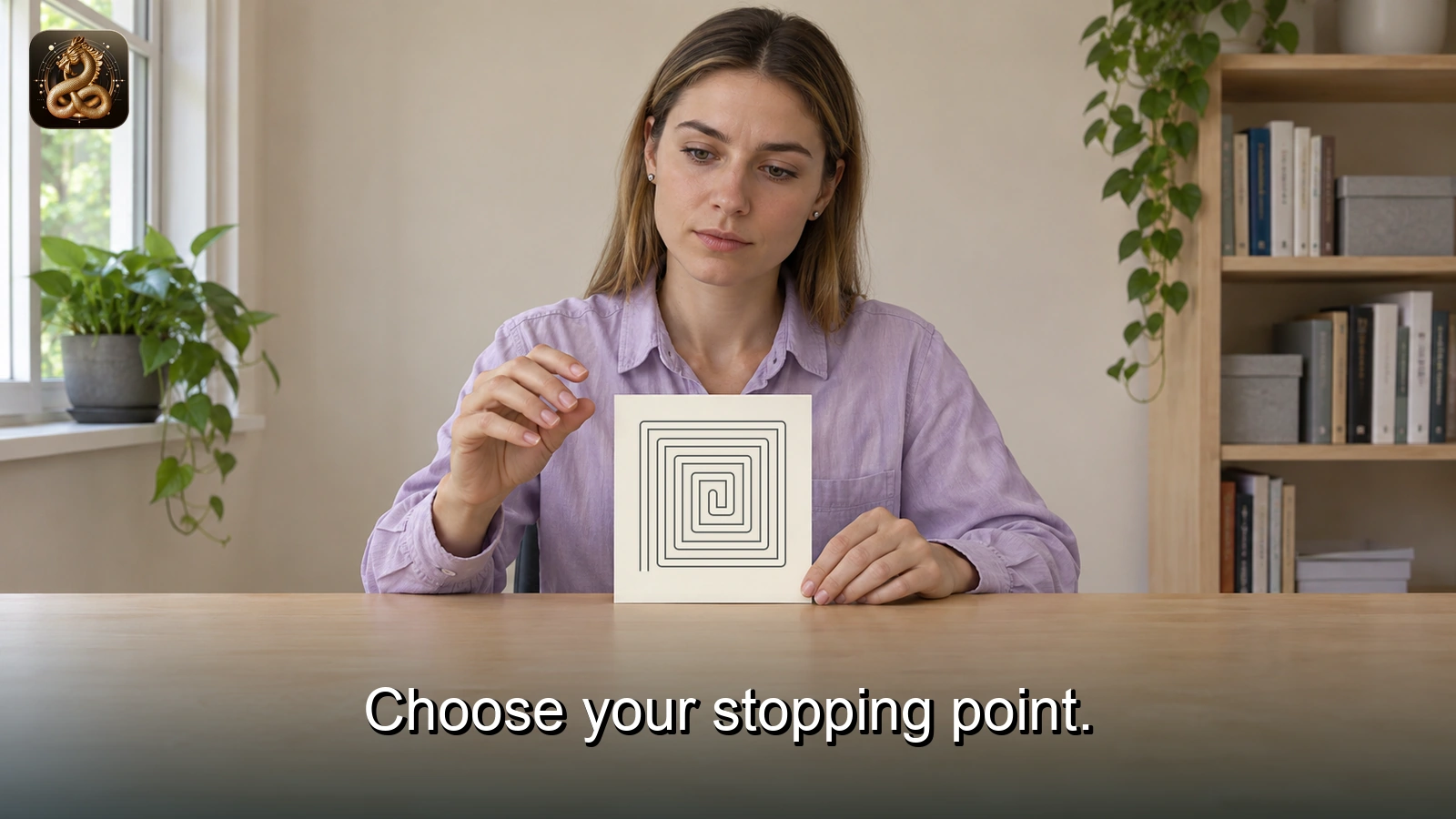
You might pause at a turn, after a short stretch or at the centre. A pause can give you time to rest your hand or simply decide what comes next. It does not need to represent releasing a concern, receiving an answer or achieving a particular state.
Choose a return or an ending
If you want to continue from the centre, follow the actual route back toward the entrance. Alternatively, lift your hand and finish. Set the resource down and attend to the room before beginning your next activity. Your chosen endpoint need not match the pattern’s entire length.
Choices for common practical interruptions
Use the table as a set of options, rather than a checklist of things to experience. A change is useful when it makes the activity clearer or more willing. You can finish without testing every alternative.
| What happens | An optional response | Keep this boundary |
|---|---|---|
| The passage looks unclear | Pause and inspect a clearer section. | Avoid guessing while tracing. |
| You lose your place | Lift your hand and locate the route. | Restarting is optional. |
| Your hand needs a rest | Stop or choose a shorter attempt. | Reaching the centre is not required. |
| A thought takes attention | Choose whether to return to the path. | A particular feeling is not a target. |
A fictional demonstration: a short route on paper
Ada is an invented adult who has a clear printed finger labyrinth on her desk. She wants a small attention activity with an external route. She looks over the resource, finds its entrance and checks that she can distinguish the passage from the printed boundaries.
She rests the page on the table and chooses to try the first few turns. Her forearm has support, and the page stays still. She follows with a finger without adding a count or changing her breathing. The task for this attempt is simply to notice following the passage.
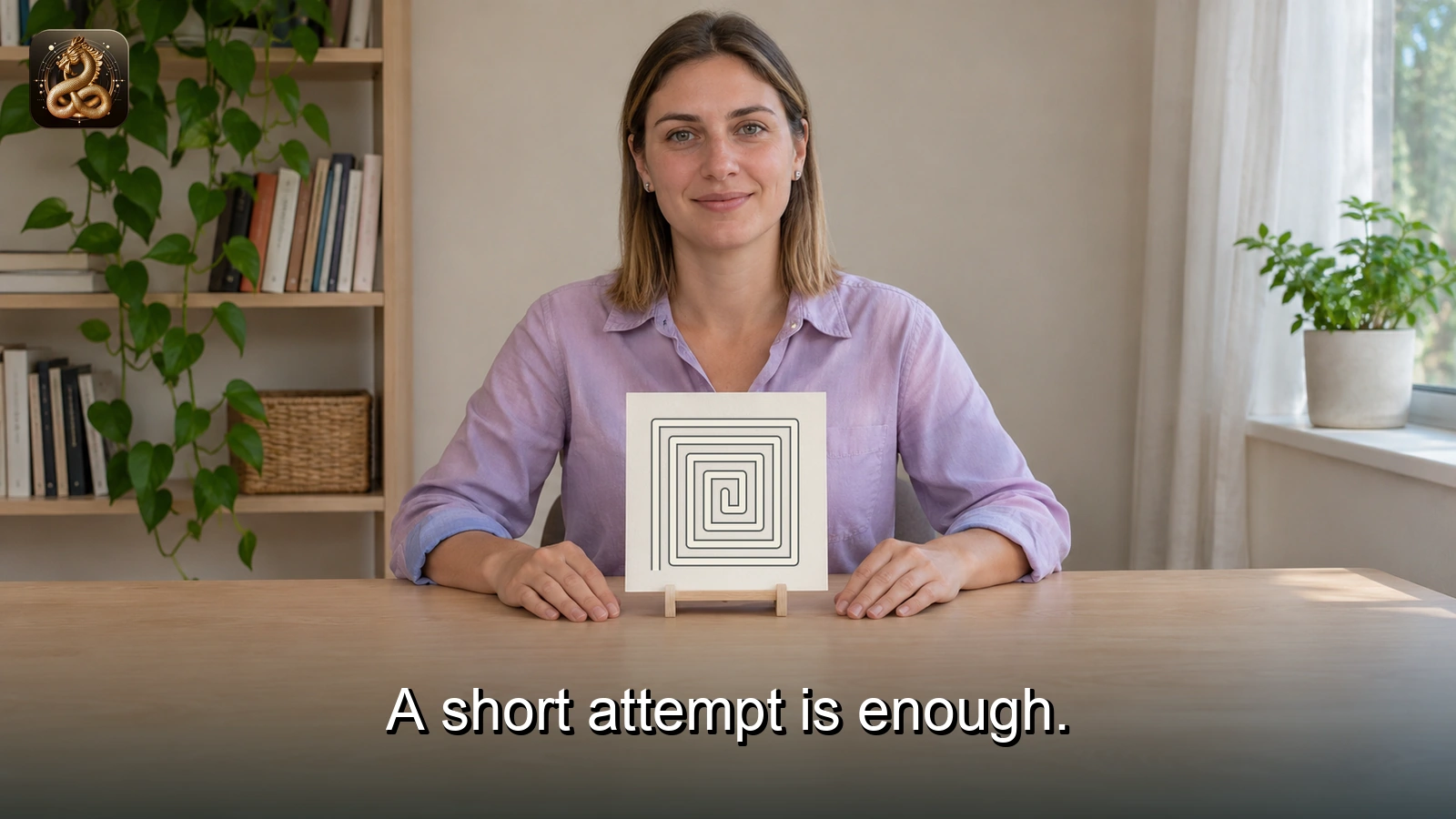
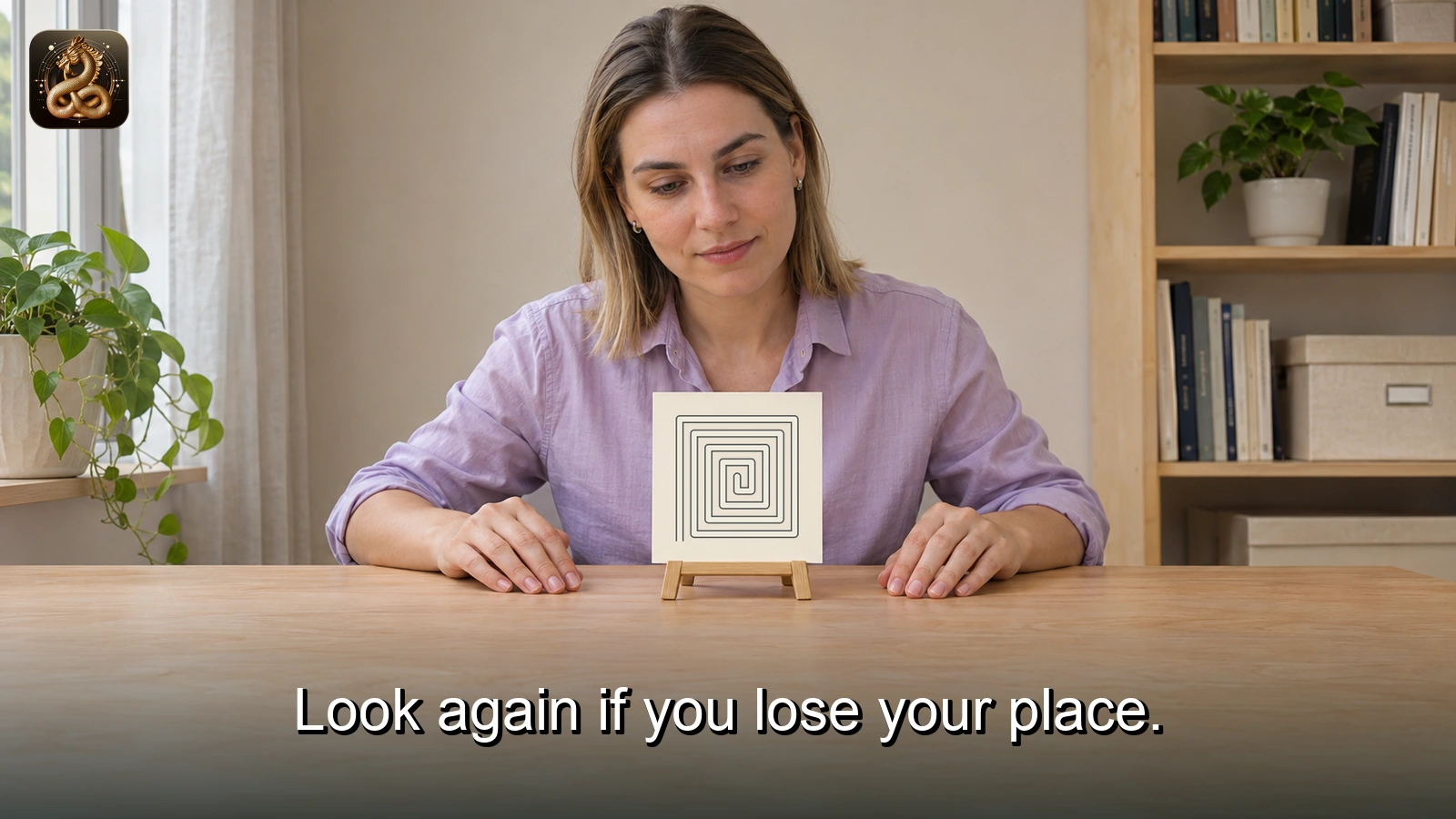
Partway through, Ada begins planning an errand and loses her place. She lifts her hand, looks at the route and decides whether she can locate where she stopped. She does not move across a boundary and pretend that the shortcut was the supplied path.
She finds the place and traces another short section. Then her hand has had enough of that position, so she finishes before the centre. She puts the sheet aside and returns to the errand. The partial route is the attempt she chose; no score or interpretation is required.
A simpler version would follow only the first clear stretch and stop. Another reader might use a different pattern, prefer a guided resource or choose no tracing at all. Ada’s fictional example demonstrates practical navigation and stopping, not a testimonial or evidence of improved wellbeing.
Compare this with a different contact practice
SoulFul GLO’s touch-based meditation guide describes noticing available contact with an ordinary object. Use that separate exercise when following a route is more structure than you want. The labyrinth adds a supplied passage to follow; neither task has to suit every occasion.
When attention leaves the path
Thoughts, sounds and plans may appear while you trace. When you notice, choose whether to return to the next part of the passage. You need not reconstruct when attention moved or make yourself start at the entrance again. A return can begin from a place you can identify now.
If searching for the correct route becomes frustrating, pause the movement and look at the pattern. A short visual check is different from continuing to move while guessing. You can choose a clearer design or finish rather than turning uncertainty into a demand for more concentration.
You may also discover that you prefer looking at the pattern to tracing it. Name that change if it matters to your purpose. An ordinary visual pause can be a different optional activity; it need not be presented as having completed the same tracing task.
Keep the centre free of a required conclusion
Reaching the centre can be a convenient place to pause because the route gives it a recognisable location. Some guided resources attach a particular reflective or spiritual meaning to that point. Read the actual invitation and retain your choice about participating.
For this suggested attention variation, the centre need not supply an insight. You can notice the page, rest your hand and decide whether to return. An ordinary or distracted experience does not need a more impressive explanation. The path has given the activity structure without deciding what you should feel.
Likewise, a return along the route does not prove that a worry has been resolved or that an intention will succeed. If a real problem needs information, action or appropriate support, handle that separately. The pattern cannot provide another person’s answer or assess a medical concern.
Retain one useful observation, if wanted
After finishing, a small practical note may help another choice. You could record that the print was easy to follow, that your hand preferred a shorter stretch or that looking suited you better than tracing. Those observations describe the arrangement you tried.
Choose whether to keep the pattern available. Repeating the activity is optional, and a more complicated design is not a required next level. One familiar route can remain useful when its actual task fits your interest. You can also let the paper return to a drawer.
Meditation is optional self-care, not treatment or a substitute for appropriate professional support. Stop if the activity causes discomfort or distress. This article cannot assess an individual reaction, and it offers no instruction to persist until a sensation or feeling changes.
Frequently asked questions
Do I have to reach the centre?
No. A short portion can be the whole attempt. Decide according to your interest, comfort and actual resource. You can lift your hand and finish without completing the inward or outward route.
Which hand should I use?
Use an arrangement that is comfortable and suitable for the resource. Particular providers may teach conventions within their own practice. This guide establishes no universal hand rule or claim that one hand has special access to intuition.
Can I follow a pattern on a screen?
Consider whether the route remains readable and whether touching the display moves or changes it. Use the tool’s actual controls, or choose a print or another activity. This article confirms no app-specific tracing feature.
Is a labyrinth the same as a maze?
In the modern distinction used by the cited provider, a labyrinth supplies a single path while a maze involves choices and dead ends. Inspect the actual design rather than assuming every circular pattern offers the same task.
Choose another practice when it fits better
Explore SoulFul GLO’s practice-selection guide for a broader choice among meditation, movement and listening. A finger labyrinth can remain one optional way to give attention an external route, with a stopping point you choose.