
An ordinary object can offer a small, concrete attention task: feel the surface that is actually touching your hand. You do not need a special stone, a spiritual meaning or a story about what the sensation should produce. The invitation is to notice a little contact, recognise when your attention wanders, and decide whether you want to return.
This is a suggested everyday practice, not a treatment or a test of sensitivity. A clean wooden ring, a familiar fabric square or another comfortable object you already own may be enough. Choose something without sharp edges, loose pieces or a surface that irritates your skin. If holding it is uncomfortable, leave it on a table, choose another focus, or skip the exercise.
Quick answer: what do you actually do?
Rest comfortably, let the object sit in your hand or against your fingertips, and notice one available detail such as pressure, smoothness or an edge. When a memory, judgement or plan takes over, acknowledge it and optionally return to the current contact. Finish by setting the object down and looking around before returning to your next activity. There is no required duration or feeling to achieve.
Choose an attention task, not an important object
It is easy to make this bigger than it needs to be. A shop description may call an object calming, a friend may have a favourite token, or you may associate a material with a particular meaning. Those associations can matter personally, but they do not establish what will happen when you hold it. This guide uses the object as a place to notice contact, without assigning it a healing property.
Begin with availability. Is there a plain object nearby that you can hold without gripping or fidgeting painfully? It need not be photogenic. A soft piece of cloth can work differently from a smooth wooden shape because each offers different contact. Neither is a higher level of practice, and you do not need to compare how much sensation each produces.
The NHS describes mindfulness in terms of noticing present experience, including ordinary sensory details. That broad description supports using everyday experience as an invitation to notice. The particular object exercise here is our practical suggestion; it is not an NHS prescription or evidence that this exact sequence produces a health benefit. Keep that distinction when deciding what you want from it.
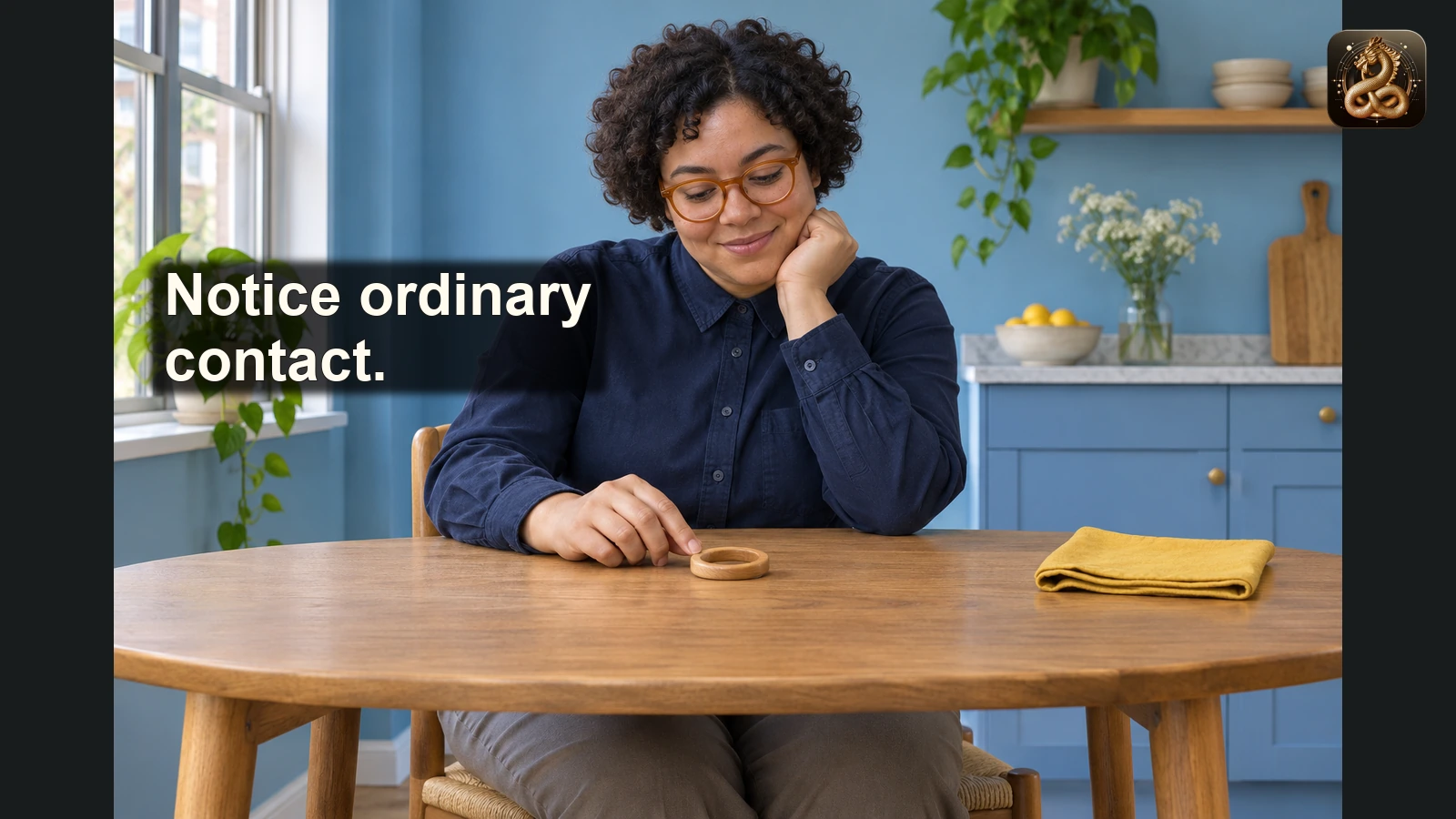
Make a small plan before you begin
Choose an ordinary supported place where your attention is not needed for a task that requires vigilance. Do not use this practice while driving, crossing a road, supervising a hazard or handling equipment. Put aside any object whose cleanliness, weight or condition you are uncertain about. Make the physical choice easy enough that the object itself does not become a problem to solve.
Decide what counts as enough for this attempt. You might notice a single edge and stop, or remain for a short unhurried period while it stays welcome. An optional timer can mark an ending, but there is no minimum dose hidden in this guide. If a timer makes you monitor the countdown, you can leave it out and finish at a natural pause.
Choose a stop option before starting. You can open your hand, place the object on the table and turn to the room. You do not need to wait until you feel settled. If you have a health concern involving touch, sensation or movement, use appropriate professional advice rather than treating this exercise as an assessment or trying to push through a worrying response.
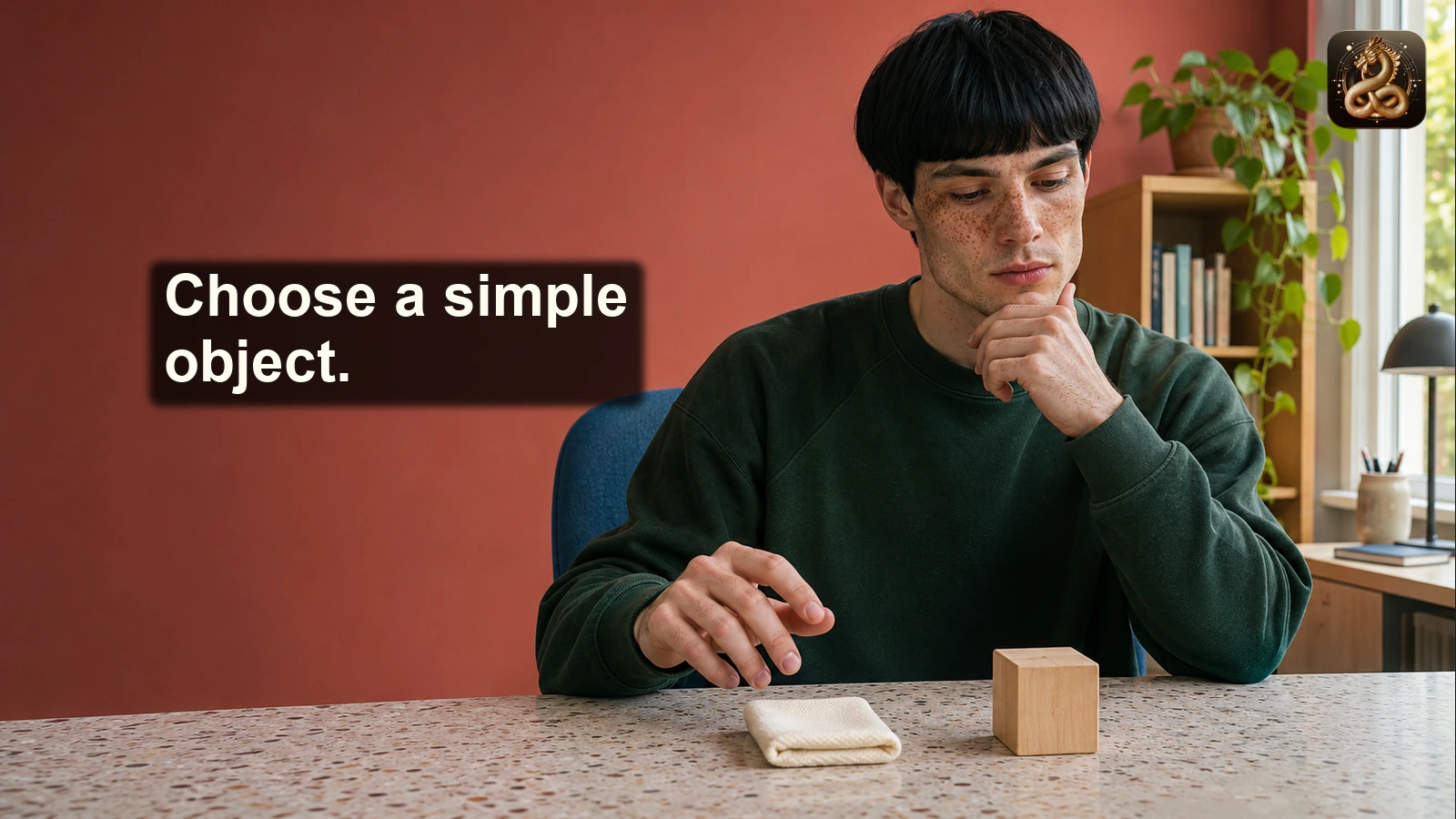
A step-by-step touch practice
First, settle the object where your hand can meet it without strain. Let your eyes remain open if that is easier. You can see what you are touching; closing your eyes is not a requirement. Allow your breathing to continue ordinarily rather than adding a counting or deep-breathing task to the exercise.
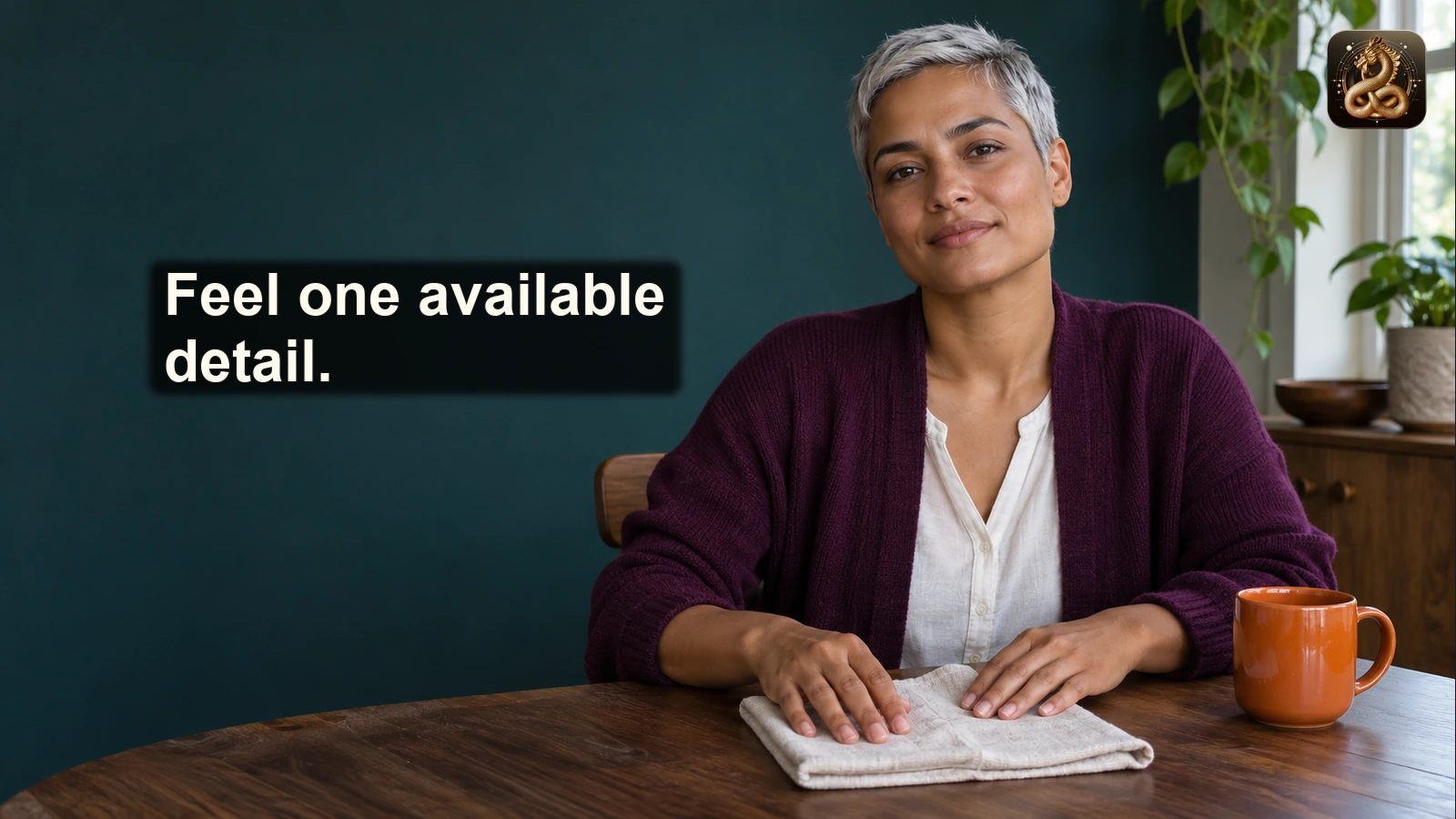
Second, select one detail that is already available. Perhaps you can feel a broad area of contact across your palm, a seam under one finger or the difference between the middle and edge. Use a simple private description if it helps: smooth here, firmer there, uncertain. You do not need to find a new detail every few seconds.
Third, notice the difference between contact and commentary. Thinking that the object looks expensive is different from feeling its weight. Remembering the person who gave it to you is different from the pressure against your fingers. Commentary is not a failure. Recognising that attention has moved is part of deciding what to notice next.
Fourth, return only if you want to. You could attend to the same contact again, shift gently to another part of the object, or finish. Avoid squeezing harder to manufacture a clearer sensation. More intensity does not make the observation more valid, and faint or uncertain contact does not need to be turned into an impressive description.
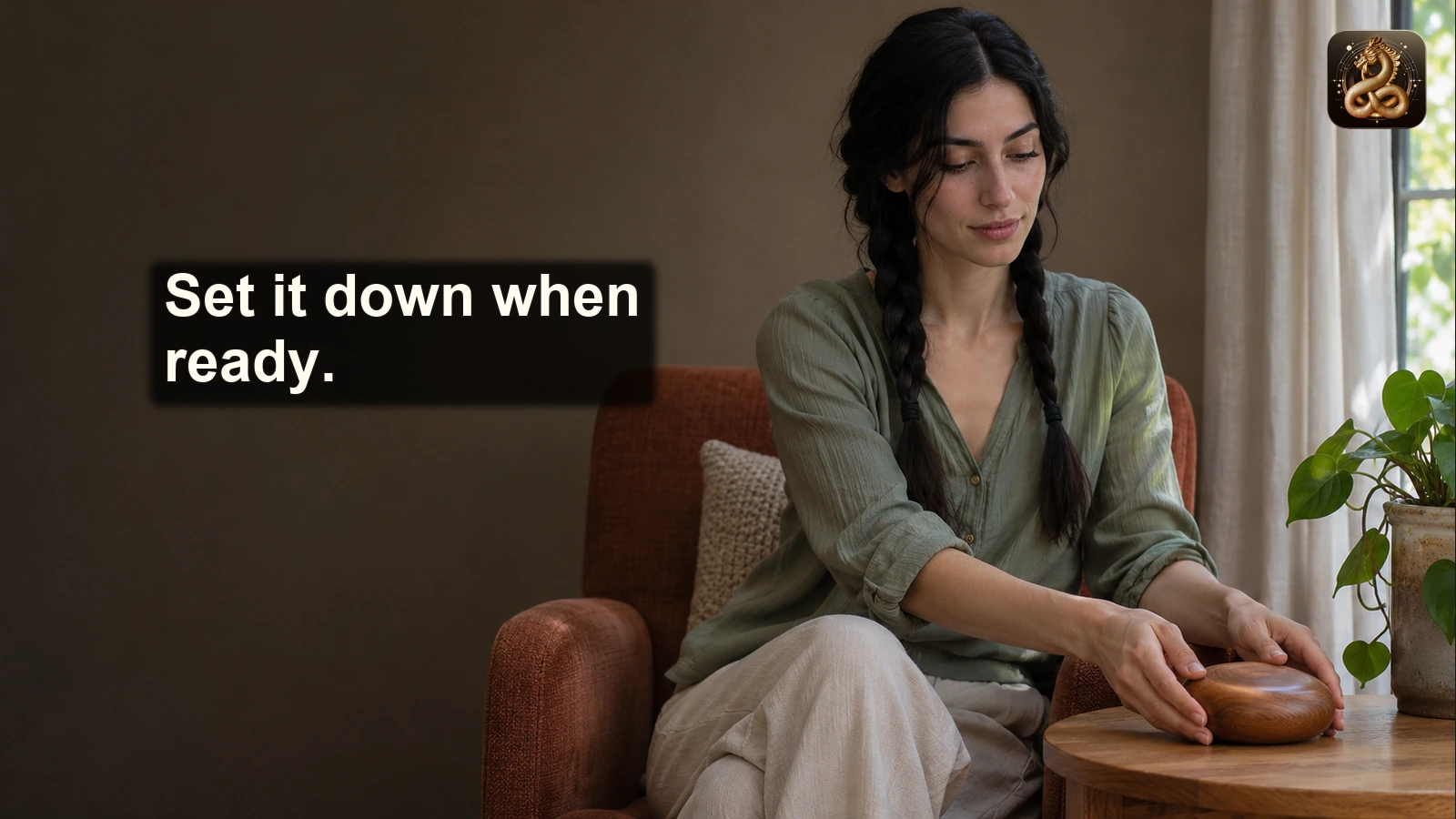
Finally, set the object down deliberately and reconnect with the setting. Notice where you put it, look around, and identify the next ordinary action you intend to take. Finishing can be as plain as standing up for a glass of water. There is no requirement to evaluate whether the practice changed your mood before moving on.
A fictional demonstration: Mina and a wooden ring
Mina is a fictional reader trying this at her kitchen table. She chooses a small wooden ring that is already in a drawer. Her first thought is that she should use a more meaningful object. She decides the question for today is simpler: can she willingly notice where this ordinary shape meets her hand?
She rests it across her open palm. At first she notices that one edge feels firmer than the flat part. Then she starts thinking about sanding a shelf. She does not label the shelf thought as bad or try to erase it. She recognises that it is a plan, then gives the contact another brief look and feel.
Mina cannot decide whether the wood feels cool. Instead of supplying the expected answer, she leaves that detail uncertain. She notices a small area of pressure near a finger, then decides she has had enough. She places the ring on the table, looks toward the window and goes back to preparing lunch. Nothing dramatic happens, and the attempt is still complete.
Another reader could dislike this task, feel distracted by the object or choose not to begin. Mina's example is a demonstration of choices, not a model response to copy. Its useful feature is that the observation stays modest: she distinguishes what she can currently notice from the meanings and outcomes she might otherwise add.

A practical observation table
The table separates a possible observation from the extra claim it does not establish. These are examples, not sensations you must find. Your own description can be shorter, different or uncertain. Use it as a reminder to stay with available experience rather than a checklist of successful meditation responses.
| Available observation | What it does not establish | Optional next choice |
|---|---|---|
| One edge feels firmer. | The object has a healing effect. | Notice the same edge or finish. |
| A thought about shopping appears. | Attention has failed. | Recognise the thought, then choose. |
| The temperature is uncertain. | You must search harder. | Leave it uncertain. |
| Holding it feels awkward. | You should endure the task. | Set it down or choose another focus. |
Adapt the practice without turning it into a challenge
If holding an object is awkward, rest it securely on a table and make light contact with a comfortable part of your hand. If that is not suitable, an eyes-open visual focus or an ordinary sound may be a better optional task. An adaptation is useful when it makes participation more understandable and willing, not when it helps you endure an unwanted exercise.
Some materials invite repetitive movement. You may turn a ring, fold cloth or rub a smooth surface. That is not automatically a problem, but decide which task you are choosing. You can notice the movement itself or allow the object to remain still. You do not need to suppress natural movement simply to resemble a meditation photograph.
If an object carries a difficult association, put it aside rather than making this a test of facing it. This article does not prescribe exposure or promise that familiarity will change your response. A neutral object is optional too. You can choose a different activity altogether without having to explain why a simple practice did not appeal.
For a different kind of attention task, read our guide to choosing a meditation anchor when breath focus feels uncomfortable. It discusses selecting a resource, rather than teaching this touch sequence. Use the distinction to make a practical choice instead of assuming every exercise called meditation has the same instructions.
What a realistic benefit might look like
A modest useful result could be having one clear task instead of trying to clear your entire mind. You might become more aware of the difference between a present sensation and a thought about it. You might also notice that you prefer another focus. These are possible experiences, not promised improvements in stress, sleep or concentration.
Do not convert a pleasant attempt into a new obligation. You can repeat the exercise because it fits a moment, change the object without creating a collection, or leave it alone. If you keep a note, a plain description such as noticed an edge, then stopped is enough. A score, streak or emotional before-and-after comparison is unnecessary.
Explore SoulFul GLO's meditation articles if you want to compare other clearly described practices. Choose by the actual instruction and your willingness today. An article label cannot determine which focus will be comfortable, and reading more is optional rather than another step required to complete this exercise.

Keep the practice separate from collecting evidence about yourself
You may be tempted to use the exercise to discover whether you are a calm person, good at mindfulness or sufficiently aware of your body. A few moments with an object cannot settle those questions. Even the same surface may be easier to notice on one day than another. The sensible task remains much smaller: choose an available point of contact and decide whether to continue paying attention to it.
If you later describe the attempt to someone, leave room for that limited scope. You could say that noticing a seam gave you something definite to attend to. You do not have to say it healed, reset or improved anything. Honest descriptions are useful because they help you choose whether to repeat an activity without turning an ordinary experience into a promise for somebody else.
You can also let the object return to ordinary use. A cloth can go back in a drawer and a wooden ring can sit on a shelf. There is no need to reserve it as an essential tool or keep it with you all day. The exercise ends when you choose to end it, and the rest of your day does not have to become a continuation of the same task.
Frequently asked questions
Do I need a meditation stone or another special object?
No. A safe, clean and comfortable ordinary object is enough for this suggested attention task. A personal meaning is optional and does not establish a special effect. Choose by practical contact and suitability rather than a product's promise.
What if I cannot feel the details described here?
Do not squeeze harder or invent a sensation. You can notice whatever contact is available, leave a detail uncertain, use another focus or stop. This article cannot assess changes in sensation; take health concerns to an appropriate professional.
Must I close my eyes and change my breathing?
No. You can keep your eyes open and let breathing continue ordinarily. This exercise adds neither a breath pattern nor a requirement to block out the room. Choose a setting where attending to an object is appropriate.
Is getting distracted a failed attempt?
No. Thoughts and plans can arise. Recognising that attention has moved gives you a choice to return to contact or finish. You do not need an uninterrupted period or a particular mood for the attempt to count as complete.