
A teacher says “find your drishti” while you are learning a yoga posture. You can see the demonstration, but you are unsure whether the instruction concerns your eyes, your head or the whole position. Trying to reproduce the photograph may add another question instead of answering the first.
Drishti is worth understanding in the context where it is taught. This guide helps you read a gaze cue, ask a useful question and recognise when you need a different instruction. It offers no posture sequence, eye exercise or promise about concentration, balance or health. Your next step can be a clarification rather than an attempt.
Quick answer
In yoga teaching, drishti refers to a gaze or focal point. Find out what the particular teacher intends for the posture you are learning, including whether the head stays where it is and what alternative is available. Keep blinking available. Avoid forcing your eyes toward an uncomfortable direction or copying a gaze from a still photograph. You can pause the activity and ask the teacher to explain or adapt it.
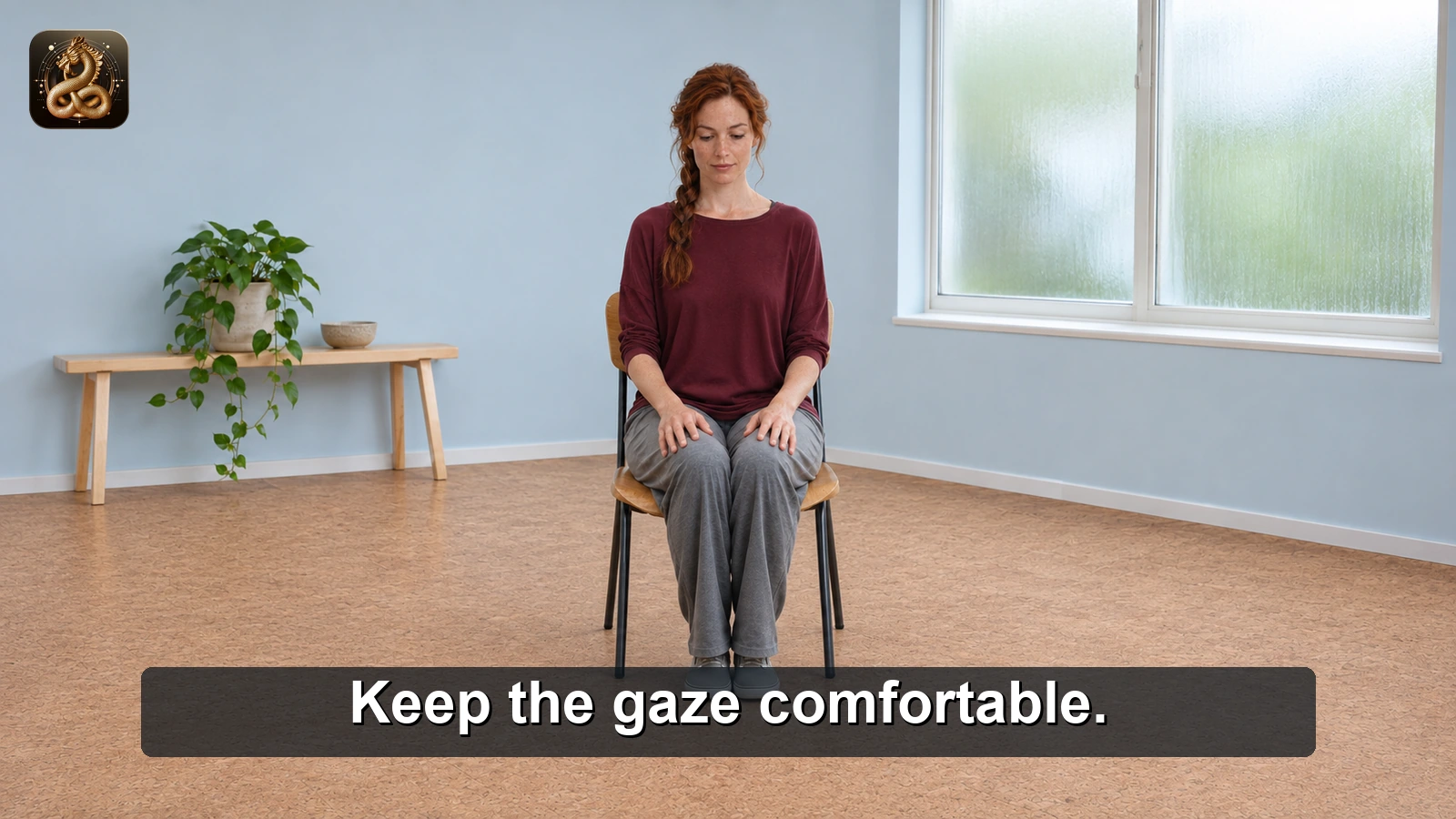
Learn the term in its teaching context
Yoga International's guide to drishti describes a focal point in yoga practice and presents several named gaze directions. That is a useful introduction to the vocabulary. A list of points does not tell you which instruction belongs to your particular posture or whether an illustrated variation is appropriate for you.
A teacher may explain a gaze point as part of an overall practice. Ask how it relates to the position currently being taught. You do not need to memorise a complete vocabulary list before participating in an introductory session. Understanding one actual cue is more useful than trying to apply every term at once.
Keep the source identifiable when taking notes. You might record the teacher's name, the class and the explanation you received. That helps you return to the same instruction later. An isolated phrase copied into a phone can lose the posture and context that made it understandable.
Treat broad claims about energy, emotion or physical effects separately. This article uses the source for a description of gaze vocabulary, without promising those outcomes. A traditional explanation can have meaning within its setting while a claim about treating a health condition requires a different kind of evidence.
Separate the gaze question from the posture question
Consider what is unclear. “Where am I looking?” is a different question from “Which direction is my head facing?” Both can matter in an actual yoga instruction. Changing one while guessing about the other may produce a position the teacher never intended.
Ask for the whole relationship: “For this version, where does my head remain, and what is the gaze cue?” The answer should make the task clearer in the position being taught. If you still cannot follow it comfortably, ask for a different version rather than adding more effort to the guess.
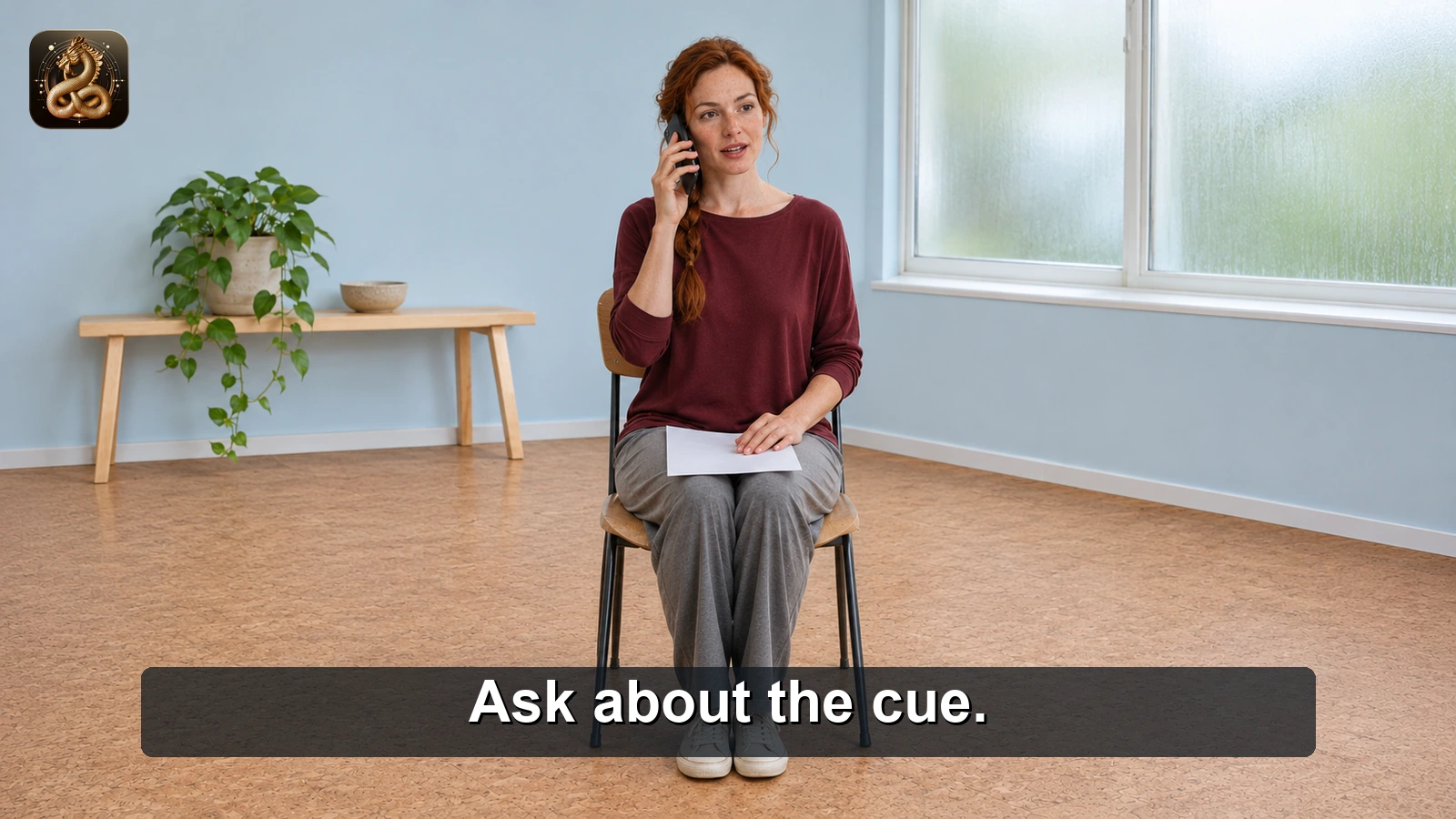
A screenshot cannot answer that question personally. It may show a moment, an experienced demonstrator or a different variation. Use it to identify what you want explained. Avoid treating a visible eye direction as permission to reproduce the rest of the posture without instruction.
If your question is about keeping your eyes open during an ordinary seated meditation, SoulFul GLO's eyes-open meditation guide addresses that separate setup. A yoga gaze cue can belong to a movement or posture context that needs its own explanation.
A small decision guide for an unclear cue
Use the table to choose a question, rather than to select a gaze direction for yourself. Each row concerns information that a teacher can clarify. You can use just the row matching your uncertainty; there is no requirement to complete the whole table during a class.
| Uncertainty | Question to ask | Useful next step |
|---|---|---|
| The word is unfamiliar | What does this cue mean in this version? | Listen to the whole explanation before attempting. |
| Eyes or head? | Does the head stay as demonstrated? | Ask for the relationship to be shown. |
| The direction feels awkward | What alternative can you offer? | Use a suitable option or leave it out. |
| The recording does not explain | Where can I get this clarified? | Choose another introduction if needed. |
Before the session: choose how you will get clarification
Read what the session offers. A live class may provide a way to ask questions, while a recording can only supply the explanation it already contains. Check the actual arrangement. A comment box, contact address or promise of an introduction should be examined for what help is really available.
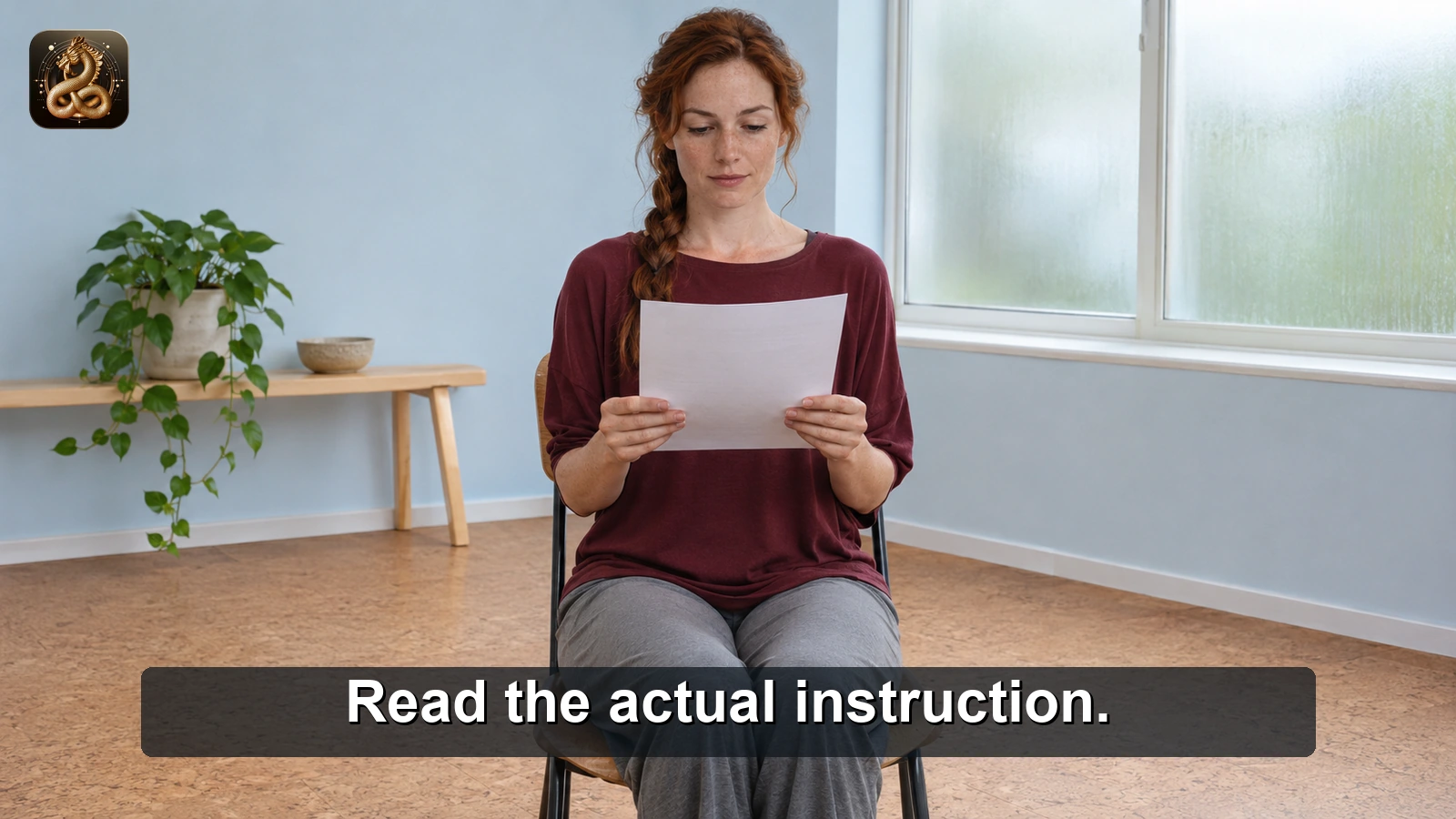
If you are new to a posture, an unexplained gaze word may be only one part of a larger learning gap. Ask whether the session introduces the posture itself and how adaptations are taught. A glossary can explain a term without replacing that introduction.
You can tell a teacher about an individual concern through an appropriate private route if you choose. This article cannot assess eye symptoms, vision, neck movement or personal suitability for exercise. Use appropriate professional advice for a health concern and suitable teaching for the activity.
For a simpler preparation, write down one sentence: “If the gaze cue is unclear, I will pause and ask.” You do not need a detailed observation sheet. The practical benefit of the sentence is that it supplies a next action before you are trying to understand several instructions together.
A step-by-step demonstration: clarifying one instruction
The following is a fictional exchange, written to show a useful conversation. It does not prescribe a particular posture or represent a real teacher's advice. Samira is an invented beginner attending a class in which questions are welcome. She hears a named gaze cue during an unfamiliar variation.
First, she stops trying to infer the instruction from other participants. Their positions may differ, and she cannot know which adaptations they have been given. She returns to the teacher's agreed pause option so that asking does not require continuing the uncertain movement.
Second, she names the uncertainty precisely: “I understand the position you demonstrated, but I do not understand what you mean by the gaze point in this version. Does my head stay as you showed it?” This gives the teacher something specific to explain.
Third, she listens for an actual explanation or alternative. In this fictional example, the teacher offers to demonstrate the whole instruction again and discuss an easier version. The guide leaves its physical details unspecified because a real answer belongs to a real posture and participant.
Fourth, Samira decides whether the explanation is clear enough to follow. She can ask again, use the offered alternative or sit out that part. Having asked a question does not oblige her to attempt the movement or agree that the first explanation solved everything.
Finally, she keeps a modest note afterward: which cue was unclear and how she obtained clarification. She does not score her gaze, time an unblinking stare or infer that the exchange improved her health. The useful outcome is a better understanding of what she was being asked to do.
The simpler option is to leave out the unfamiliar activity and ask after the class. Adapt the conversation to the teaching arrangement you actually have. If asking is unavailable or the response leaves you uncertain, choosing another introduction remains reasonable.
Keep blinking and comfort part of the conversation
A focal point can sound like a demand to keep the eyes motionless. Ask what the teacher intends rather than adopting that interpretation. This guide sets no target for how long to look, how rarely to blink or how intensely to concentrate.
If you notice yourself tensing your face to maintain the direction, pause and describe that practical difficulty. You do not need to push through discomfort to demonstrate interest. A clear instruction should still leave you able to explain that it feels unsuitable.
Eye discomfort or a worrying change in vision is a health question, not a meditation achievement to analyse here. Stop the attempt and seek appropriate advice for the concern. A blog article cannot establish its cause or determine what exercise is suitable afterward.
You can also find a direction unappealing without a medical problem. That preference is sufficient reason to ask for another option or skip the activity. The ability to choose matters even when a practice is described as gentle, traditional or suitable for beginners.
Explore the practice descriptions that interest you
Explore SoulFul GLO's guide to choosing a practice if you want to compare the activities you are interested in learning. Read each resource's actual description and choose an introduction with explanations you can follow. Keep individual suitability and questions about a posture on the appropriate teaching or professional advice route.
When different resources use different instructions
The cited Yoga International resource names several focal points, including the toes and the hand, and illustrates its discussion through particular postures. This gives a concrete reason to keep the gaze cue with its surrounding lesson. A reference to the hand in one passage and the toes in another need not be competing answers to the same question. First establish which posture and version each passage is describing, without trying either from this comparison.
For a reading-only comparison, make two short notes: the focal point named, and the position or lesson in which it appears. If a cropped image shows neither its caption nor the surrounding instruction, leave the second part blank. You have identified the missing context. Adding a head position remembered from another lesson would create a third instruction, rather than recover the one that the cropped image omitted.
You can learn the meaning of a term without adopting every associated practice. Reading about drishti might answer a vocabulary question and stop there. You need not convert curiosity into a daily gaze routine or purchase a course merely because the explanation is interesting.
If a recording repeatedly leaves the relationship unclear, replaying it harder may not solve the problem. Look for an introduction that explains the whole activity, seek clarification where available or leave that resource. An unanswered question is useful information about the resource's fit.
Notice what became clearer
After clarification, keep the answer at the level the teacher actually supplied. A useful note might say: this named gaze point belongs to the version demonstrated in today's class; the teacher explained how the eyes and head relate. Add the actual explanation in your own accurate words if you want it for reference. If that relationship was not explained, keep the question beside the cue instead of recording that the instruction is now clear.
Avoid making a single session into a general claim about your concentration or ability. A difficult cue can reflect unfamiliar language or an explanation that did not reach you. A clear cue can still feel inconvenient. Neither observation determines how every future yoga session will go.
A practical plan for next time might be to choose a class with more opportunities for questions. It might be to return to the same teacher for clarification. It might also be to leave this element alone. Your decision can follow the information you have rather than a demand to complete a particular progression.
Frequently asked questions
Does drishti always mean looking at the same point?
The cited teaching resource presents several gaze directions. Which cue belongs to an activity depends on the instruction and context. Ask the teacher about the actual posture or variation rather than applying one point to every practice.
Should I move my head to reach the gaze point?
Do not infer that from the word alone. Ask how the eyes, head and position relate in the version being taught. Pause if the answer remains unclear or uncomfortable; this article supplies no universal movement instruction.
Must I stare without blinking?
This guide sets no unblinking target. Keep blinking available and ask what the actual instruction means. Forcing an uncomfortable gaze is unnecessary. Symptoms or concerns about vision belong with appropriate professional advice.
Can reading about drishti be enough for now?
Yes. Learning vocabulary is a complete use of the article. You can leave the physical practice for suitable instruction, ask a question later or choose another activity. Curiosity does not create a requirement to attempt a posture.
Choose an understandable introduction
Return to SoulFul GLO's current yoga and meditation articles when you want another practical starting point. Choose an explanation that helps you understand the activity, keep questions specific and leave room to pause, adapt or stop. A familiar word becomes useful when its role in the actual practice is clear.