
You reach the studio after the advertised start. You can see people moving through the doorway, but you missed what the teacher said at the beginning. The immediate question is whether and how you can join this particular session. Watching the nearest person does not tell you what instruction or preparation you missed.
A useful arrival plan covers two things: the studio's entry arrangement and the teacher's current invitation. Permission to come through the door does not by itself give you the missing instruction. This guide concerns that practical gap. It offers no sequence to catch up on and cannot assess which movements are suitable for you.
Quick answer
Check the provider's late-arrival arrangement before class when possible. If delayed, use its stated contact route and give a realistic arrival estimate. On arrival, wait at the agreed place until you can get a clear instruction about entry and participation. Tell the teacher that you missed the beginning. Join only the activity you understand and have been invited to join; another session may be the workable choice.
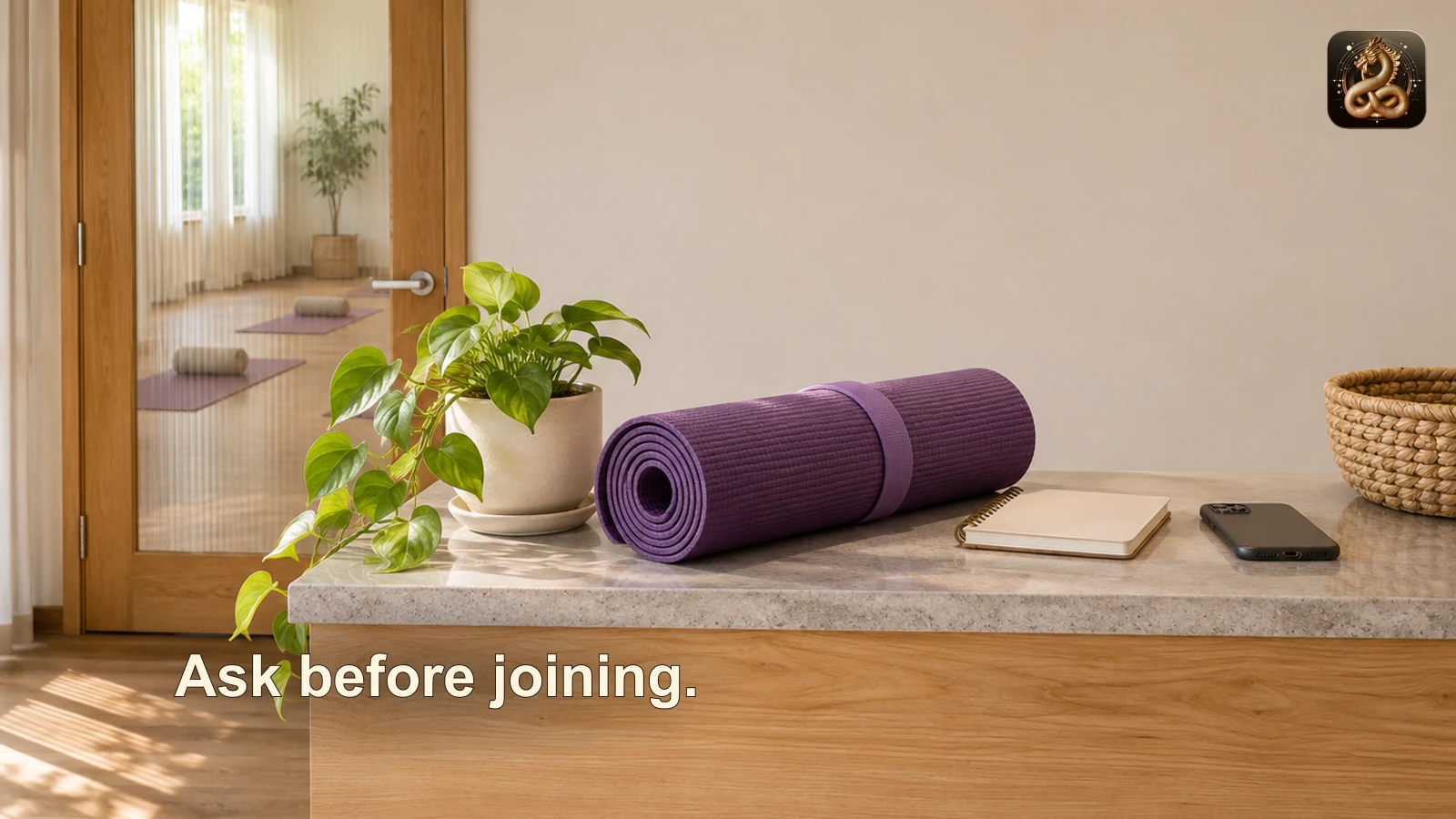
If there is no reply, do not interpret an unlocked door or another participant's wave as the teacher's answer. A staff member may help you reach the right person, or explain that entry has closed. Keep the unanswered part of the plan visible rather than improvising a way into a moving group.
Find out what late arrival means for this booking
Read the confirmation for the class date and time. A studio can have one arrangement for a drop-in class and another for a course or workshop. Look for the entry cutoff, where to wait, whether someone can answer messages during teaching, and what happens to the booking if you cannot join. Use the provider's actual terms for any cancellation or credit question.
Ask a narrow question if the description is unclear: “If I reach Tuesday's class after it starts, where should I wait, and who decides whether I can join?” You can ask before a delay happens. The answer can tell you whether the session is a realistic choice when your journey is unpredictable.
The reply may distinguish a short delay from missing an opening explanation. It may also say that the teacher cannot interrupt an activity to admit someone. These are arrangements to establish with that provider. This article does not supply a universal number of minutes that makes entry appropriate.
Send a useful message when you know you are delayed
If the provider accepts arrival messages, identify the booking and give the information needed for a decision. For example: “I'm booked for the 6:30 gentle class. My bus is delayed and I expect to reach reception around 6:40. Should I still come, and where should I wait?” Leave room for the answer to be that joining is no longer possible.
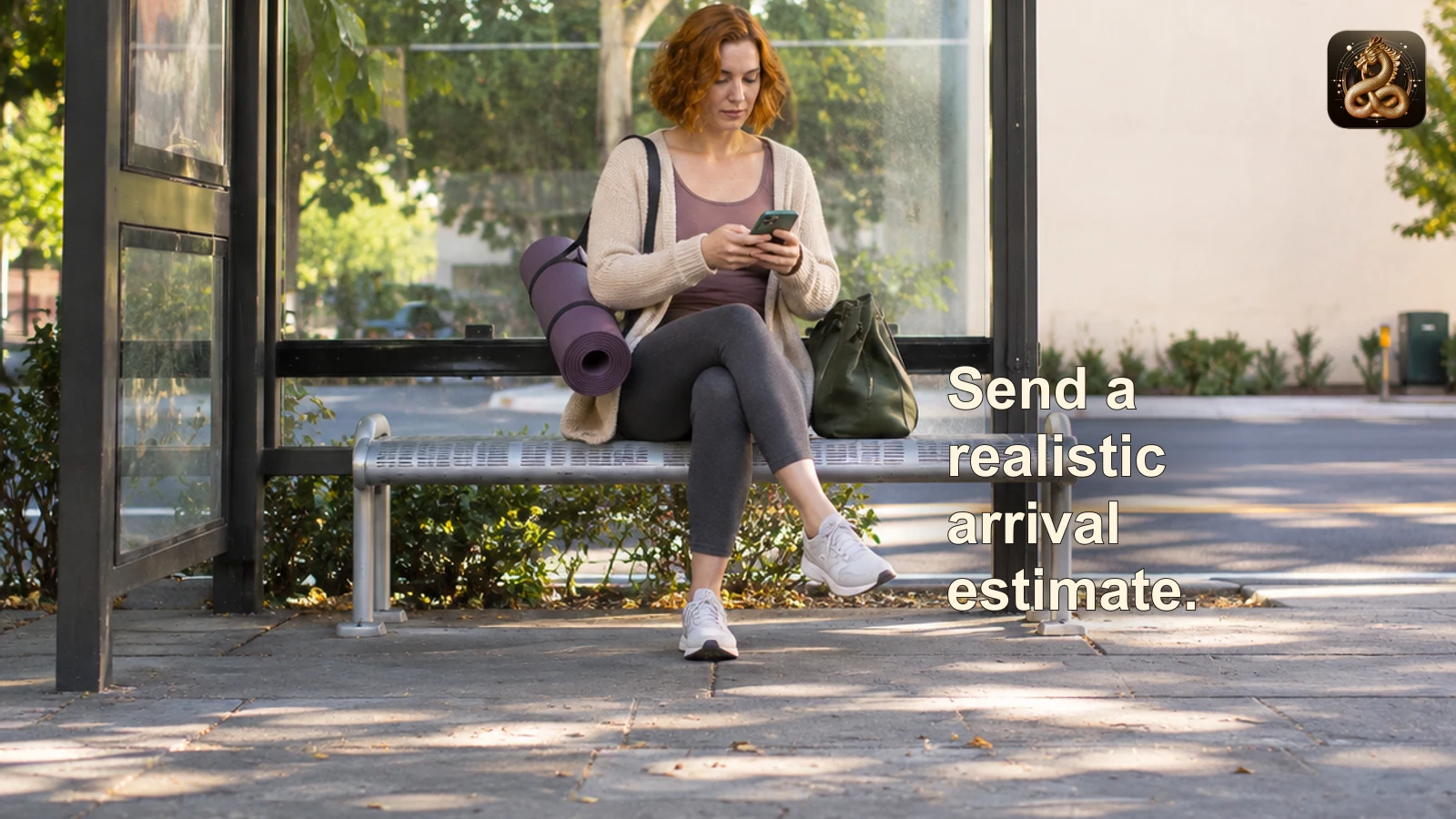
Use an estimate you can reasonably make. If you do not know when you will arrive, say that rather than promising a time to keep the place. A message sent during class may remain unread. Sending it establishes what you asked, not that a teacher saw it or agreed.
Avoid trying several channels in quick succession unless the provider has asked you to. One agreed contact route gives staff a clearer request to handle. You can make your own decision to postpone if the uncertainty makes the journey unhelpful. Keep a practical booking query separate from an explanation of every reason for the delay.
Pause at the agreed arrival point
When you arrive, locate the place the studio described. That might be reception or a waiting area outside the teaching room. Give staff the class name and tell them that you are late. If no arrival point was agreed, ask an available staff member how to reach the person responsible without entering the activity yourself.

Keep door access separate from class access. A building may remain open for another business or session. Likewise, a person leaving the room may hold the door out of courtesy without knowing the teacher's arrangement. You still need the relevant instruction for the class you are joining.
If nobody can answer, you can wait where permitted, use the stated contact method or leave. Do not follow someone through an unfamiliar restricted route to catch the group. Ordinary building and staff directions apply even when you can hear the class nearby.
For the separate problem of finding the correct door, read SoulFul GLO's guide to confirming a gentle yoga studio entrance. It helps you establish the route before travelling. Once you reach the room, the late-entry decision still belongs to the actual session.
Tell the teacher what you missed
When there is an appropriate chance to speak, a short description is enough: “I missed the opening ten minutes. Is there a way for me to join the current activity?” You are asking what instruction is available now, not asking the teacher to certify every activity from your arrival time onward.
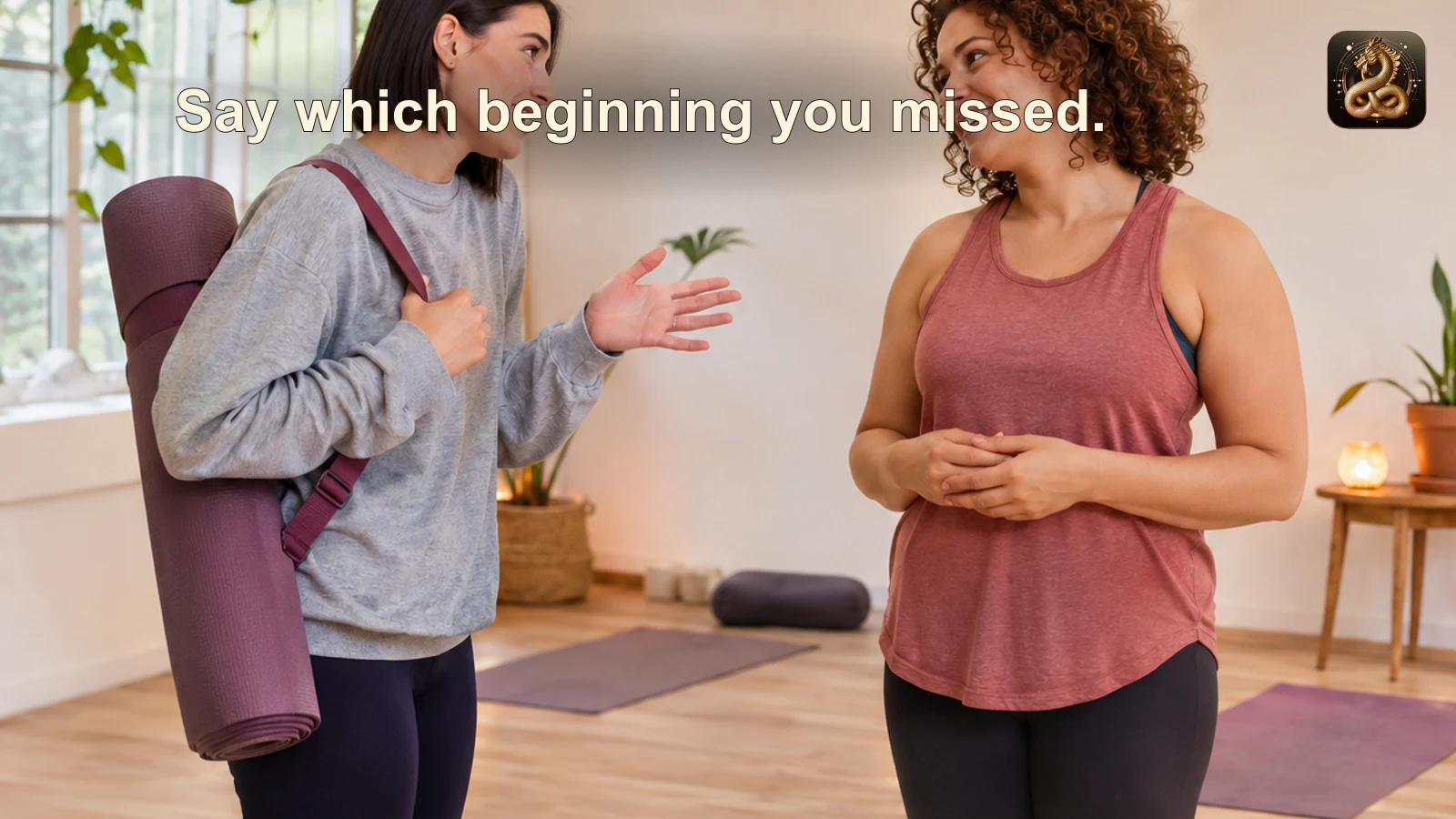
The teacher may ask you to wait, watch an explanation, begin a stated option or attend another class. Clarify the invitation you actually receive. “Join when you're ready” may still leave you unsure where to put your belongings or which part to follow. Ask the smallest question that resolves the immediate uncertainty.
Keep relevant individual concerns in the appropriate conversation. General arrival instructions do not replace qualified advice about a health condition or a physical limitation. You can decline participation even if entry is allowed. There is no need to demonstrate that you can match the group in order to justify being there.
Enter without creating a catch-up sequence
If invited into the room, use the route and space the teacher indicates. Put belongings where directed and leave paths clear. Allow an ongoing movement to finish before crossing an occupied space when the teacher asks you to wait. Do not move someone else's mat or equipment to make a place.
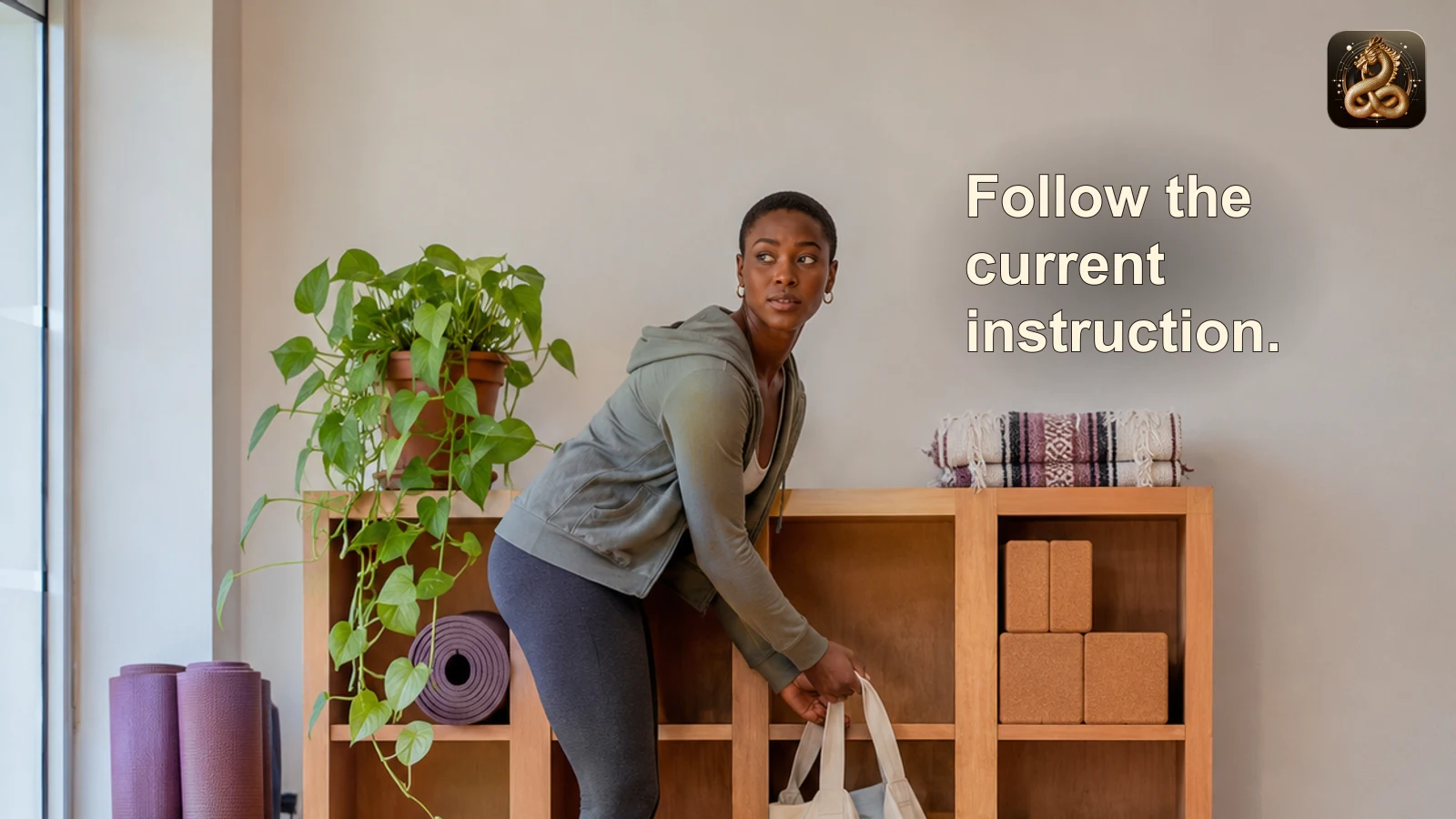
A familiar-looking activity can have a specific explanation you missed. Ask what you should follow now. Avoid adding movements you assume happened earlier, speeding through a remembered sequence, or copying a neighbouring participant's variation as your own introduction. The class's current instruction is more useful than a guess about its first minutes.
If you cannot understand the answer while the class continues, pause participation and ask at the next suitable opportunity. Waiting is an available practical choice when it is permitted by the room arrangement. It does not oblige you to remain until the end or turn observation into a substitute for instruction.
Two fictional arrivals with different outcomes
In this invented example, Leena is delayed on her way to an evening class. The confirmation says to report to reception after the start and wait for staff to check with the teacher. She sends the agreed message with her estimated arrival, then reaches reception before anyone replies.
Staff ask her to wait rather than go directly to the room. When the teacher can speak, Leena explains that she missed the opening. The teacher describes a current participation option and where to set up. Leena asks one question about the instruction before deciding to take that option. The example supplies no movement advice or claim about its suitability for another reader.
In a second fictional example, Sam arrives at a course session after an explanation on which the next activity depends. The teacher says that the missed material cannot be introduced while the group continues. Sam asks how to arrange a later session and leaves without attempting to reconstruct the opening from memory.
Neither outcome establishes a rule for other classes. The difference is the answer each person receives about the actual teaching. A welcoming conversation can lead to postponing, just as an open door can leave essential instruction unresolved. These characters are illustrations, not customer accounts or recommendations for a studio.
Decide what information would change your choice
A brief decision can rest on a few concrete questions. Can you enter through the confirmed route? Has the responsible person actually answered? Do you understand what you are invited to do now? Does the option fit your circumstances? If one essential answer is missing, keep it missing rather than treating the others as a complete yes.
Suppose staff confirm entry but cannot reach the teacher. You know where you may wait, but you do not yet know how to participate. Suppose the teacher explains an option but you no longer have enough time before another commitment. You can leave even though joining would have been permitted.
You may also prefer a complete introduction on another day. That preference does not require criticism of the class or an explanation of your ability. Tell the provider what you need for the booking decision and use its actual arrangements. Avoid promising yourself a benefit simply to make the hurried journey feel worthwhile.
Make the next booking easier to use
Afterward, note the specific arrangement that helped or remained unclear. You might record the reception location, the channel staff actually monitor, or a question to ask before another booking. Keep the class date with that note. An answer for one instructor or room may change when the timetable changes.
If a recurring travel delay makes arrival difficult, compare a different class time or format. Ask what is available rather than assuming a later class supplies identical teaching. A recording, a live online group and an in-person class provide different opportunities for questions. Choose using the actual offer and your current needs.
Avoid using one late arrival as a measure of your commitment to yoga. The practical issue is whether you can reach and follow the class you booked. You can adjust travel arrangements, choose another session or take a break from booking. The arrival problem does not have to become a personal verdict.
If you want to understand what you missed, ask whether an existing authorised recap or another introduction is available. Avoid recording the ongoing class or other participants as a way to reconstruct the opening. A recording could create a separate permission and privacy issue, and still omit the explanation you need. Use the teacher's actual support arrangement.
Frequently asked questions
Is there a standard grace period for yoga classes?
Use the provider's arrangement for your booking. A general guide cannot establish an entry cutoff or tell you which explanations can be missed. Ask what happens if you arrive after the start, including where to wait and who can answer during teaching.
Can I copy the person next to me until I catch up?
Their activity may reflect instructions or individual options you did not hear. Tell the teacher what you missed and ask what to follow now. If that cannot be clarified, postpone participation rather than building a catch-up sequence from observation.
What if the door is open but nobody answers?
An open door establishes access to a doorway, not permission or instruction for an ongoing class. Use the agreed waiting point and contact route. If there is no workable answer, you can leave and ask the provider about the booking later.
Should I explain why I was late?
Give the practical information needed: which class, when you arrived and what beginning you missed. You can share more if you want, but a detailed personal account is not needed to ask how joining works. Separate any booking-policy query from participation.
Check the teaching as well as the arrival
For another part of the booking decision, explore SoulFul GLO's guide to yoga class prerequisites and pace. A clear late-entry arrangement helps with arrival; understanding the class's actual teaching helps you decide whether to book it in the first place.