
A human voice becomes audible among the other sounds in a recording. It may seem to hum, hold a vowel or move through a short phrase. You notice yourself paying more attention to it than to the rest of the track. Before deciding whether to stay with the recording, you can ask a small question: is this a sound I want to follow today?
You can enjoy a vocal layer, prefer another part of the recording or choose a different resource. This guide concerns ordinary listening preferences during an optional meditation. It does not identify a performer, decode uncertain language or establish that a voice has hidden effects.
Quick answer: listen before deciding what to follow
If an audible vocal texture feels comfortable, you can use a sound you actually hear as an attention anchor. You need not sing along or give it a meaning. If you cannot tell whether a passage contains words, leave that uncertain and check the recording description. Choose another resource when the sound or the uncertainty does not suit you.
There is no requirement to like a voice because a recording is described as meditative. Your preference can differ from a creator's description and from another listener's response. Keep stopping available, including after a promising preview.
Notice the audible voice without assigning a story
Start with an observation you can make: a sustained vocal sound, a rising phrase or a repeated hum-like texture. It is fine to say that something sounds like a voice when its source is unclear. You can attend to an audible shape without deciding who made it or exactly how it was recorded.
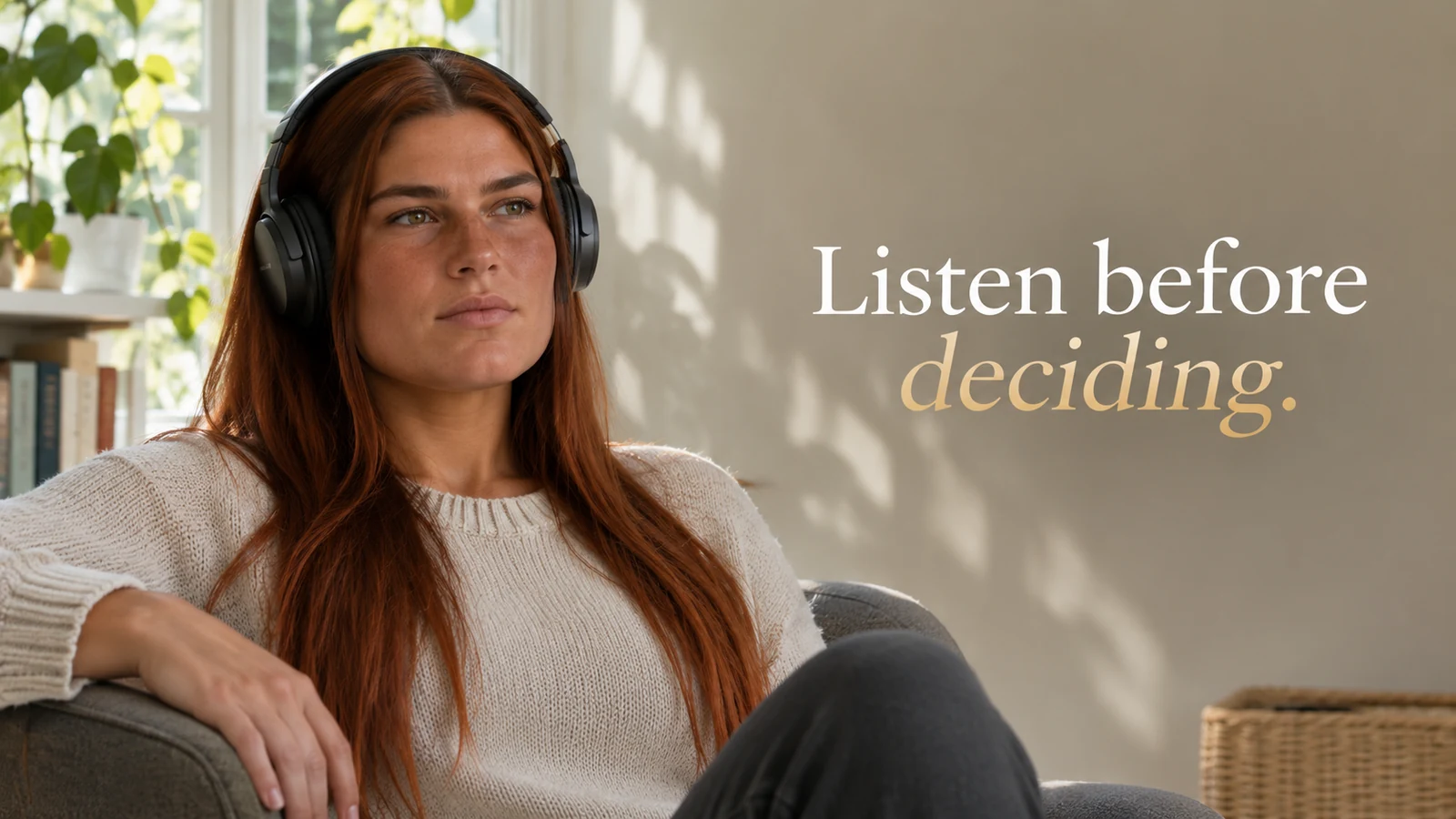
Wordless is a description of content, not a conclusion to draw from your own unfamiliarity. A phrase may contain language you do not recognise. If you are unsure, use a narrower description such as “a vocal-sounding layer whose words I cannot establish.” That keeps your listening observation separate from an attribution claim.
The difference need not turn the session into research. You may have enough information to choose whether to continue now. Questions about the performer, language or source can wait until you want to read the supplied notes. Choosing a different recording is also possible before those questions are settled.
A pleasant sound does not prove the source is wordless, and an unfamiliar one does not prove anything is concealed. Keep each conclusion attached to the information that supports it. This lets the meditation remain a modest listening activity rather than a test of recognition.
Preview a voice you are willing to hear
Use the actual preview and description where they are available. Notice whether the voice is prominent or occasional, alone or mixed with other audible sounds, steady or changing. These are practical features that may affect your preference. You do not need specialist terms to notice them.

If a short preview contains no voice, it may not represent every later passage. Look for a description of the full recording before assuming it stays instrumental. A provider may give limited information; you can acknowledge that limit and decide whether you want a more clearly described resource.
You may prefer a voice that is easy to distinguish, or one that remains a small part of a broader texture. You may prefer no vocal layer at all. Treat those as current choices. They do not establish that a particular style is more authentic, more advanced or better for health.
Preview at an appropriate level in a suitable setting. WHO's safe-listening guidance explains that sound level and listening duration matter. Avoid turning audio up to investigate a quiet syllable. Neither a soothing label nor an enjoyable sample establishes the exposure of a whole recording.
Leave uncertain words uncertain
When a passage resembles speech, check what the provider actually says about it. Does the description identify spoken text, singing, a language or an intentionally wordless vocal part? Keep the explanation attached to that recording, rather than assuming a general collection description accounts for every track.
If the information is unclear, you can ask a direct question: “Does this recording contain words, and where is the language or text described?” You do not need to offer a guessed translation first. A familiar-sounding fragment is insufficient to establish a complete phrase or its context.
Keep traditions and languages in their supplied context. Avoid calling an unfamiliar vocal practice a generic healing chant or inventing a cultural origin from how it sounds. The separate recording-credits guide covers reading attribution without guessing who or what you hear.
This is different from an audio product advertised as containing masked affirmations. That category raises a content-disclosure question about words that are not readily audible. The separate subliminal-affirmations guide addresses those questions. A clearly audible vocal texture does not, on its own, establish hidden speech or a subliminal claim.
Explore a clearly described listening resource
SoulFul GLO describes sound journeys among its offerings. Explore the current resource descriptions if you would like another listening option. This guide does not establish that a particular SoulFul GLO track contains wordless voices, nor that every recording shares the same vocal arrangement.
Follow a sound you can actually hear
If you choose to continue, let the task stay small. Notice the beginning or end of an audible vocal phrase, or listen to the whole comfortable passage without trying to name each part. When attention moves elsewhere, you can return to the sound that is present now.
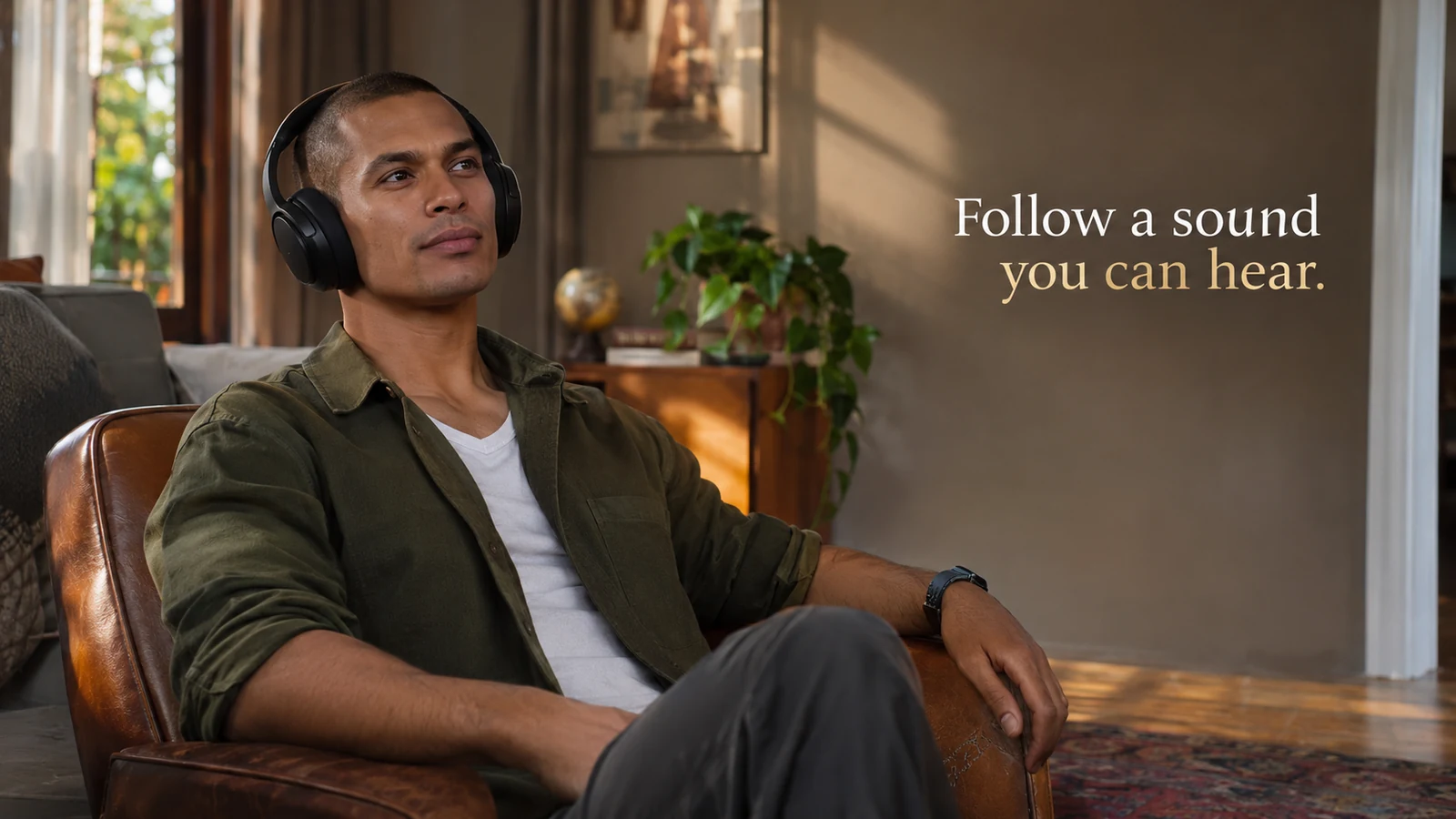
You need not match the singer's breath, hum along or produce the same note. Listening is a complete activity here. Ordinary comfortable breathing and a supported position leave fewer additional instructions to manage. Keep your eyes open if that suits the setting and the practice you chose.
You can also attend to a different clearly audible layer. Perhaps the vocal part remains in the background while a soft repeating sound is easier to follow. You are choosing a workable focus within the recording, rather than trying to remove or suppress everything else.
If shifting focus becomes an effort to ignore something you strongly dislike, stop and reconsider the resource. A different recording may fit more comfortably than an elaborate strategy for tolerating this one. Meditation does not require you to welcome every sound or complete every track you start.
Keep other formats available
A voice can be welcome on one occasion and distracting on another. You can choose an instrumental resource when its contents are actually described, understandable spoken guidance, or a practice that does not depend on recorded sound. The useful comparison is the task and arrangement you want now.

Spoken guidance supplies directions to follow; a wordless vocal layer does not automatically do that. Avoid searching for an instruction in every rise or fall of a sound. If you want a teacher to explain what to attend to, choose an understandable guided resource rather than asking an ambiguous texture to provide a lesson.
The same distinction works in reverse. If spoken instructions feel like more language than you want at that moment, a clearly described listening practice may fit. This is a preference comparison, not evidence that one format produces better relaxation, sleep or emotional outcomes.
NCCIH's meditation overview notes the variety of practices studied and limitations in the research. General findings do not verify an effect from a particular voice or recording. Keep these activities as optional self-care, and retain appropriate care or advice for health concerns.
Two fictional listening choices
In an invented example, Mara hears a sustained vocal part in a recording she has previewed. Its description identifies it as wordless singing. She likes the sound and notices the end of each phrase as a simple attention anchor. She does not try to imitate the singer or build an explanation for each note.
Mara sometimes follows a thought instead. When she notices, she returns to what is audible. Her session may feel ordinary. The example illustrates a practical use of sound, not a report from a customer or evidence that wordless singing changed her health.
In another fictional example, Dev hears a phrase that might contain words. The notes he finds do not explain the language or content. He would rather know what he is hearing before continuing, so he stops and chooses a clearly described alternative.
Dev does not label the original recording deceptive or claim it contains hidden messages. He has reached a personal decision with incomplete information. He can ask the provider later if he remains curious, but his listening break does not depend on obtaining an answer.
Finish without judging your taste
When you have heard enough, stop playback and put the device down. There is no need to replay a section until your response matches its description. You can leave the choice as simply as “I preferred another sound today,” without turning it into a rule about the style or its listeners.

A note about preference is optional. If useful, record only what you actually know: the resource and the part you liked or chose to avoid. Do not add a supposed language, instrument or emotional mechanism that you could not establish. A plain preference can guide a future choice without becoming a public claim.
If listening is uncomfortable, stop. If an experience becomes distressing or a symptom concerns you, seek appropriate qualified advice rather than using repeated playback as a test. An optional audio practice should not become a demand to persist through an unwelcome experience.
Returning to everyday activity can be the finish. You do not need a conclusion about why the voice appealed to you, a lesson about yourself or a compulsory written reflection. The immediate decision was whether this recording was something you wanted to follow.
Questions about audible vocal textures
Do I have to hum along?
No. This guide offers a listening task. You can follow an audible phrase without matching a note, copying a breath or making any sound yourself.
Is a voice wordless if I cannot understand it?
Your uncertainty does not establish that. Check supplied information about language or text, describe the passage narrowly and leave unknown wording unresolved. Choose another resource if that uncertainty does not suit you.
Can I focus on a different part of the recording?
Yes, if there is another comfortable audible sound you want to follow. If the vocal layer remains unwelcome, stopping or choosing another track may be simpler than trying to ignore it throughout.
Does disliking a vocal layer mean I am resisting meditation?
A listening preference does not establish that. You can choose a resource whose sound and instructions fit you without assigning a psychological explanation to the choice.
Choose another starting point if you want one
Explore SoulFul GLO's sound journey and guided meditation options through the current descriptions. Choose the listening task and content you are willing to follow, with room to pause, stop or try another format.