
The sound you remember might be the click of a gate, the rattle of a drawer or rain landing on a metal railing. You noticed it once, and it stayed with you. A voice journal gives you a place to describe that moment later, using your own words. You do not need a recording of the event or a convincing imitation of the sound.
Think of the entry as a brief account you can listen to later. Your voice can give the sound a setting and an order: what happened just before it, what you heard and what came next. If you never found out where the sound came from, leave that question open. An incomplete account can still preserve the detail that made you want to speak.
Quick answer
Choose one everyday sound you remember. When you have a private place to speak, say where you were, what the sound did and whether you know what made it. Mention one detail about the moment if it helps you recognise it later. Use your words rather than trying to capture the original scene, and leave other people’s conversations out. Stop when you have said what you wanted to remember.

Choose a small sound with an edge
A single sound gives you an easy beginning and ending. The click before a kettle starts or the brief scrape of a chair can be enough. If a whole room comes back to you at once, pick the sound you would recognise first if it happened again. The entry can stay with the door latch rather than trying to describe everyone who passed through the room.

Choose a sound you feel comfortable discussing. A private conversation may have been the most obvious sound in a room, but you can use a different detail instead. The soft fan starting above the conversation, for instance, gives you a moment to describe without repeating what someone said. If the setting itself is personal or identifying, leave it unnamed or choose another moment.
It helps to say how large the event was in ordinary language. “One quick tap” and “a low hum that went on while I waited” give a later listener different expectations. You can use those descriptions without checking a clock or deciding what exact instrument or machine was involved.
Say where you were in relation to it
Start with what you were doing when you noticed the sound. “I was putting the cups away” may tell you more later than the name of the room. Add your position if it matters: you were on the stairs, on the far side of a closed door, or close enough to feel the cupboard handle move. A simple setting makes it easier to distinguish this sound from other similar ones you remember.
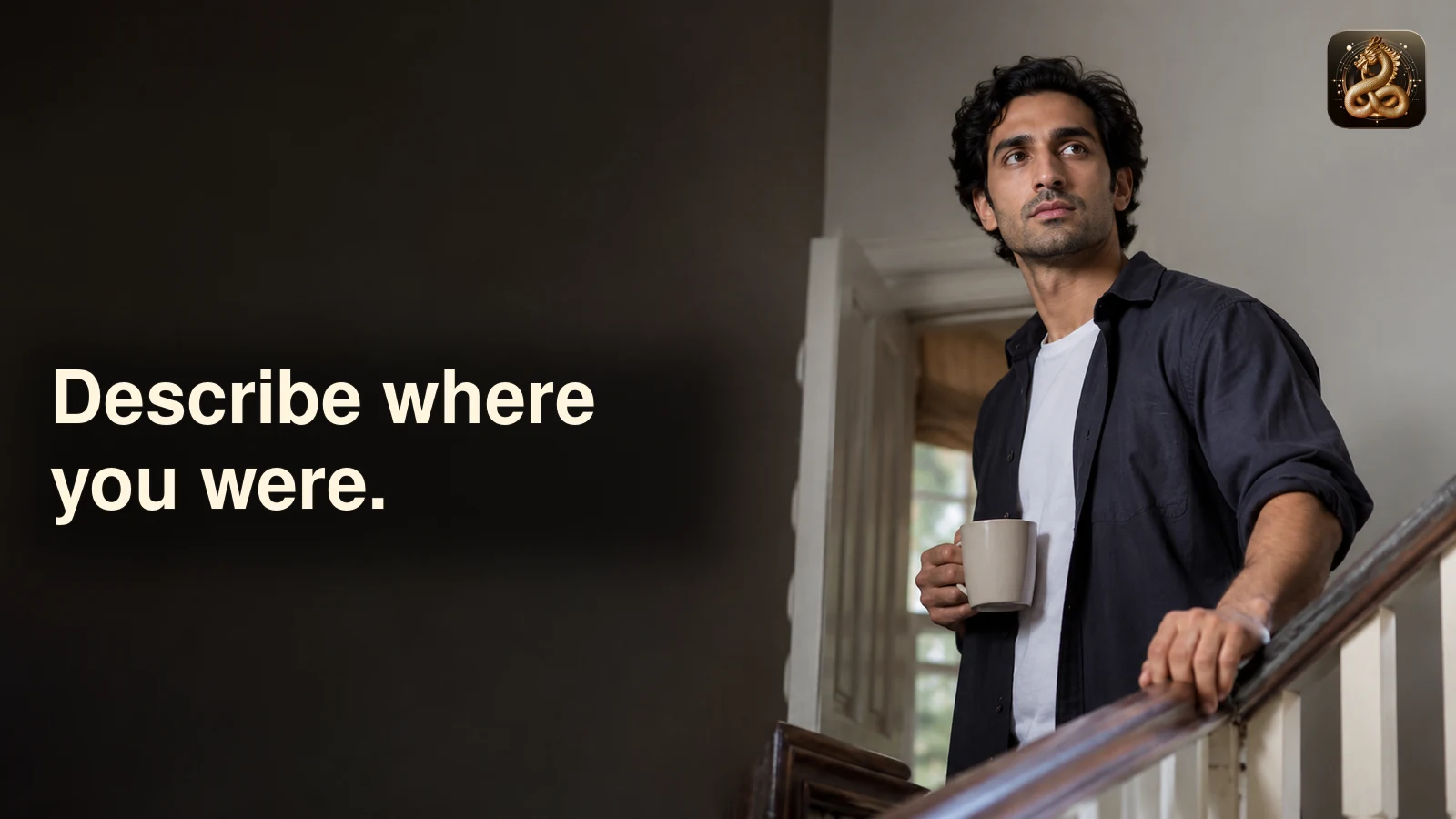
There is a difference between where you were and where you think the sound came from. You might have heard a scrape from the direction of the window without seeing what moved. “I was by the kitchen table, and it seemed to come from the window” leaves that distinction intact. The later entry still makes sense if you never learn what caused the noise.
Try one sentence that connects the setting to the sound. For example, “Just as I reached the landing, I heard two taps from somewhere below me.” That gives your account a useful point of view. If you cannot place the order as precisely as that, say “around the time I reached the landing.” There is no need to turn a rough memory into a timed sequence.
Describe what the sound did
Ask whether the sound began suddenly or became noticeable gradually. Did it repeat, change or stop? You might remember “a high click, then a softer one” rather than know what the clicks were. Plain comparisons can help, especially if they come naturally to you. You can describe a brief noise as “like a coin landing flat” while making clear that you did not see a coin.

If you heard a pattern, say it at a normal speaking pace. “Two quick knocks, a wait, then one more” is easier to recognise than an extended imitation. If you cannot remember the number, use “a few knocks” instead. An ordinary estimate can be more faithful than a precise count supplied afterwards.
Other sounds can help locate the one you picked. A steady fan may have continued behind a brief tap, or the tap may have been easier to hear because the fan had just stopped. Include one contrast if it adds something. If your description starts turning into a list of everything in the room, return to the sound you chose.
Keep the source as certain as it was
Some sounds come with a clear source. You watched a loose lid settle and heard it rattle. Others come with a reasonable guess. You heard a rattle near the cupboard and thought a lid might have shifted. Give those two situations different wording. A useful journal entry can say “I saw” or “I think” without stopping to prove anything.

If the cause matters to the memory, you can finish with one open sentence: “I still don’t know whether that came from the gate or the railing.” If it does not matter, leave the source out and keep the shape of the sound. “It ended with a faint second scrape” can be the detail you wanted all along.
A guess about a person deserves particular care. Hearing footsteps does not tell you why someone was in a hurry, even if the pace sounded quick. You can describe the rhythm without assigning a motive. If the steps remind you of something, speak about your own association and mark it as such.
For a different spoken prompt, try SoulFul GLO’s everyday-object voice journal guide. That exercise starts with something you can look at or hold. A sound you heard once calls for a different sort of detail: how it unfolded and what you can recall about the setting.
Give the entry a workable ending
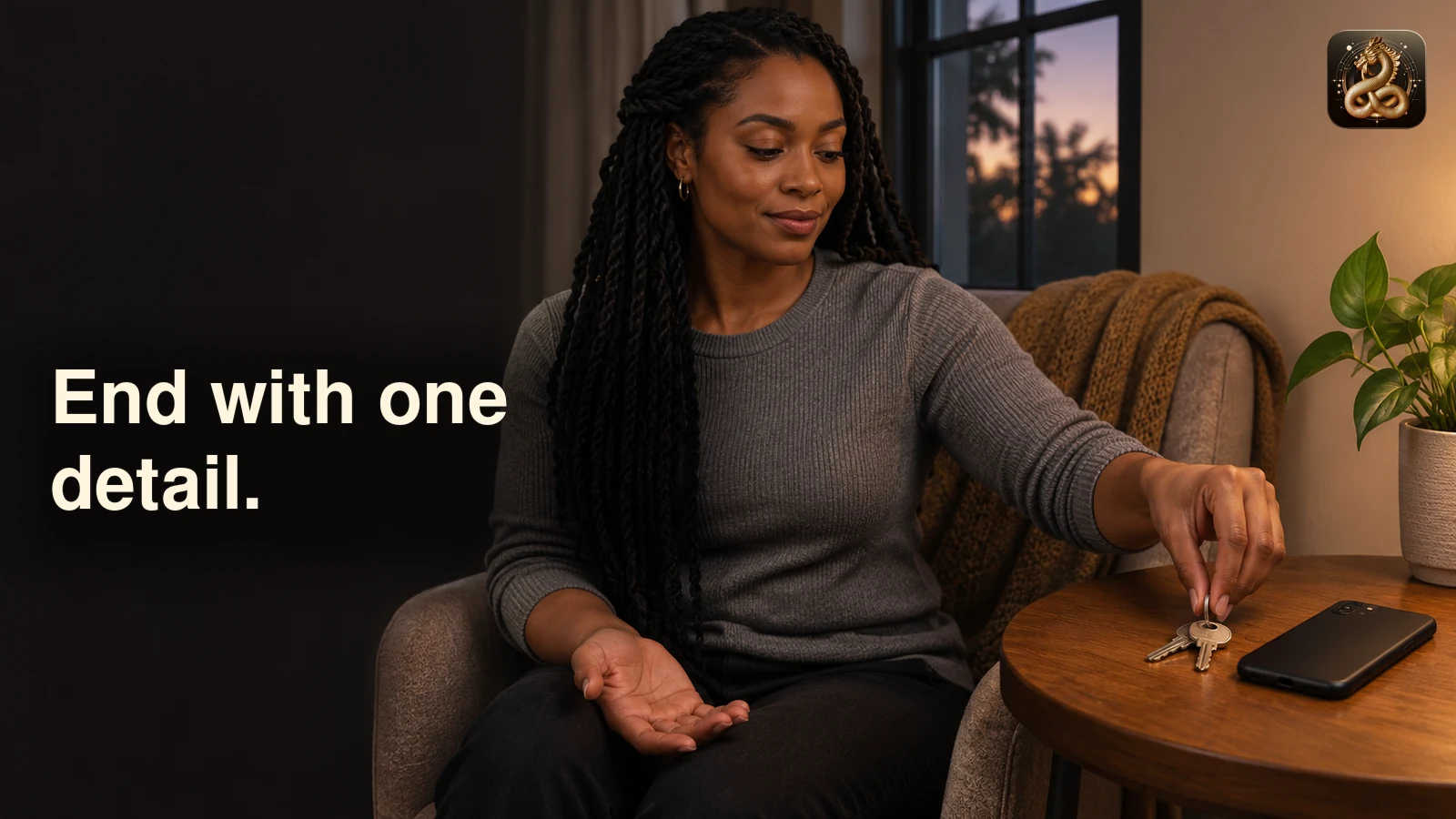
Before you stop, say why the detail made it into the entry, if you know. “It was the only sound I noticed while I stood there” is enough. You may also end with the last sound or action in the sequence. You do not need to explain what the moment reveals about your day.
Here is one fictional example: “I had just shut the back door. The rain was already falling, but the first drop I noticed struck the hollow railing beside me. There was a sharp ping, then a gap, then several softer pings. I could see the water collect on the top, though I couldn’t see exactly where each drop landed. I remember it because I stopped with my keys still in my hand.” The account stays with a short moment and distinguishes what was seen from what was heard.
Here is another: “I was putting a plate on the shelf when I heard a little scrape somewhere behind me. There was a second scrape, much shorter. I thought a chair had moved, but I never looked. A minute later I had forgotten what I was going to get from the cupboard. The scrape is the bit I remember.” There is no need to resolve what happened in the room to make the entry usable.
If a first attempt runs long, you can simply stop. You can also begin a fresh short entry if you prefer to hear the moment on its own. Keep whichever version suits the purpose you had for it. You are making a personal record, so there is no requirement to retain every take or to find a final, polished account.
Listen back only if it serves the entry
You can finish without reviewing the recording. If you do listen later, notice whether the first sentence brings you to the right moment. When the setting is vague, one extra detail might help more than a second description of the sound. “I was at the back door with the keys in my hand” could identify the moment even if you cannot add anything about the ping.
Think about what a future listen would need. You already know which morning you meant today, but in a few weeks “this morning” may not distinguish it from another entry. You might say the date or put it beside the entry if that fits your ordinary journal setup. There is no need to add a location name, a person’s identity or anything you would prefer to keep out of the recording.
The point of listening back is to see whether the account still works for you. It does not confirm that every detail happened in exactly the order you remember.
Frequently asked questions
What if the sound is hard to describe?
Start with timing, distance or a single contrast. “It came from farther away than the fan” may be enough. You can also say that you cannot find a good comparison. That leaves room for an awkward, unfamiliar sound without making you borrow a description that does not fit.
Do I have to say the sound out loud?
No. You can say “a soft pop followed by a hiss” or “a short scrape that faded quickly.” An imitation is optional if you find it useful, but the entry works with words alone. The purpose is to recall a moment, not to recreate an audio sample.
Can I use music I heard earlier?
You can describe a brief memory of hearing music in your own words. Keep the original recording, quoted lyrics and any other person’s audible voice out of this exercise. You might speak about when you noticed a change in the music or where you were when it began, without trying to identify or reproduce it.
What if I remember the scene more clearly than the sound?
Say that. Perhaps you recall holding the door open, but you are unsure whether the sound was a click or a knock. That distinction is useful information. If the visual scene is what you wanted to keep, an ordinary journal entry about the scene may suit you better than this prompt.
Can I add something I learn the next day?
Yes. If it matters to you, date the later detail and distinguish it from what you remembered at the time. “I checked the gate the next morning and heard something similar” leaves the first account in place. It also leaves open whether you heard the same thing both times.
Try it once with a sound already in mind
Pick a sound that belongs to a small, ordinary moment. In a private place, say what you were doing, what the sound did and what you are unsure about. End when you can recognise the moment from your own description. If speaking this way feels useful, explore another short voice-journal prompt when you next feel like making an entry.