
You reach the end of a day and remember being occupied, but the phrase “I did nothing” is what comes to mind. The day may have contained cooking, travel, waiting, paid work, conversation and a few unplanned intervals. A private time-use journal gives those activities a place on the page without requiring you to rank them by output.
This is an optional reflection on one day or part of a day. It is not a work log, a billing record, a sleep assessment or a method for proving how efficiently you live. You can keep the entry approximate and incomplete. Its value for this exercise is the account you want to understand, rather than a total that makes every minute appear settled.
Quick answer
Choose a bounded part of a day, describe the activities you remember in broad order and mark approximate or unknown times honestly. Note simultaneous activities without counting the same interval twice. Then choose one observation about how the time was experienced: wanted, necessary, interrupted, enjoyable or simply unclear. You can finish there without making a new schedule.
Decide what the page is for
Give the entry a question small enough to answer. “What occupied the afternoon between lunch and leaving home?” is different from “Am I using my life properly?” The first invites a description. The second can ask far more of a page than one ordinary day can establish.

You might want to remember time spent helping somebody, understand why a familiar errand felt crowded or notice which optional activity you actually enjoyed. Choose the purpose before selecting categories. A record meant to retain a conversation does not need the same detail as one meant to describe travel and waiting.
Leave high-stakes records to the arrangements appropriate for them. An informal journal may not contain the precision required for pay, care documentation, legal evidence or a professional assessment. You can reflect on an experience while keeping any necessary formal record separate and accurate.
Choose a span you can reasonably describe
A whole day is optional. You could use the morning before work, a free afternoon or the period between arriving home and supper. State the beginning and ending in terms you know. “After the appointment until dinner” is useful even when the exact times are uncertain.
If the day is already over, use what you remember and any ordinary record you already want to consult. There is no need to search every message, reconstruct a route or inspect device history merely to complete this exercise. You can write “I do not remember this interval clearly” and keep going.
You may prefer to make a few brief notes during a future day. Keep that optional and proportionate. Recording should not become an interruption you resent or a reason to ignore the activity itself. If continual tracking makes the day feel monitored, stop and return to a shorter retrospective account.
Name activities before judging the day
Begin with ordinary verbs: prepared lunch, waited for a bus, answered messages, read, talked, rested. Describing an activity gives you something more specific than “busy” or “unproductive.” You can add your evaluation later if it serves the question you chose.

Include activities that did not produce an object or a finished task. Waiting, listening to somebody and resting can occupy time. The page does not need to justify them before they can appear. Nor does naming an activity establish that it was necessary, pleasant or freely chosen.
Use descriptions at a similar scale. “Prepared lunch” beside “entire household management” makes the entries difficult to compare because one is an occasion and the other is a broad responsibility. Break down only what matters for your reflection, and allow the rest to remain a plain summary.
Keep estimates and gaps visible
If you remember the start time from a clock, say so when the distinction matters. If you are guessing the length of a conversation, call it an estimate. You can use a phrase such as “part of the afternoon” instead of assigning a number that feels more exact than your information supports.

Avoid forcing the intervals to add up to a full day. An unrecorded gap is different from time spent doing nothing. It may contain several activities you have not retained. Leave a visible gap rather than inventing a likely activity or adjusting other estimates until the total looks complete.
If you want totals for your own interest, check what is being added. Approximate intervals can remain approximate after addition. A neat sum does not improve the original estimates. For this reflection, it may be more useful to notice the sequence than to calculate a daily percentage.
The Office for National Statistics' Time Use Study distinguishes main and secondary activities and explains that secondary activities can overlap. That is context for a recording distinction, not validation of this personal exercise. Your private journal is not a representative survey and does not need to reproduce its categories, timings or data collection rules.
Give simultaneous activities a shared interval
Suppose you folded clothes while talking with a friend. You can describe both activities beside the same span. If you later total the time, those activities did not create two separate hours merely because each has a name. Keep the overlap visible rather than quietly adding it twice.
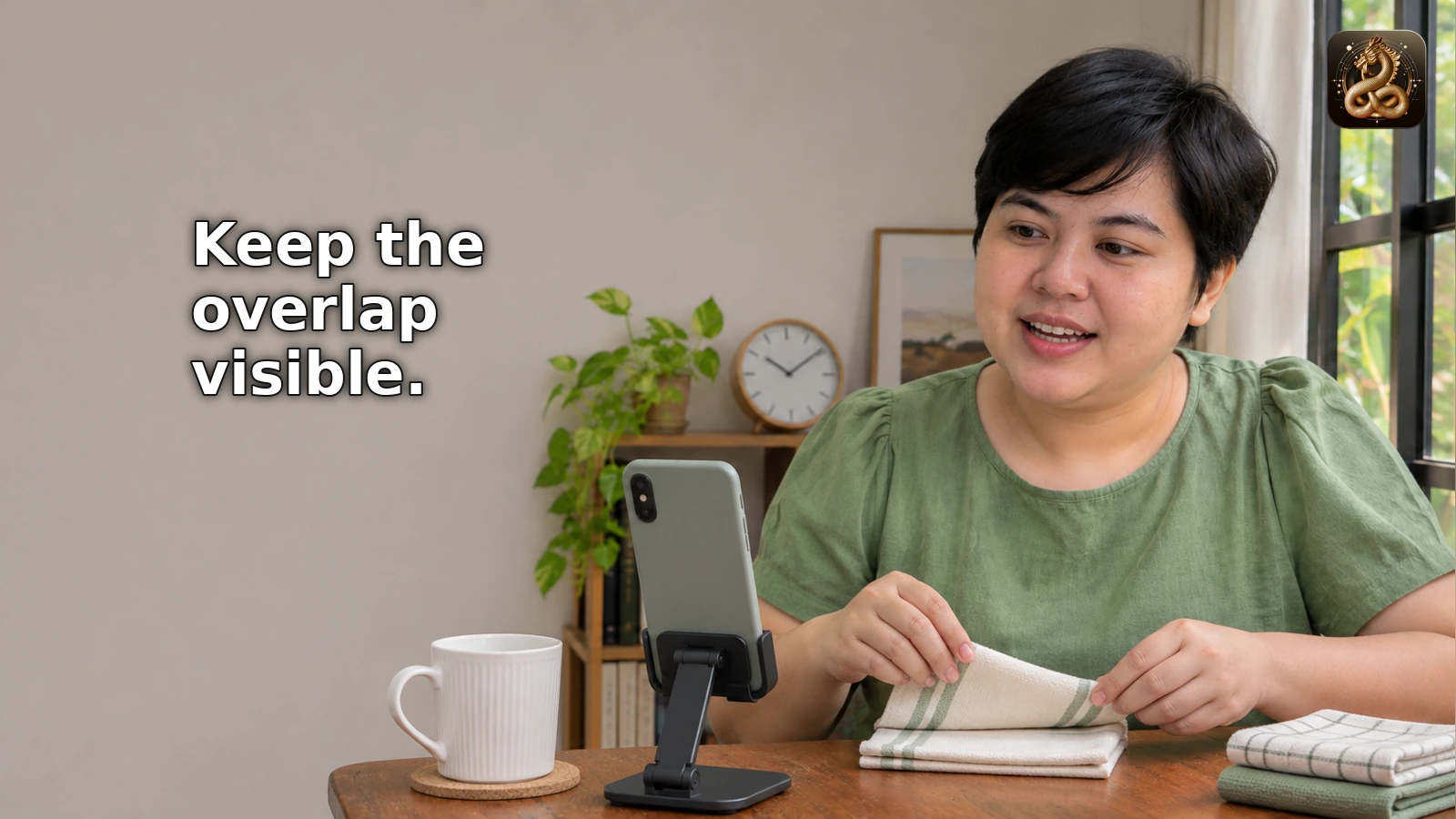
You can choose which activity you want to foreground without deciding which mattered more. “Talking while folding clothes” may fit a reflection about conversation; “folding clothes while talking” may fit a description of household work. The different emphasis is a writing choice, not an objective ranking.
Some activities involve attention that is difficult to compress into a simple row. You may have been waiting for a delivery while doing several ordinary things at home. Describe the arrangement in a sentence if that is clearer. You do not need to translate every responsibility into a separate count.
Use a small table when it clarifies the account
The table below demonstrates a possible layout for a fictional afternoon. The intervals are deliberately approximate. The final column keeps a response beside the description without turning it into a score. These are invented details, not a timetable to follow.
| Approximate span | Activity | Alongside it | Personal response |
|---|---|---|---|
| After lunch | Cleared dishes | No second activity noted | Necessary task |
| About half an hour | Folded clothes | Phone conversation | Wanted the conversation |
| Later | Looked for library book | No second activity noted | Frustrating search |
| Unrecorded interval | Not remembered | Unknown | Leave open |
| Before leaving | Read a magazine | No second activity noted | Wanted a short read |
You can replace the first column with an event boundary, such as “before leaving home.” Keep as few rows as you need. If the table starts asking for distinctions you do not care about, use a paragraph instead. For this example, the table is useful because it makes overlapping activity and an unrecorded interval visible together.
Explore SoulFul GLO's journaling overview if you want to compare writing formats. A paper page is enough for this exercise, and a private entry does not require installing a new tool or sharing your day.
A fictional demonstration: Nila's afternoon
Nila is a fictional adult who wants to understand why an ordinary afternoon felt full. Her first sentence is “I got nothing done after lunch.” Instead of defending or correcting that sentence immediately, she selects the span from clearing lunch to leaving for a planned visit.
First, she lists what she remembers: clearing dishes, folding clothes during a phone conversation, looking for a misplaced library book and sitting down with a magazine. She cannot remember the length of the conversation. She writes “about half an hour” as an estimate, rather than presenting it as a clocked duration.
Second, she records the overlap. The conversation and folding belong to the same interval. She gives them one row with both activities named. That lets her retain the social part without making the afternoon appear longer than it was.
Third, she leaves a gap between finding the book and sitting down. She thinks she may have answered messages but is unsure. The table says “unrecorded interval.” Nila does not need to investigate it to continue with the question she actually chose.
Fourth, she adds a response beside one row: “I wanted the conversation and was glad I had time for it.” She also writes that looking for the book felt frustrating. Those responses can coexist. They do not require declaring the entire afternoon worthwhile or wasted.
Finally, she rewrites the opening as a more specific description: “The afternoon contained household tasks, a conversation I wanted, a frustrating search and some reading.” She can keep the first sentence as well, identified as how she initially described the day. Neither sentence needs to become a verdict about her general productivity.
A simpler option would have been to list just three activities and one response. Nila could stop there or leave the table unfinished. This is an editorial demonstration of a writing choice, with no claim that it improves memory, treats distress or produces a better use of time.
Ask one question that the account can support
Read the entry and choose a question close to the material. “Which interval did I want more room for?” or “What made the errand take several stages?” may be useful. A broad claim such as “I always waste afternoons” reaches beyond the one account in front of you.
Look at constraints before assuming that a preference could have changed the day. Work, care, access, transport and other people's needs may shape the time available. A reflection can identify a wish for more rest without implying that you could simply have chosen a different schedule.
You can also find that there is nothing you want to change. The entry may have done its job by describing an ordinary day accurately enough for you. A question does not have to end in an action plan, a new habit or an instruction to make the next day more efficient.
Keep the reflection separate from tomorrow's tasks
If a practical action emerges, decide whether you want to place it in your usual planning arrangement. “Put the library book beside the bag” is a task you could choose. The rest of the journal entry can remain a description rather than expanding into a list of improvements.
Avoid using tomorrow to repay a supposed debt to today. If you wanted more reading time, consider the actual conditions of the next occasion instead of adding an obligation to compensate for the afternoon. A personal record can hold a preference without issuing a demand.
If the page becomes a repeated search for proof that you used time correctly, stop the exercise. Use a different activity or appropriate support if the subject is causing ongoing distress. This guide offers optional self-reflection, not treatment or an assessment of whether your life is sufficiently productive.
Frequently asked questions
Do I need exact start and end times?
No. Use the precision you actually have and that serves your question. An estimate or event boundary can be enough. Keep exact times for situations that genuinely require them in a suitable formal record, rather than pretending a casual journal provides that precision.
Can I record time spent resting?
Yes. Name the activity in ordinary words without requiring a productive result. You can record whether the rest was wanted, interrupted or difficult to describe. The page does not have to establish that resting improved anything before you include it.
What if two things happened at once?
Describe them in the same interval or explain the overlap in prose. If you add durations later, avoid counting the same interval as separate elapsed time. Foreground the activity relevant to your reflection without erasing the other one.
Does one day's entry show a general pattern?
It describes one day with the limits of your record. You may notice a question worth revisiting, but a single account cannot establish what all your days are like. You can keep the observation without beginning a tracking project.
End with a description you can recognise
An ordinary day can remain mixed, partly remembered and shaped by responsibilities. Finish with the detail or question you actually want to retain. You can leave tomorrow unplanned and the unrecorded intervals open.
Read SoulFul GLO's guide to journaling without turning the page into a to-do list if reflection keeps becoming another assignment. Keep any practical next step separate from the account you wanted to write.