
You have a few minutes and two possible recordings in mind: a song you know well and a sound journey you have considered trying. The song has a chorus you look forward to. The sound journey offers something you could listen to as it unfolds. Both choices involve sound, but you may want to do a different thing with your attention.
Start with that practical difference. Enjoying a familiar song is a worthwhile use of a break. Choosing a sound as a meditation anchor is another optional activity. You can decide which one you want without ranking the recordings or using the session to test which has a stronger effect on your mood.
Quick answer: decide what you want to do with the sound
Choose the familiar song if you want to enjoy its words, anticipate a passage or spend time with music you value. Choose a sound-journey meditation if you want to notice an audible sound and return attention when it wanders. You can also use a song for attentive listening, provided that is the task you intend. Neither label guarantees relaxation or a health benefit.
Keep listening appropriate to the setting and the time available. There is no requirement to try both recordings, finish a comparison or explain a preference. A simple choice for this occasion is enough.
Separate enjoying a song from practising listening
Consider what would make the break useful in ordinary terms. You might want to hear the whole familiar song, enjoy a particular passage or listen while doing an undemanding household activity. In those cases, letting anticipation and associations be part of the experience may fit your purpose.
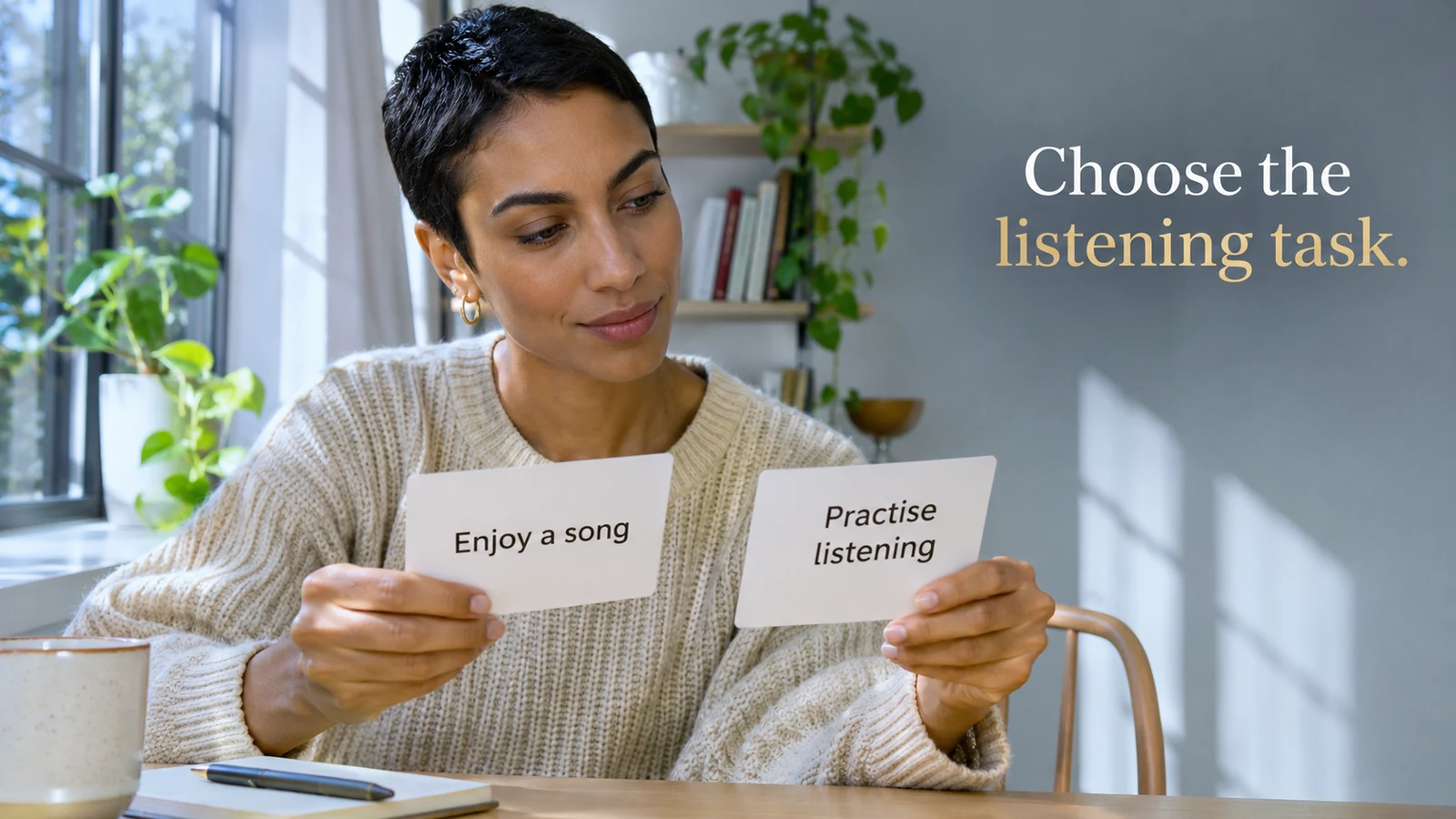
For a listening meditation, you might instead choose the small task of noticing what is audible now. When you realise you are following a thought, you return to the sound. The recording supplies something to attend to; it does not need to produce a particular feeling before the activity counts.
These intentions can overlap. You can enjoy a sound journey, and you can listen attentively to a song. The useful distinction is the task you choose, rather than a rigid division between two kinds of recording. You do not have to rename ordinary enjoyment as meditation to justify taking a break.
Choose one intention at the start if that helps. A plain phrase such as “I want to enjoy this song” or “I want to practise returning to what I hear” can keep the decision small. You can change the activity later without treating the original choice as a commitment you must defend.
Notice what familiarity invites you to do
A song you know may draw attention toward an expected chorus, an instrumental entrance or a line you remember. You might notice yourself silently joining in before the recording reaches that part. Those are ordinary features of your own experience with a familiar resource; you need not suppress them while enjoying the song.
If your chosen task is attentive listening, notice anticipation as something happening alongside the sound. You can return to the phrase actually playing rather than repeatedly waiting for the next favourite moment. You do not have to prevent every expectation, and there is no need to count how often it appears.
Familiarity can also make a recording convenient. You know whether it contains a sudden change or a vocal section you would rather avoid today. That practical knowledge may matter more to your choice than a broad label such as relaxing music. A familiar item still deserves attention to the current setting and your preference.
An unfamiliar sound journey is not automatically better for attention. You may become interested in identifying every layer or wondering what will happen next. Choose it because you want to try the listening task, rather than because novelty is supposed to make the meditation more authentic.
Use a sound journey as an audible attention anchor
If you choose a sound-journey meditation, settle in a position that works for an ordinary listening break. Keep the controls accessible and choose an appropriate level. Let breathing remain comfortable, and keep your eyes open if that suits you. A recording does not require a special pose or an elaborate preparation ritual.
Pick something you can actually hear: a sustained layer, a repeating sound or the end of a phrase. You can notice the whole recording instead if selecting one layer feels unnecessarily complicated. The task should be understandable enough that you can return to it without constructing an analysis.
When attention moves elsewhere, notice that and decide whether to return. There is no requirement to hear every sound. You can continue with a changing recording, pause it or finish when you would rather do something else. Persistence is not proof that a particular practice is right for you.
SoulFul GLO's sound-journey overview describes this category of recorded listening. Check the actual item you choose for its contents and available controls. An overview cannot establish that every recording is instrumental, has the same pacing or contains a particular instrument.
Explore the listening resources actually available
Explore SoulFul GLO's current sound journey descriptions if you want to try a recorded attention anchor. Choose from the real contents and previews, keeping any personal listening preference separate from promises about what a session will achieve.
Notice where words and associations take attention
With a favourite song, you may find yourself following its language or thinking about a place where you once heard it. Decide whether that is part of the activity you want now. You can enjoy the association without turning it into a meditation exercise or treating it as a message you must interpret.
If you intended to practise listening to present sound, return to an audible detail when you choose. Leave remembered scenes unexplored if that fits. A sound journey can also prompt associations, so switching formats does not guarantee a session without memories or thoughts.
Keep a remembered impression separate from evidence about a past event. A vivid response to music does not establish what another person thought or precisely what happened. If a memory becomes the main issue, the separate sound-journey memory guide discusses the choices to notice, return, pause or stop without forcing recollection.
There is no requirement to find a recording with no words or associations. A more workable choice may simply be one whose contents you are comfortable hearing. When lyrics keep drawing you into a different task, you can select another resource without deciding that songs are generally unsuitable for meditation.
Compare fit without creating an efficacy test
If you want to try each format, let each occasion stand on its own. On one break, enjoy the song. On another, try returning attention to a sound journey. Notice practical differences such as whether the material was easy to follow and whether you wanted to continue.
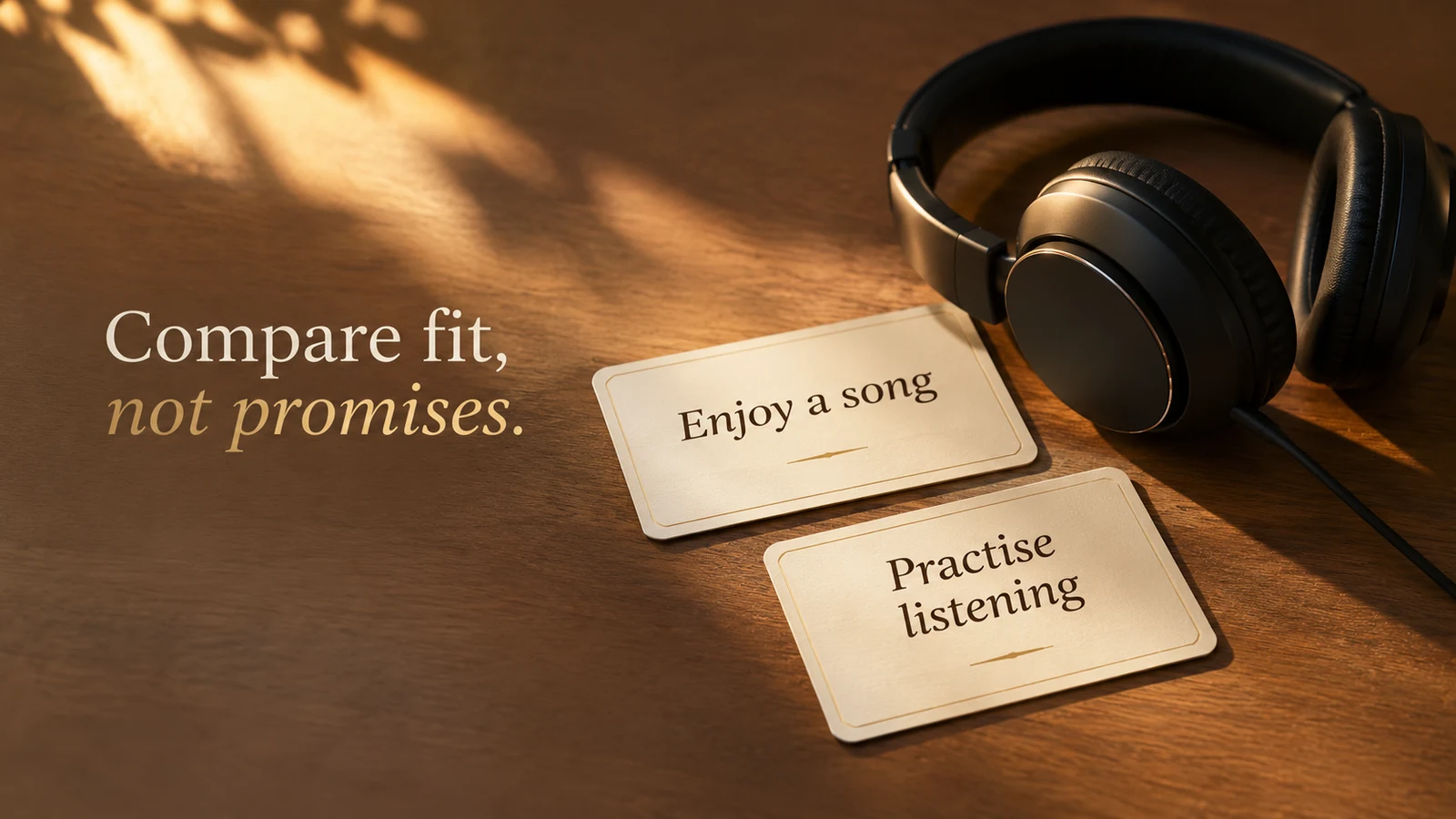
Avoid turning a small personal comparison into a test of treatment effects. Different days bring different circumstances, and one response does not establish a cause. A calmer feeling after one recording cannot prove that the format is clinically superior or that another listener should make the same choice.
NCCIH's meditation overview discusses varied practices, research limitations and possible negative experiences. Those general findings do not establish an effect from your favourite song or a particular sound journey. Keep this as an optional self-care or enjoyment decision, with appropriate care for health concerns kept separate.
You do not need a scorecard. A sentence such as “Today I wanted the song, and its familiar ending suited the break” captures a preference. You can keep the observation in mind without building a routine, measuring emotions or repeating the comparison until one format wins.
Keep ordinary listening conditions in view
Choose an occasion in which you can attend to audio appropriately. Driving, crossing roads or doing work that requires close monitoring is not the setting for this meditation task. Keep responsibilities and other people's needs available, including calls that genuinely require your attention.
Sound level and listening duration matter for hearing, as WHO's safe-listening guidance explains. A peaceful title or a familiar chorus does not certify exposure. Use appropriate playback, avoid competing with surrounding noise by repeatedly raising volume, and stop when sound is uncomfortable.
There is no need to buy equipment to decide between these activities. Use a suitable setup you already understand, or leave audio for another occasion. A change from headphones to speakers also changes the practical arrangement, including what other people may hear. Consider that separately from which recording you prefer.
If a playback fault interrupts the session, keep it as a separate equipment question. A silent player or a connection problem cannot tell you whether a song or a sound journey suits your intended task. You may finish the break instead of spending the rest of it troubleshooting.
Retain a preference without making it permanent
In a fictional example, Noor wants to enjoy a song she knows before returning to a household task. She anticipates a familiar passage and listens to the ending. She does not ask whether the break was sufficiently meditative. Enjoyment was the activity she chose.

On another occasion, a fictional listener, Adam, wants to practise returning attention to current sound. He chooses a sound journey with a description he understands. When he starts wondering about a later section, he returns to the sound playing now. He stops when the time available ends.
These invented examples describe different purposes, not customer outcomes. Neither listener establishes a health benefit or a ranking between formats. A single person could make both choices on different days, or prefer neither activity on a particular occasion.
Put the headphones away when you finish and return to the next ordinary activity. You can leave the preference as something that fitted today. The next choice can depend on the recording, surroundings, responsibilities and listening task actually in front of you.
Questions about songs and sound-journey meditation
Can I use a favourite song for attentive listening?
Yes, if that is the activity you want. Notice what is audible and return when you choose. Anticipation or remembered words may also be part of the experience. You can change the task or the resource if it no longer fits.
Is a sound journey better because it is less familiar?
Unfamiliarity alone does not establish that. A new recording can invite curiosity and prediction too. Choose an understandable listening task and material you are comfortable following, without assigning a guaranteed benefit to novelty.
Must I avoid all lyrics?
No universal rule is supplied here. Words may suit ordinary enjoyment and may draw you toward a different task during meditation. Notice what happens for you and choose a resource accordingly, without reproducing lyrics or needing to analyse them.
Do I have to try both formats before choosing?
No. You may already know what you want for this break. A comparison is optional, and it does not need to end in a permanent preference or a claim about wellbeing.
Choose a resource for the task you want
Explore SoulFul GLO's current sound journey and guided meditation options if you would like a different starting point. Read the actual descriptions, choose what you want to follow and keep the option to finish or change the activity.