
A class description mentions breathing, and a meditation recording does too. One may ask you to attend to breathing already happening. Another may introduce a particular way of changing it. Knowing which task is being offered helps you choose an introduction you actually want, rather than treating every mention of breath as the same practice.
Pranayama belongs within yoga's wider traditions. Breath-awareness meditation describes an attention task that can appear in different teaching contexts. This guide explains a practical distinction between noticing and deliberately regulating. It does not provide a pranayama sequence, a treatment recommendation or a rule about how everybody should breathe.
Quick answer
Read the actual instructions, not just the resource title. Notice whether the guide asks you to observe ordinary breathing or deliberately change its pace, depth, route or pauses. Identify the named method and required introduction when supplied. Choose understandable teaching that fits your intention, with appropriate qualified guidance for unfamiliar techniques. You can leave an exercise out or stop instead of filling an instruction gap yourself.
Start with what the words ask you to do
A broad label such as breathing practice leaves important questions open. A guide could invite you to notice an exhale, lengthen it, count repetitions or coordinate breathing with movement. Those verbs describe different tasks. Read enough of the resource to understand its actual request before deciding how to participate.
The practical distinction here is between attention and deliberate regulation. In an attention exercise, you notice an aspect of breathing as it occurs. In a regulation exercise, the instruction includes an intended change. A complete session may contain both, so the distinction concerns particular instructions rather than a permanent classification of every recording.
Counting also needs context. Counting completed breaths can organise attention without specifying how long each breath lasts. Counting a duration for an inhale asks something different. Neither use of a number supplies individual suitability. Ask what the count represents rather than deciding from the presence of numbers alone.
Understand the term pranayama in its source context
NCCIH identifies pranayama as breathing techniques within yoga, alongside postures and meditation, and describes yoga as rooted in Indian philosophy. That broad account establishes context. It does not make all breathing exercises interchangeable, identify a single beginner sequence or certify the teaching in a particular online resource.
Use the method's actual name when a source supplies it. A provider may teach a specific approach with its own introduction and conventions. Similar-looking instructions elsewhere do not establish that the resources belong to the same tradition or can be combined into one exercise.
Spiritual language can be part of the teaching. Read it as part of that source's framework rather than silently converting it into a physiological claim. A description involving energy or purification does not, by itself, demonstrate a medical mechanism or predict what you will experience.
Know what ordinary breath awareness offers as a task
An attention instruction might invite you to notice where breathing is easiest to perceive and return when your attention wanders. The object of attention is the ongoing experience, rather than achieving a specified depth or rhythm. You can understand that intention without needing a perfect account of every inhale.
An example of wording, written for this guide, is: notice one ordinary sensation of breathing without deliberately changing it. This is an illustration of the distinction, not a complete course or a requirement to use breathing as your anchor. If attending to breathing is uncomfortable or unwelcome, choose another activity.
Even with a noticing instruction, you may become aware of trying to manage the breath. You can stop the attempt rather than repeatedly testing whether you are observing correctly. Nothing here requires prolonged monitoring, suppressing an impulse to move or proving that you can make your breathing feel natural.
A table for reading the instruction
Use these wording examples to identify the information you need. They were written for this guide and are not quotations from an actual teacher. The table distinguishes tasks; it does not prescribe a technique or rank their effects.
| Wording example | What to clarify | Keep this boundary |
|---|---|---|
| Notice one sensation | Whether breathing is left ordinary. | Attention is not a request for greater depth. |
| Count completed breaths | What one number represents. | Counting is not automatically timed regulation. |
| Change the breathing pattern | The named technique and required teaching. | Do not invent timing or a breath hold. |
| Coordinate with movement | The role of the cue in that lesson. | This is not the same as a standalone introduction. |
A practical selection plan
Name what you want to learn
Decide whether your current interest is attending to an ordinary sensation, learning a named yogic breathing technique or understanding a class description. Those are different starting points. An introductory explanation may answer the third question without being an appropriate lesson for performing the second activity.
Keep the intention modest and specific. Wanting to understand a term is a learning choice. Wanting a resource to guarantee sleep or remove anxiety is an outcome it cannot promise. General wellbeing information does not establish what one technique will do for your circumstances.
Inspect the opening, main task and ending
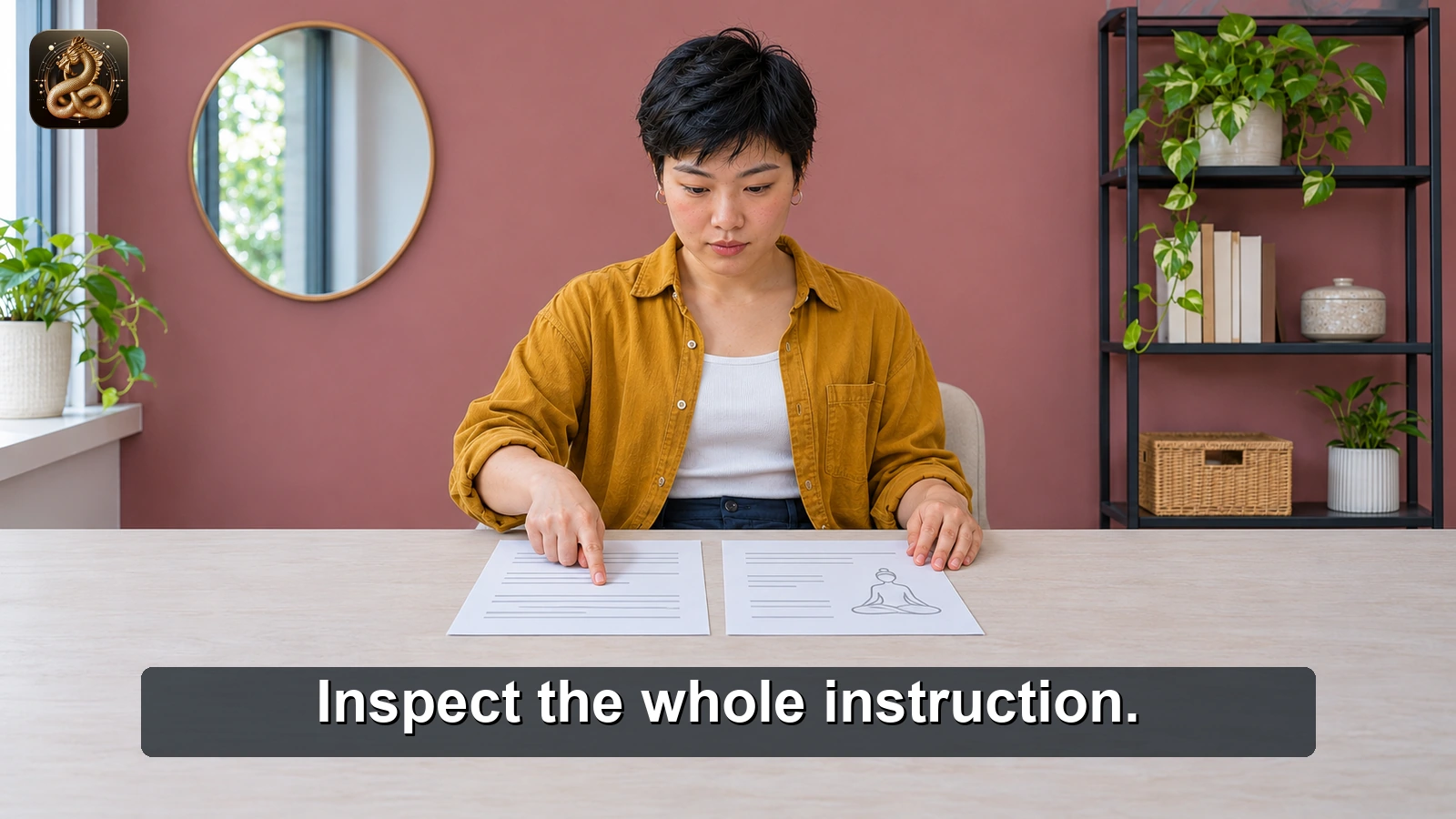
Look beyond the first soothing sentence. A session may begin with ordinary breathing and later add active changes. Read an available transcript, watch an actual introduction or use a preview, while recognising that a short sample may not cover the middle of the resource. When a transcript is available, mark the sentence where the request changes. A note might say: first section asks me to notice; later section asks me to alter the pattern. Keep that note beside the resource name. If you have only an opening preview, record that limit instead: later instructions not available. Both notes are more useful than treating the preview as a description of the whole recording.
Find what prior instruction is assumed and how participation ends. A title containing beginner does not answer every question about supervision or technique. If an essential action is unclear, leave the practical attempt unresolved while you seek an appropriate explanation.
Match the question to the right person
A provider can explain what their lesson contains and who teaches it. An appropriately qualified instructor can explain their method and introduction. Individual health questions may also need a healthcare professional. A booking administrator's timetable answer does not become personal advice about a breathing practice.
A focused inquiry could ask whether the session involves deliberate breath regulation and what introduction is required. You can ask that without recounting private health details in a public comment. Use an appropriate private route when personal circumstances genuinely need discussion.
Choose a clear option or leave it open
Choose when the activity and teaching are understandable and suitable for your situation. You can instead select an ordinary attention practice using a different anchor, observe an explanation without performing it, or postpone. Curiosity about a technique does not create an obligation to try it immediately.
A fictional demonstration: two resources with different tasks
Mariam is an invented adult choosing something to do during an ordinary afternoon pause. One fictional recording describes noticing a sensation of breathing without changing its pace. Another fictional course describes learning a named pranayama technique with an instructor. She initially puts both into a folder called breathing.
She then names her actual interest: she wants a short attention exercise rather than a lesson in regulating breathing. That gives her a reason to inspect the first resource. It does not establish that the second is inferior or that her preferred option will create a particular feeling.
Mariam checks the whole available description and discovers that the recording later introduces a deliberate breathing change. She does not assume that an opening instruction describes the entire session. She looks for a clearly explained section or another resource whose activity matches what she wanted to try.
If the available information remains insufficient, she can leave the selection unfinished and choose ordinary listening instead. The demonstration concerns recognising the task, not finding the correct technique for an imagined health problem. It supplies no ratio, breath hold or predicted outcome.
The simpler version would compare one resource with one question: does this ask me to notice breathing or to change it? If the answer is unclear, stop at the information gap. A larger comparison table, purchase or physical trial is unnecessary for identifying what remains unknown.
Use another anchor when that is the actual preference
SoulFul GLO's guide to choosing a meditation anchor when breath focus feels uncomfortable addresses a different decision: whether another point of attention would suit you. Use it when that is your question. Understanding pranayama does not require continuing to focus on breathing.
Keep safety separate from confidence with terminology
Knowing the name of a technique does not establish that you have learned to perform it. A clear definition and a suitable introduction are separate resources. Avoid copying a physical manoeuvre from a still image or treating a brief written description as personalised supervision.
NCCIH recommends qualified yoga instruction and says beginners should avoid forceful breathing. It also advises attention to individual needs and relevant healthcare discussion for people with health conditions. These cautions do not validate the original selection process described here or guarantee a specific class.
Consider two invented description fragments: noticing the end of an exhale, and deliberately making an exhale longer. The first identifies something to attend to; the second requests a change. These fragments are for comparing wording, not practising either task. If a resource moves between them, record the change rather than silently treating both as ordinary observation. A missing explanation stays missing; a familiar count from elsewhere cannot supply it.
Stop an activity that causes discomfort or distress. New, persistent or concerning symptoms need appropriate professional advice. This article cannot diagnose their cause, recommend a breathing intervention or establish that discomfort is an expected stage of learning.
When a session changes its activity
A recording may move from noticing to a deliberately regulated technique. Recognise that as a new request. Decide whether you understand it and want to participate. A comfortable opening does not commit you to every later part of a session.
If you are using recorded material, stop the activity before handling playback controls. Replaying may reveal wording you missed, but it supplies the same teaching rather than personal feedback. Choose a clearer introduction when the missing information is not present in the recording.
In a live class, an instructor can explain the particular transition you heard. With a recording, first check whether that explanation is already present in its accompanying material. Those are different information routes. For example, a transcript may identify the named technique while still leaving its required introduction unclear. Finding the name answers the vocabulary question; it does not complete the practical instruction.
Keep an accurate note if you want to return
A return note can have three short entries: what the resource says, what activity that describes, and what remains unknown. For the fictional recording above, Mariam could write: opening invites ordinary noticing; later section requests a change; introduction to that change not yet checked. She can then look for that particular explanation instead of replaying the opening. Include the resource name or saved link so the note remains attached to the material she actually examined.

You need not create a chart of bodily reactions or track every breath after the session. Keep only information that serves a future choice. An observation about one recording does not establish a general conclusion about yoga, meditation or your capacity to participate.
Frequently asked questions
Does every breathing meditation count as pranayama?
This guide makes no universal naming rule across traditions. Inspect the source's description and actual instructions. Attending to ordinary breathing and learning a named regulation technique are different tasks even when a broad label appears to cover both.
Does counting always mean I am changing my breath?
No. A count may mark completed breaths, specify a duration or indicate another part of a sequence. Determine its stated role. If its meaning remains unclear, ask or choose different guidance rather than guessing.
Is one approach always more relaxing?
No outcome ranking is established here. A description of the task does not predict an individual response. Neither approach guarantees relaxation, sleep or relief from a health condition, and neither replaces appropriate care.
Can I understand a technique without trying it?
Yes. Reading a definition, observing a qualified explanation and asking about an introduction are legitimate learning steps. You can remain at that stage, choose another practice or decide the subject is not something you want to pursue.
Choose an activity whose instructions you understand
Explore SoulFul GLO's practice-selection guide for a broader comparison of meditation, movement and listening. Keep the actual task, source and participation choices clear. You can finish the decision with a suitable resource, an unanswered question or a decision to leave the activity for another time.