
You have a few pictures that suggest things you would like more room for: a small worktable, a footpath, an ordinary meal with friends. Arranging them on one page can be a private creative project. The finished board can show what interests you without claiming that displaying an image will make an event happen.
A personal vision board is a visual collage of selected wishes, values or possible directions. This guide offers a small paper-based version using materials you already have. It does not require buying a kit, making a journal entry or adopting a belief about manifestation.
Quick answer: make a collage you can revise
Choose one manageable theme, gather a few personally appropriate images, arrange them before attaching them and add brief wording where a picture could mislead. Keep wishes distinct from available resources and constraints. Store the board privately if that suits you, and change or put it away when it no longer fits.
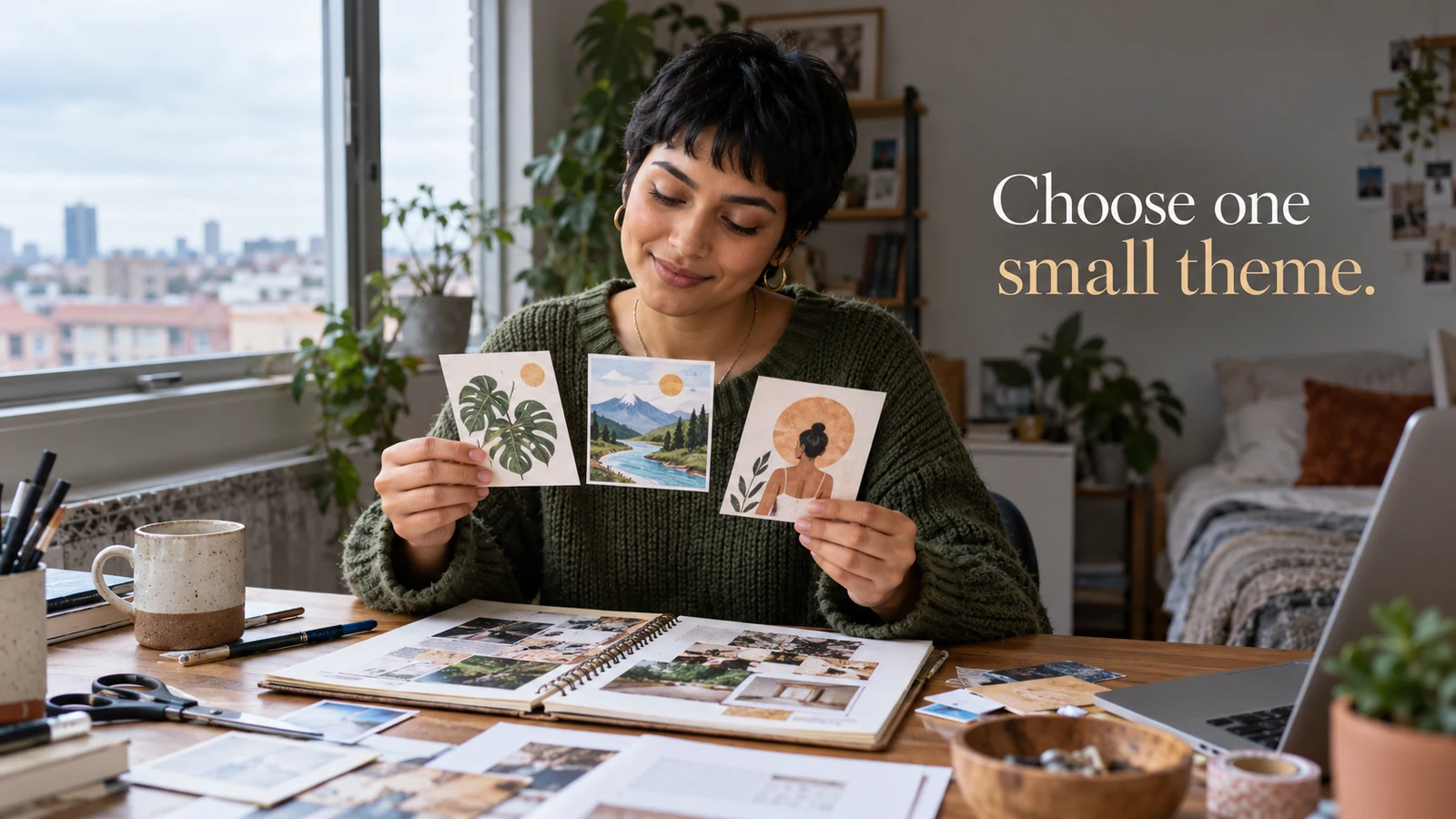
The board is an expression of present interests, not a prediction or a contract. A picture of a studio might represent wanting a place to make things. It does not establish that you will obtain a studio, that one particular route is possible or that an outcome depends on how often you look at the picture.
Choose one small theme
Begin with an area you are comfortable considering. A creative project, time outdoors or a way you would like to use a corner of your home can give a small board enough material. Trying to display every hope at once may make the project harder to compose and more personal than you intended.
Use words that leave room for ordinary scale. "A place to draw" allows a tabletop or an occasional shared space. "My perfect future studio" may attach the image to a more specific outcome than you want. Neither wording needs to be impressive to someone else; choose the meaning you actually intend.
Check whether the theme belongs to you. Another person's relationship, career or health is not an object you can arrange into a promised result. You can show your own interest in company or learning while leaving other people's choices and circumstances open.
A theme can also remain tentative. You might be exploring whether making things matters to you at the moment. The collage can hold that curiosity without becoming a commitment to change your life. If choosing a theme feels burdensome, make a purely decorative collage or leave the project for another day.
Use imagery you are comfortable keeping
Start with your own photographs, simple drawings or materials you have permission to use. An image can be useful because of its colour, object or setting rather than a literal destination. A sketch of a plain table may communicate your interest more accurately than a photograph of an expensive room.
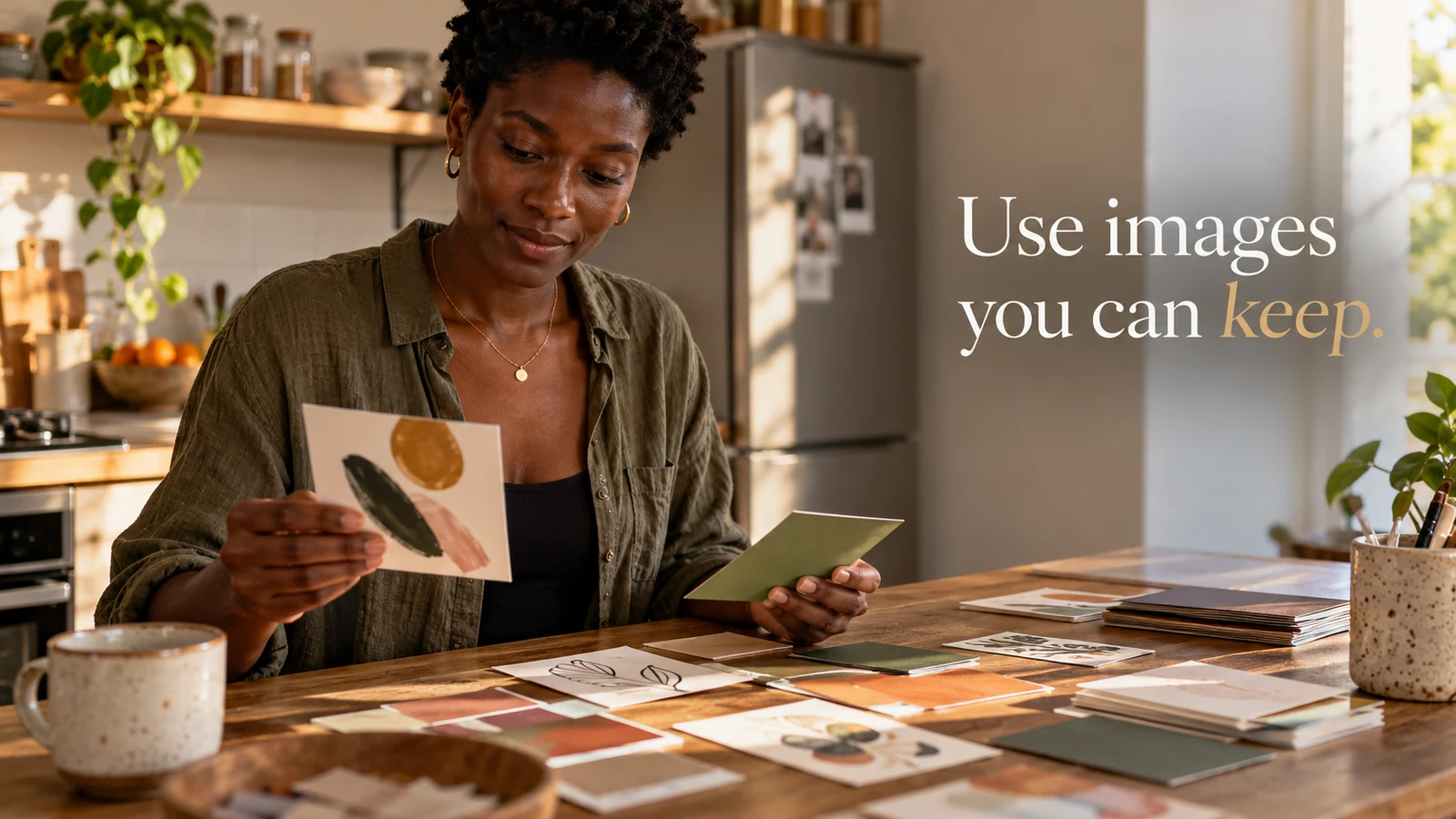
Consider what the image includes. A personal photograph may show someone who would not welcome being part of your project, an identifying location or a private message on a screen. Choose another image or make your own drawing when that is simpler. A private board does not need private details to make its theme clear.
For images offered under a Creative Commons licence, read the specific licence and the source's information rather than assuming everything online is free to reuse. Creative Commons' licensing guidance distinguishes different permissions and reminds users to consider rights beyond copyright. This guide does not determine whether a particular photograph is cleared for your intended use.
Keep a source note if you need attribution or may later share the collage. Finding an image online does not mean its use is unrestricted. If the permissions are uncertain, leave it out. Making a small original drawing avoids turning an optional project into a complicated search for materials.
Decide what each picture represents
Before placing an image, describe its role to yourself in one ordinary sentence. A trail might stand for wanting time outside, rather than a promise to travel to that exact place. A bowl of fruit might represent a type of shared meal you enjoy, without making a claim about health or body size.
Watch for comparisons that move the board away from its purpose. An attractive picture of someone else's home can become a standard you feel pressured to meet. You can choose an image of the activity you value instead: hands arranging paints, an empty notebook or a table cleared for a short project.
Some wishes depend on factors outside your control. Leave that fact intact rather than selecting only pictures that make everything look settled. Wanting a garden and having no outdoor space can coexist. Your board can show an interest in growing things without pretending the housing question has been resolved.
A small label can preserve that distinction. "Interest in growing plants" describes a present preference; "A garden by June" turns it into a dated outcome. Use the latter only if you deliberately intend a practical plan and have assessed it separately. The collage itself supplies no evidence that the date is achievable.
Arrange before attaching
Place the images loosely on an ordinary sheet, piece of card or surface you can put away. Start with a few items and look at the whole arrangement. A crowded page is not more powerful than a sparse one. Keep enough space to recognise what matters without adding every picture you gathered.
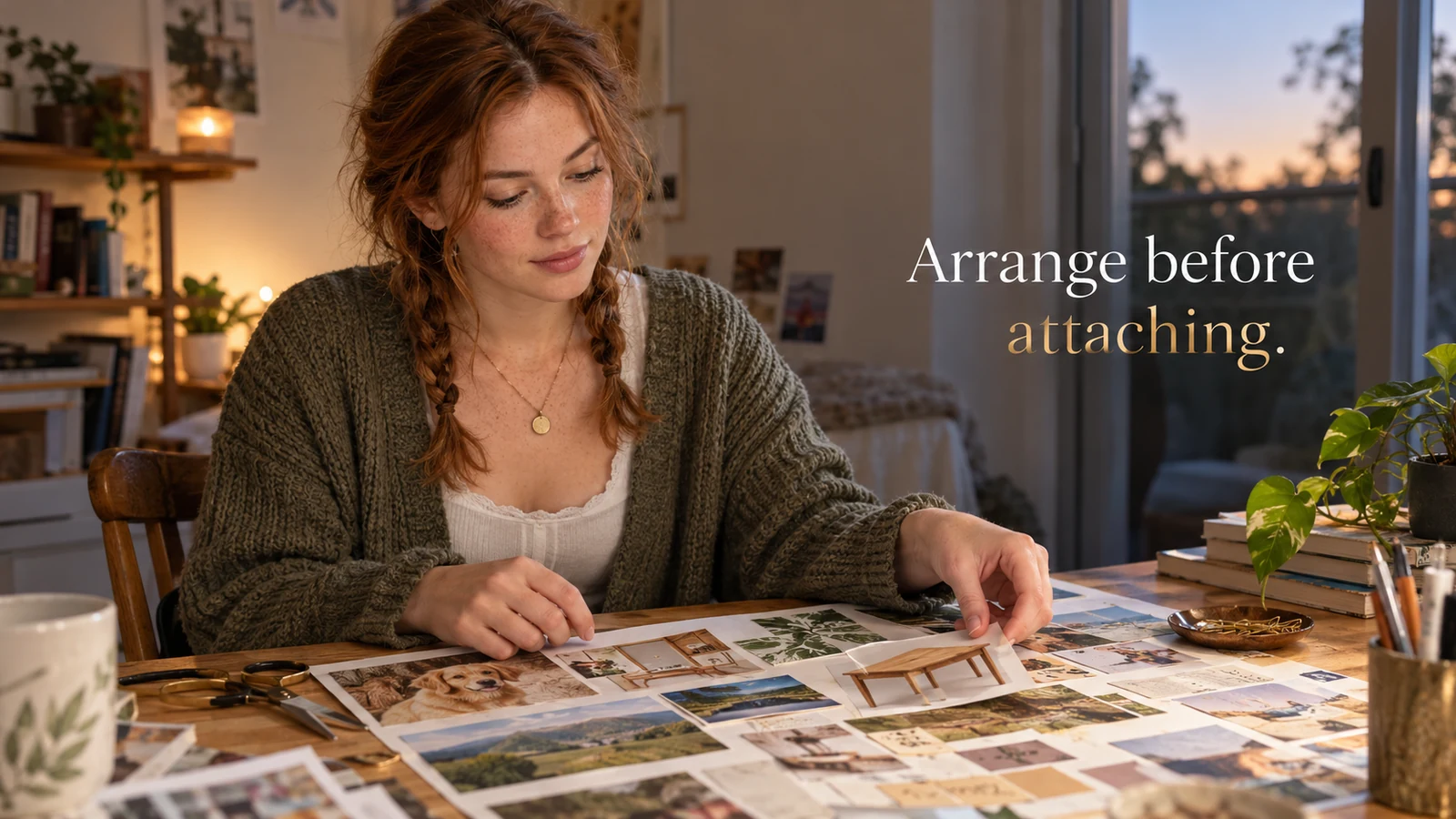
Try moving one image at a time. A central position can suggest importance, while a small grouping can show a connection you want to explore. These are composition choices. They do not create a mechanism that changes external events, and there is no required direction or special order for the pictures.
If two images suggest different things, keep the difference visible. A busy shared workshop and a quiet solitary desk could represent two possible ways of making things. They need not become one polished story. You can use a small space between them or a question mark to show that the choice is open.
Attach the pieces only when you want to keep this arrangement. Ordinary removable materials can suit an exploratory board, provided they are appropriate for the surface. A digital alternative is also possible if you already use a tool comfortably, but no new app or feature is required by this guide.
Explore intention-setting separately
SoulFul GLO's manifestation meditation guide covers a different activity: optional reflection and visualisation. If you use both, keep the collage and the meditation separate choices. Neither predicts what will happen or obliges you to maintain a positive feeling.
Leave real constraints visible
Decide whether a few words would make the board more honest. A picture of a worktable could sit beside "shared room" or "materials I already own." These notes do not spoil the image. They distinguish what you value from the conditions in which you may pursue it.
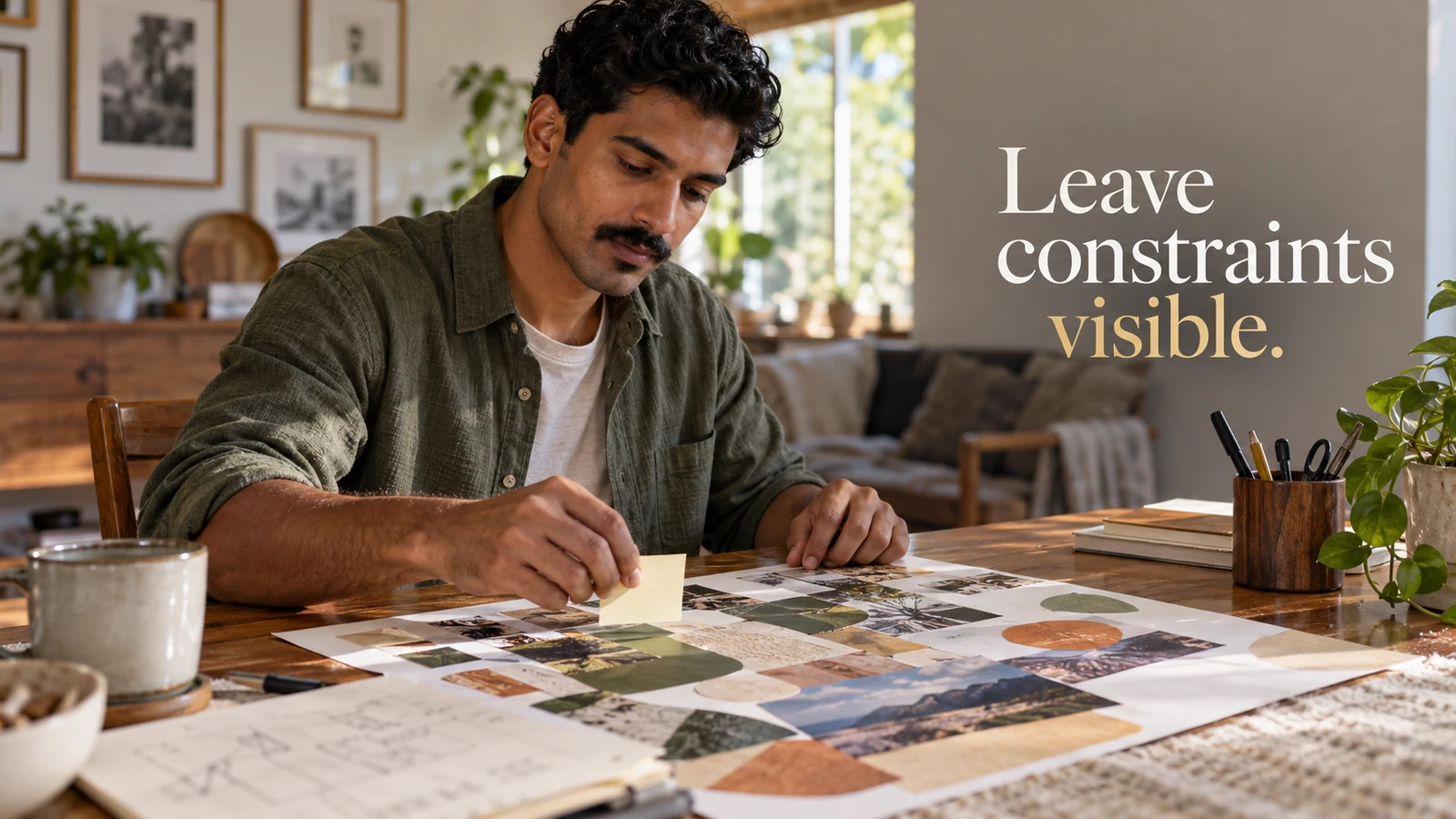
Avoid using the board to bypass decisions that need practical information. Costs, permissions, available time and other people's agreement remain relevant. You can enjoy an image of a trip without treating it as a reason to spend money or make a commitment.
A value can survive a change of scale. If the board concerns time outside, a nearby walk may fit while a larger journey does not. That does not mean the smaller activity will produce the same experience. It means you can recognise the underlying interest without insisting on one pictured form.
Keep the board proportionate to uncertainty. Some circumstances may remain difficult even when you describe them carefully. A collage cannot remove those constraints, and failing to obtain something is not evidence of inadequate belief, insufficient gratitude or a poorly made board.
Keep the board as private as you want
Choose where the collage will live before displaying it. You might keep it in a folder, inside a drawer or on a surface you can clear. A board does not need to be publicly visible or viewed every morning to count as a creative project.
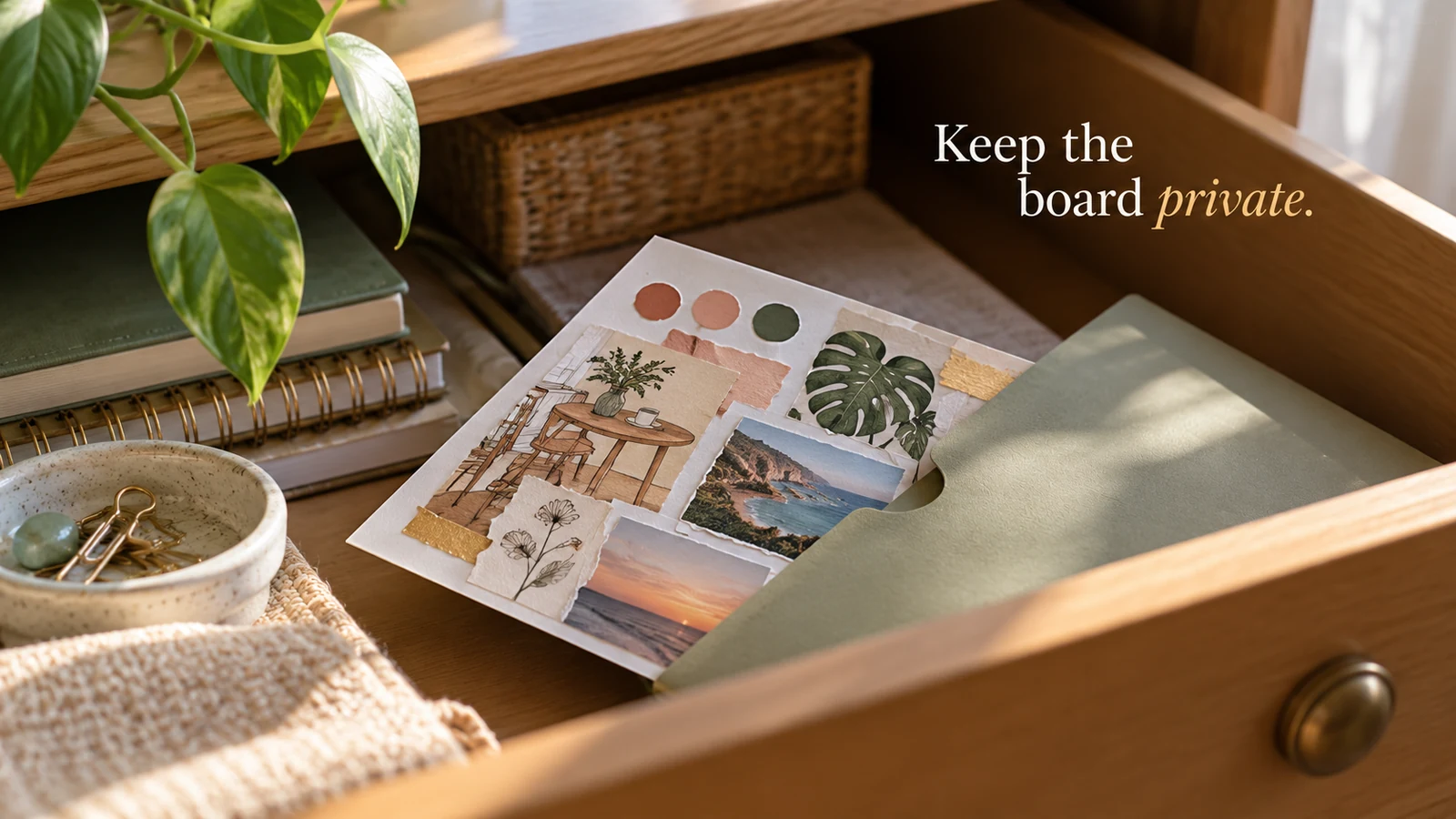
Consider the actual space. A shared wall, a video-call background or a photograph taken in the room can reveal material beyond the people you intended. If the collage includes something personal, a portable page may offer a more suitable arrangement than permanent display.
Sharing remains a separate decision. You can show one detail, describe the theme or decline to explain it. A person who sees the board is not entitled to a story about every image. Equally, you should not include someone else's identifiable picture merely because you expect the board to remain private.
A digital board has its own storage and sharing arrangements. Check the tool you actually use rather than assuming that a document is private because it has no public link. This article does not certify a particular app, folder or account configuration.
Two fictional boards
A place to make something
In this fictional example, Nia selects her own photograph of a cleared table, a small drawing of paintbrushes and a colour sample. She places them on a single page. The theme is having occasional room to paint, rather than obtaining an ideal studio.
She adds "shared table; put materials away afterwards" beside the photograph. The note reflects the space she has. Nia keeps the board in a folder and makes no claim that it will secure more time, improve her mood or change another person's plans. She can later alter it if the theme loses relevance.
Two versions of time outdoors
In another fictional example, Owen has pictures of a familiar local path and a distant landscape. He likes both, but they suggest different possibilities. He places them apart and writes a small question between them rather than arranging them as stages of a guaranteed journey.
He leaves the distant trip undecided. The local image can remain interesting even if travel is impractical. This example illustrates composition with uncertainty, not a claim that making a board produces opportunities or that one person's budget and circumstances apply to another.
Change what no longer fits
When you next look at the board, ask whether the images still represent what you intended. You can remove something, replace it with a drawing or put the whole page away. A past selection is information about an earlier interest, not a promise you have broken.
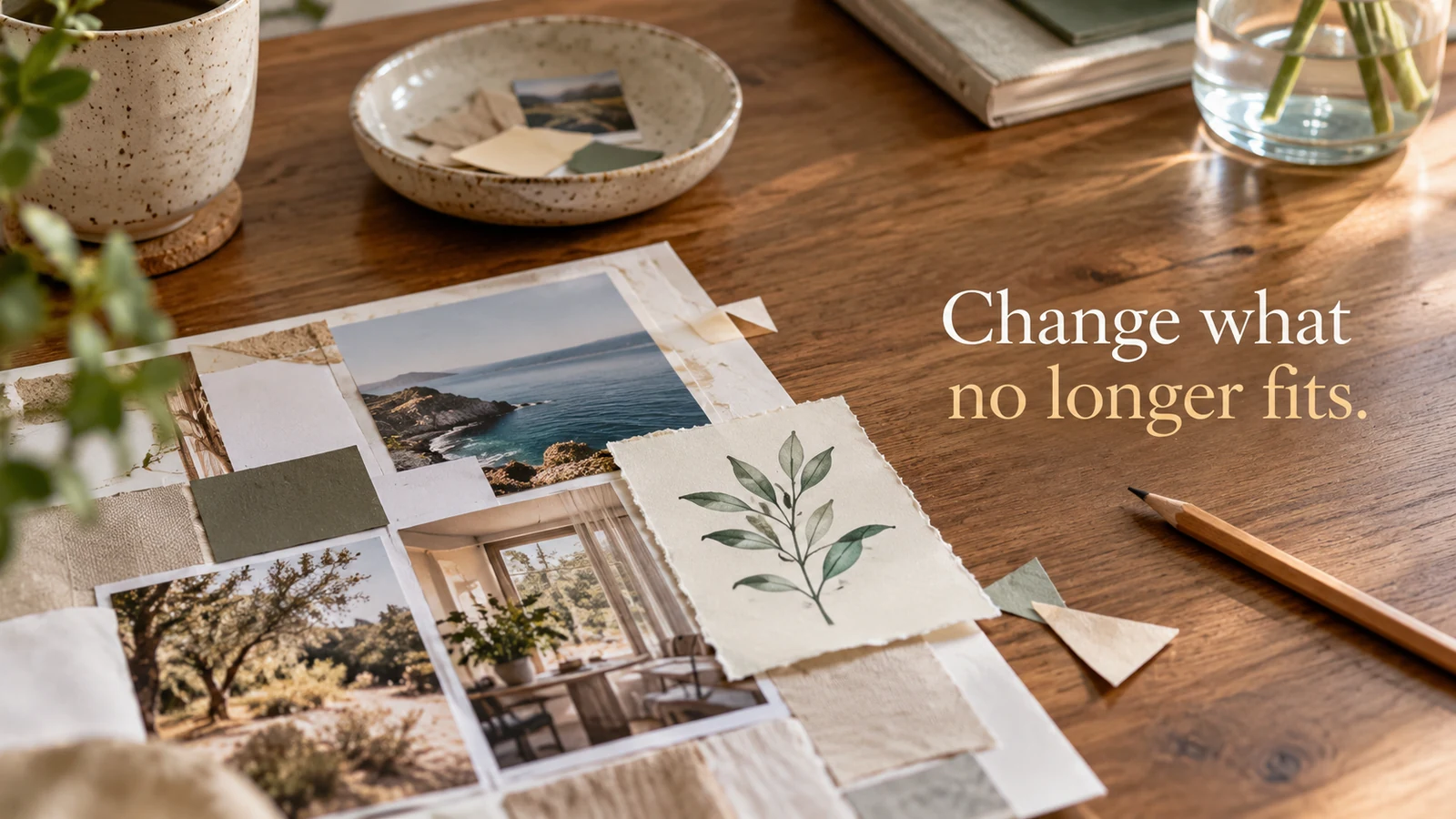
Notice whether the display invites useful reflection or mainly creates pressure. If it has become an unwanted checklist, reduce the content or stop using it. There is no required frequency for reviewing the page and no evidence supplied here for an ideal number of pictures.
Avoid interpreting every later event as confirmation that the collage worked. A resemblance between a picture and an experience does not establish that the picture caused it. Keep ordinary explanations, practical actions and chance in view when thinking about what happened.
Manifestation and Law of Attraction are used within different belief systems and personal practices. This project does not present them as scientific laws or claim that thoughts attract external outcomes. The optional value of the board here is concrete: it lets you see and revise your selected images together.
Frequently asked questions
Is a vision board a prediction?
No. In this guide it is a present visual composition. Pictures can express wishes or values while future events remain uncertain.
Must I include affirmations?
No. A brief factual label or a question may suit the picture better. You can also leave it unlabelled if its meaning is clear to you.
Can I make a board without buying materials?
Yes. Use suitable paper, your own drawings and images you are permitted to use. A small page is enough; no specialist kit or new software is required.
What if the images start making me feel pressured?
Change or put away the board. You can stop an optional creative project without turning that choice into a judgment about your motivation or future.
Choose a practice that fits the occasion
SoulFul GLO's practice chooser describes broader meditation, sound-journey and yoga formats. Use it if you want a separate self-care activity, while keeping your collage free to remain a visual project rather than a programme of required practices.