
The space between two familiar yoga movements can become hurried. You may already be thinking about the next instruction while you finish the current one, or you may stay in a position because you have confused pausing with holding. A mindful pause is a different choice: complete the movement as you have been taught, arrive at an ordinary supported rest, and take a moment to decide what comes next.
This guide is about attention and participation, not instructions for moving into or out of a pose. It does not replace a teacher's guidance about transitions, support or personal circumstances. The useful question is small: when a safe resting opportunity is already available, can you notice it before beginning another optional movement?
Quick answer: where should the pause happen?
Use an existing resting opportunity after a movement is complete, rather than adding time inside a demanding shape or interrupting a transfer that needs attention. Notice your support, the room and your willingness to continue. You may resume, ask for guidance or finish. There is no required breath count, duration or sensation of readiness.
Separate a pause from an extended hold
A pose can involve effort, balance or a position that is comfortable only briefly. Remaining there while you reflect is not automatically restful. Nor does stopping halfway through a transition make that transfer safer. If you do not know where an appropriate resting place belongs in your sequence, ask a qualified teacher rather than inventing a halfway position from an article.
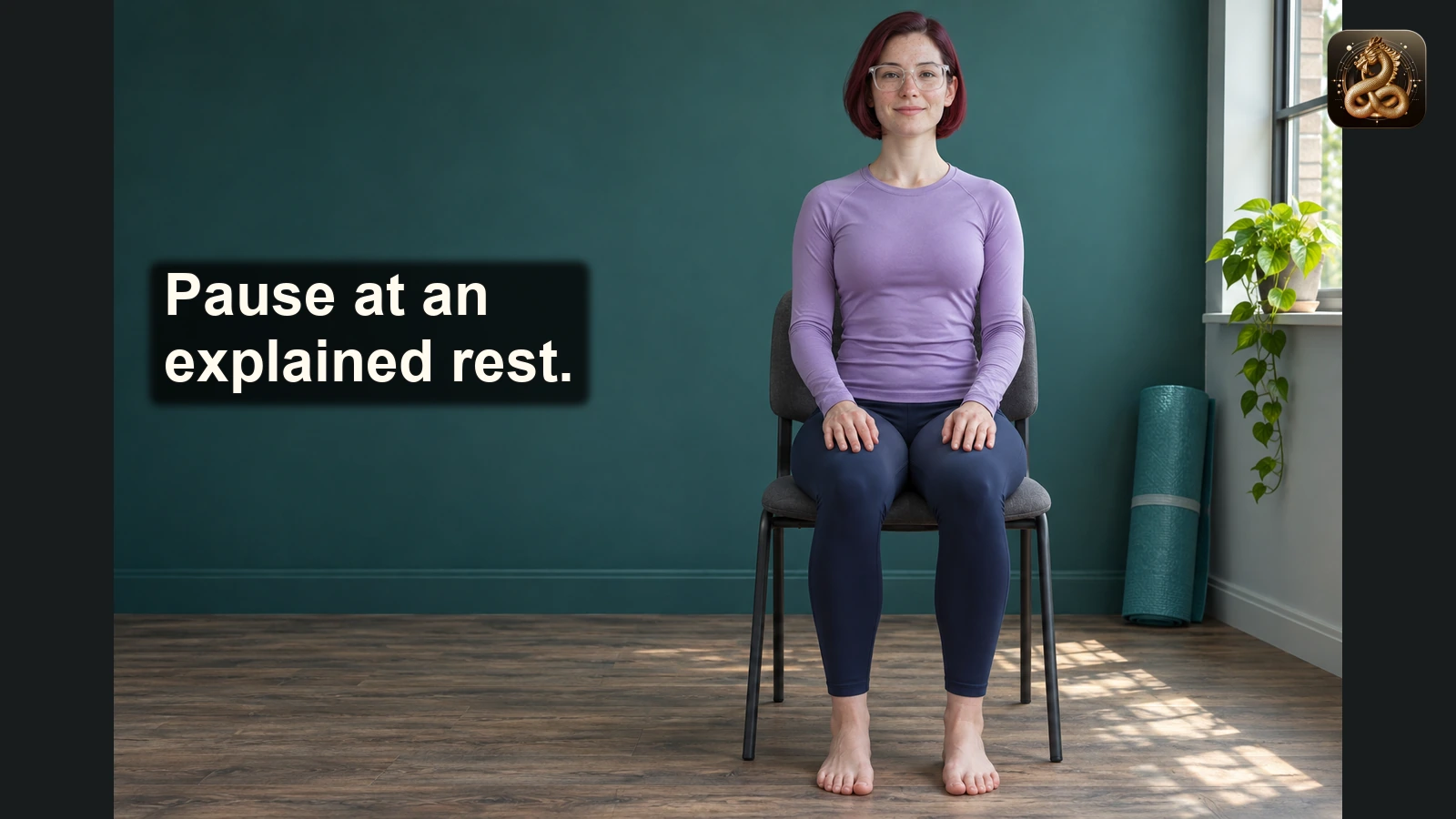
For this practice, the pause belongs where you are already at rest with suitable support. That might be an ordinary chair between separately taught seated movements, or another rest that your teacher has explained for you. The guide does not choose that position on your behalf. Its contribution begins after the physical task has ended and you have a genuine choice about starting another.
NCCIH's yoga safety guidance emphasises appropriate instruction and individual considerations. Yoga can cause injuries, and suitability varies. A moment of attention is not a substitute for that guidance or a way to assess pain, dizziness or other symptoms. If something worries you, stop the optional activity and seek the appropriate help instead of using mindfulness to override the concern.
Make a simple transition plan
Before the sequence begins, identify the resting opportunities that are already part of it. If you are following a recording, find out whether you can pause it without losing an important movement explanation. If you are attending a class, ask how to rejoin after a rest. Knowing the practical arrangement prevents the pause itself from becoming a scramble.
Keep the plan brief enough to remember. Finish the current taught movement. Arrive at the agreed rest. Notice one fact about support or the setting. Decide whether to continue. These are choices about attention; they do not tell you how to change positions. If a safe rest is unclear, the sensible next step is clarification, not adding an improvised pause.
You do not need to stop after every pose. That could make an enjoyable sequence feel fragmented or add a new obligation to monitor yourself. Choose one available break to try, or leave the idea for another practice. A useful plan makes the session more understandable and manageable; it does not require the maximum number of mindful moments.
Demonstration: one ordinary resting opportunity
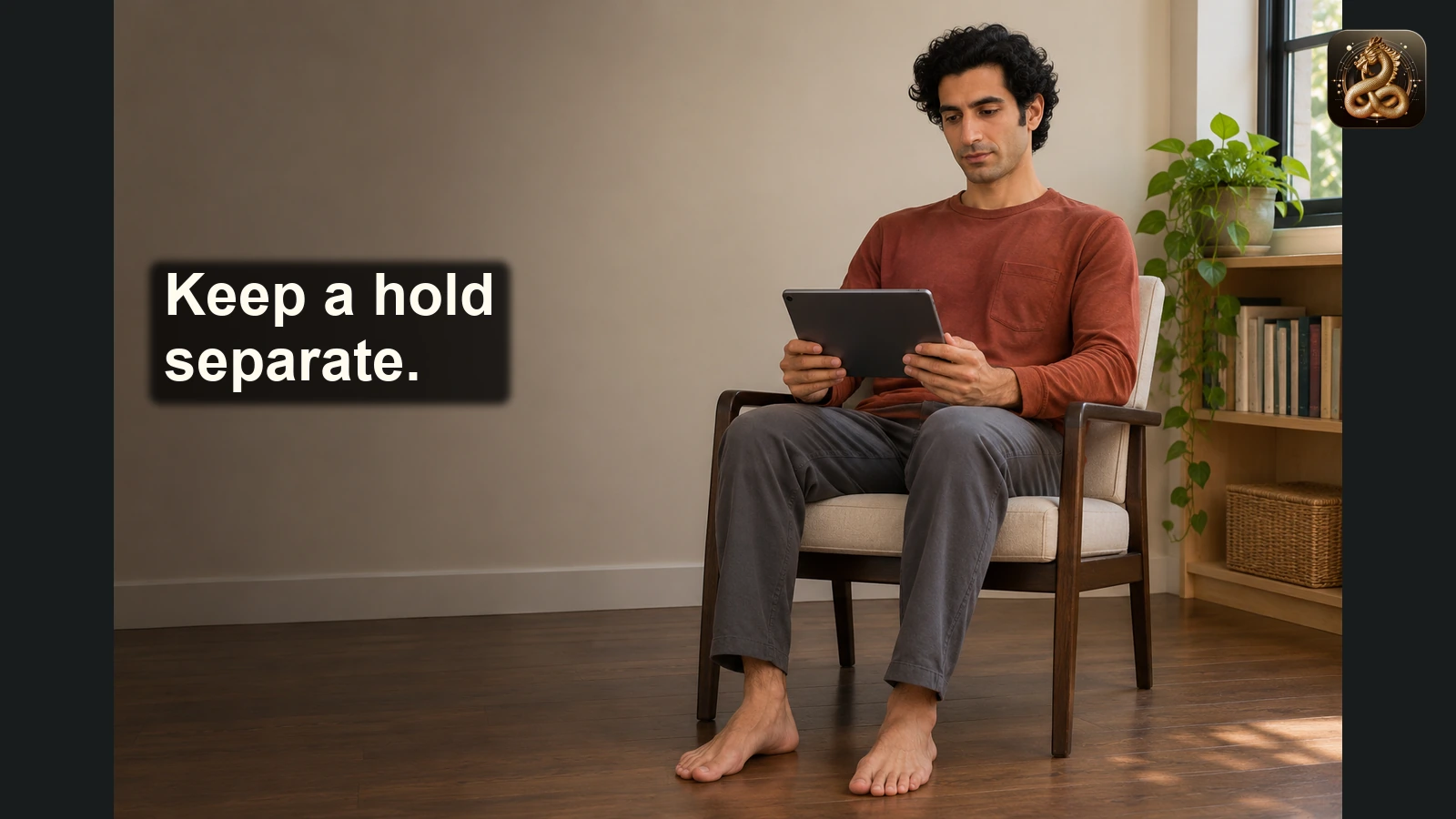
Noor is a fictional beginner following a short seated sequence that a teacher has already explained to her. The sequence returns to her supported chair between movements. Before beginning, she decides that one of those returns will be a chance to choose whether she wants another movement. She does not lengthen the movement itself or add a new posture.
When she reaches that rest, she notices the chair beneath her and the next instruction waiting on the screen. Her mind is already comparing her movement with the teacher's. She acknowledges the comparison without making it the question she has to answer. The immediate choice is whether she understands and willingly wants the next part.
Noor realises that she missed an instruction. She pauses the recording while already at rest and replays the explanation. Later, at another resting opportunity, she chooses to finish instead of continuing. Neither choice requires her to produce a calm feeling first. The demonstration concerns a workable decision at a known rest, not a promise that pausing improves a pose.
Another learner in a different sequence may need a different rest or direct assistance with transitions. Noor's chair arrangement is not a universal adaptation. Copy the decision process only when an appropriate resting opportunity has already been established for your own practice. Do not copy a physical transfer merely because the example sounds simple.
What to notice without inspecting every sensation
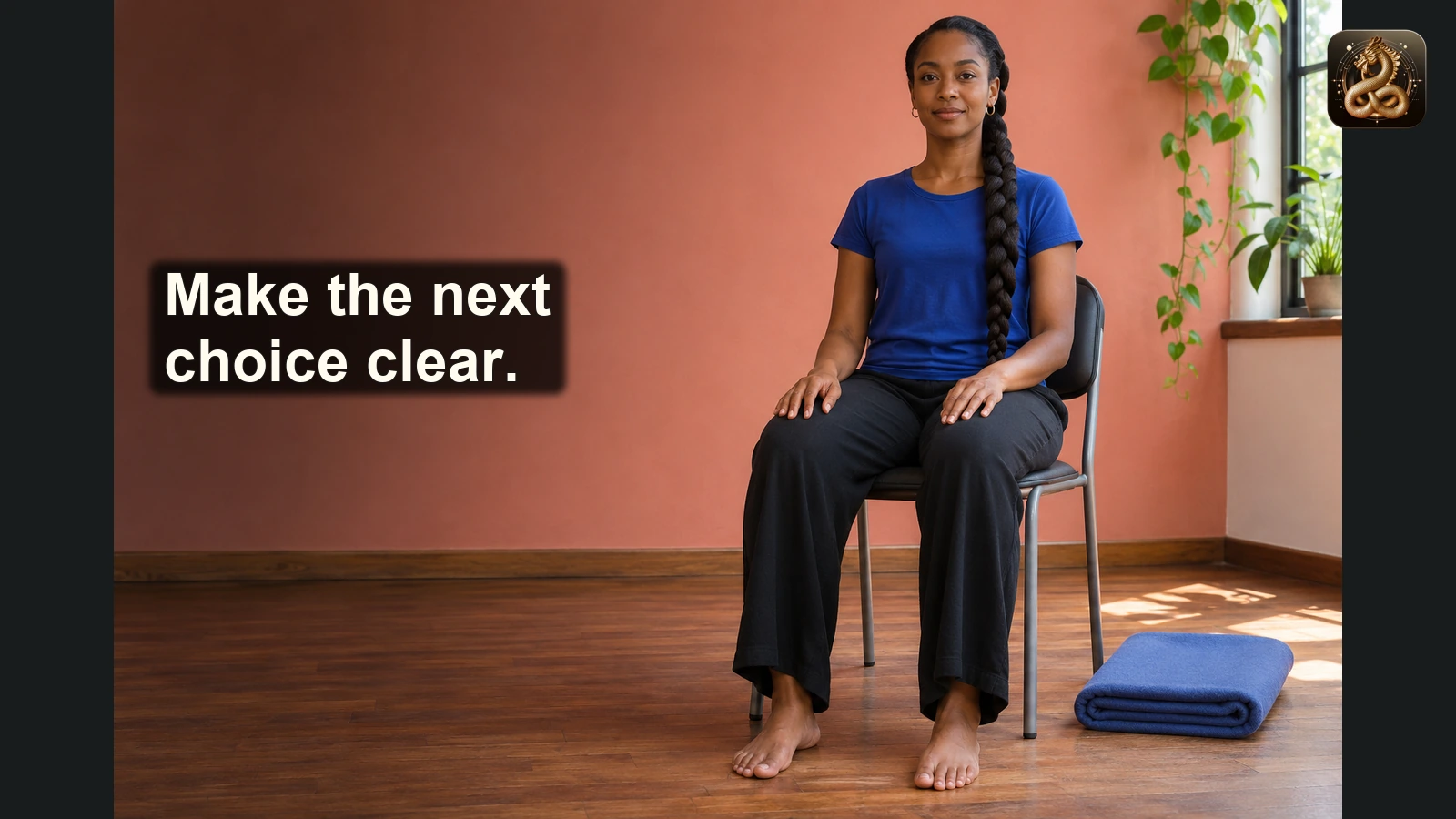
Choose one plain fact. You might notice the support beneath you, that you are already looking toward the next movement, or that you want the teacher to explain a cue again. You do not need to scan every body part or search for subtle signs. This is a moment to orient yourself, not an examination that must be completed before you may move on.
Thoughts about performance can be present too. Perhaps you are annoyed at losing your place or pleased that a movement felt familiar. There is no requirement to remove either thought. Recognising what is occupying your attention can help you make the next ordinary choice without pretending the session is free of judgements.
Keep breathing ordinary unless you have chosen and understood a separately taught breathing practice. Adding a compulsory count would introduce a new task and could make the pause feel like another instruction to get right. If the class ties movement to a breath pace that does not suit you, ask about that cue rather than using this pause plan to reinterpret it.
A table for the next choice
The table offers examples of decisions after you have reached an appropriate rest. It deliberately avoids prescribing a position, transfer or holding time. Use the row that matches the practical issue, or use none of them. A teacher who understands your sequence and circumstances can clarify the movement questions this article cannot answer.
| Practical issue | Optional next choice | What needs separate guidance |
|---|---|---|
| The next instruction is clear and welcome. | Continue using the taught arrangement. | How to perform the movement. |
| You missed a cue. | Remain at the suitable rest and ask or replay. | The meaning of the actual cue. |
| The group has moved on. | Use the explained rejoining option. | Where to rejoin this sequence. |
| Something feels worrying. | Stop the optional activity. | Appropriate instruction or care. |
Rejoin without rushing to catch up
In a live class, the group may move on while you rest. You do not have to race through the missed movement to restore the same position in the sequence. Follow the rejoining arrangement you agreed with the teacher, or ask again if it is unclear. A pause loses its purpose if it becomes a reason to hurry through something you do not understand.
With a recording, use ordinary playback controls only when you are already in a suitable resting place. Rewind for an explanation if useful, or finish without watching every remaining section. Completing an entire video is not the same thing as choosing a suitable practice. The availability of another movement does not create a requirement to attempt it.
If transitions remain confusing, take that specific question to the teacher: where can I rest, and how should I rejoin? It is more actionable than asking whether you are doing mindfulness correctly. You may need a simpler sequence, a different explanation or direct instruction. None of those needs can be settled by a longer pause alone.
For a related participation question, read our guide to a yoga breath cue that does not match your comfortable pace. It addresses the cue itself. Keep this article's planned resting choice separate from interpreting a teacher's instructions or deciding how to perform a movement.
When pausing becomes another task to perform
A small practice can acquire rules that nobody asked for: pause for exactly a certain number of breaths, check whether you feel different, or refuse to continue until your mind is quiet. Notice if that is happening. You can simplify the pause to a brief orientation or leave it out. There is no score for how attentively you use a resting opportunity.
Once at the explained rest, use the next understandable instruction as the decision point. You might continue, replay its explanation or finish. This pause needs no extra timer unless timing is already part of your teacher's arrangement; keep that arrangement rather than adding a second countdown.
You can also decide in advance not to evaluate the attempt afterward. Perhaps the most useful result is simply noticing that an existing rest was available. Another day the practice may feel fussy or interruptive. Those responses can inform your next choice without becoming evidence of personal progress or failure.
Realistic benefits and clear limits
A planned pause may make space to notice a practical need: an explanation, a rest or a decision to finish. It may help you avoid treating a sequence as a race to the last instruction. These are possibilities, not guarantees of relaxation, emotional balance or better physical performance. A pause cannot establish that a movement is suitable or safe for you.
Keep attention questions and movement questions distinct. “Did I miss the next explanation?” may be answered by replaying it. “How should I transfer my weight?” needs appropriate instruction. Attention alone cannot establish that a movement is suitable or assess discomfort.
Explore SoulFul GLO's yoga articles when you want to compare clearly described participation choices. Bring specific movement questions to a qualified teacher. You can enjoy a familiar sequence, use an explained rest and finish with something left unwatched, without turning the session into a project of perfect attention.
Let the rest remain an ordinary rest
Use the extra attention task only when it clarifies your next choice. At another rest, you may already know what you want to do. Leave that break as an ordinary rest, using the arrangement your teacher explained rather than adding a reflection out of habit.
Frequently asked questions
Should I hold the pose longer to create a mindful pause?
No. This suggestion places attention at an existing appropriate rest after the movement is complete. It does not prescribe longer holds or a stop halfway through a transition. Ask a qualified teacher where a suitable rest belongs in your own sequence.
How many breaths should the pause last?
There is no required count in this guide. Let breathing continue ordinarily and use a brief practical choice about continuing, clarifying or finishing. If your teacher has given a specific arrangement, follow or clarify it rather than replacing it here.
What if the class continues without me?
Use the teacher's explained rejoining option instead of rushing through missed movements. If that option is unclear, ask before attempting to catch up. A recording can also be stopped or replayed from an appropriate resting place.
Does noticing discomfort mean I should work through it mindfully?
No. Mindfulness is not a reason to override pain, worrying symptoms or uncertainty about a movement. Stop the optional activity and seek suitable guidance or care. This article cannot assess a symptom or select a safe adaptation for you.