
Quick answer
Choose one action that fits the money you can spend now. Write the spending limit before turning the wish into a plan, and include a free option. You can use a short manifestation meditation to bring the action to mind, then decide about purchases separately. The intention can guide how you use your time and resources while the result stays uncertain.
Put the wish into ordinary words
You might want to spend more time making things, host a small gathering or feel more comfortable in the room where you work. Write the wish in a sentence you would say to a friend. Then separate what you want to experience from what you are thinking of buying. “I want a regular hour to draw” describes an experience. “I want a new set of pencils” names one possible purchase.

Ask what could make the experience possible using what you have now. You may already have a place to sit and paper that will work for a first attempt. If an item is missing, name the job it needs to do before comparing options. You can keep the wish even if buying the item is out of reach this month.
Decide the spending boundary before browsing
Use a limit you have already chosen for this kind of spending. It can be zero. Write the boundary next to the action so the two remain visible together. “Spend Saturday morning drawing with materials I have” is a complete version. “Look up the cost of one item next week” is another. Neither sentence asks you to commit to a purchase today.

A sale price, a discount code and a limited number of places may all change what the seller presents. They do not tell you what fits your plan. If you want to reconsider the amount, do that separately, at a time when you can see the rest of your commitments. Leave the item undecided until then.
Give the intention a concrete cue
Pick a cue you already expect: after clearing the table on Saturday, at the end of the first break, or when you open the cupboard where the materials are stored. Decide what you would actually do at that cue. Keep the first step small enough to see yourself beginning it. If you want to host someone, your first step might be checking which food you can make with what is already available.
During a brief meditation, bring that cue and action to mind. Hear the words once, then return to a comfortable point of attention, such as the contact of your feet with the floor. At the end, repeat the action if it still seems useful. Leave any imagined outcome open. You can be interested in an outcome while recognising that several factors will shape it.
Try an existing guided practice. If you prefer more structure, preview manifestation meditation and choose an invitation you can apply to the action within your limit.
Two examples with different limits
Priya wants to make her desk more pleasant to use. Her limit this week is zero. She decides to clear the working surface and move a lamp she already owns. In a brief meditation, she pictures taking the first stack off the table after lunch. When she does it, she finds there is less space than she imagined. She keeps the useful part of the change and leaves buying a desk organiser for a later decision.

Owen wants to invite a friend for tea. There is room for a small purchase, but Owen first checks what is already in the kitchen and asks when the friend might be free. The intention is to make an easy invitation within the planned amount. If the dates do not work, Owen can offer another date or leave it for later. The purchase and the reply are separate decisions.
Check what you can learn from the attempt
When you reach the cue, note what actually happened. Did you start? Did you discover a practical need? Did the task fit the limit? An ordinary observation can help you decide what to change. “The old lamp was useful, but the cable does not reach” gives you a concrete next question. It leaves room to rearrange the space before shopping.
You can also discover that the free option already gave you what you wanted for now. If you still want to purchase something later, write down why and what would make it worth the amount. A useful intention leaves you free to delay, adjust or decline a purchase when circumstances change.
Review the promise separately. If a programme suggests paying for a guaranteed financial outcome, use questions to ask about law-of-attraction abundance claims to look at what the offer actually provides.
Choose an action you can point to
Take the wish you wrote and ask what you could do this week without waiting for a different income, a sale or another person’s decision. If the wish is to make more room for drawing, you could put the pencils you already own somewhere easy to reach. If you want to invite someone over, you could ask whether they are free before deciding what to buy.
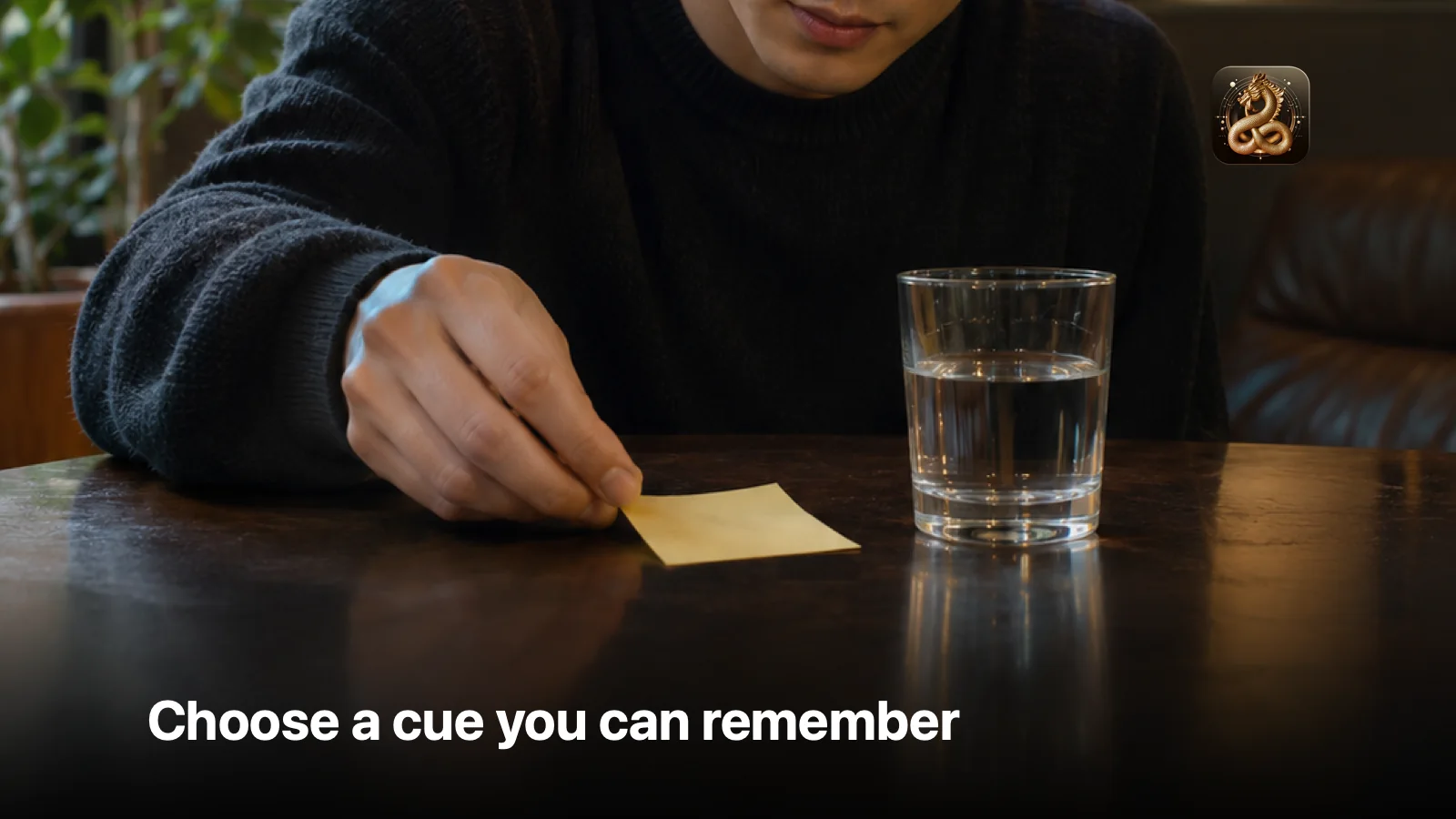
The action should be specific enough that you would know if you had done it. “Look after my space” might be a useful intention, but “clear one corner of the table on Saturday” tells you what to try. You can change it later. Its purpose is to give you a place to start with what is available.
Write down the simplest version first. If you want a small lamp for your desk, the first action could be moving an existing lamp and seeing what changes. If that does not work, you have learned what the new lamp would need to do. You can use that information when you decide whether to buy one.
Write a decision rule before looking at offers
A spending boundary can be easier to use if it includes a rule for the moment an offer appears. You could decide to leave every item on a list until the following day. You could also decide to compare only options that meet a particular need. This gives you something concrete to do when a discount or a countdown creates urgency.
Write the rule in words you can use quickly. “I will look at the total before choosing” or “I will check whether I already have a suitable item” are practical examples. A rule should fit the decision you are making. You can stop looking when you have enough information to choose.
Keep the cost separate from the qualities that caught your attention. A notebook might feel appealing because the paper is pleasant or because the cover reminds you of the kind of work you want to do. Acknowledge those qualities, then consider whether the notebook solves an actual problem that the one you have cannot solve.
Plan for a day when the intention feels less vivid
An intention can feel clear when you first write it and less clear after a busy week. Give yourself a prompt you will recognise even then. A note next to the materials you want to use can help. You can also use something you already do, such as clearing the table after breakfast, as a reminder to start.
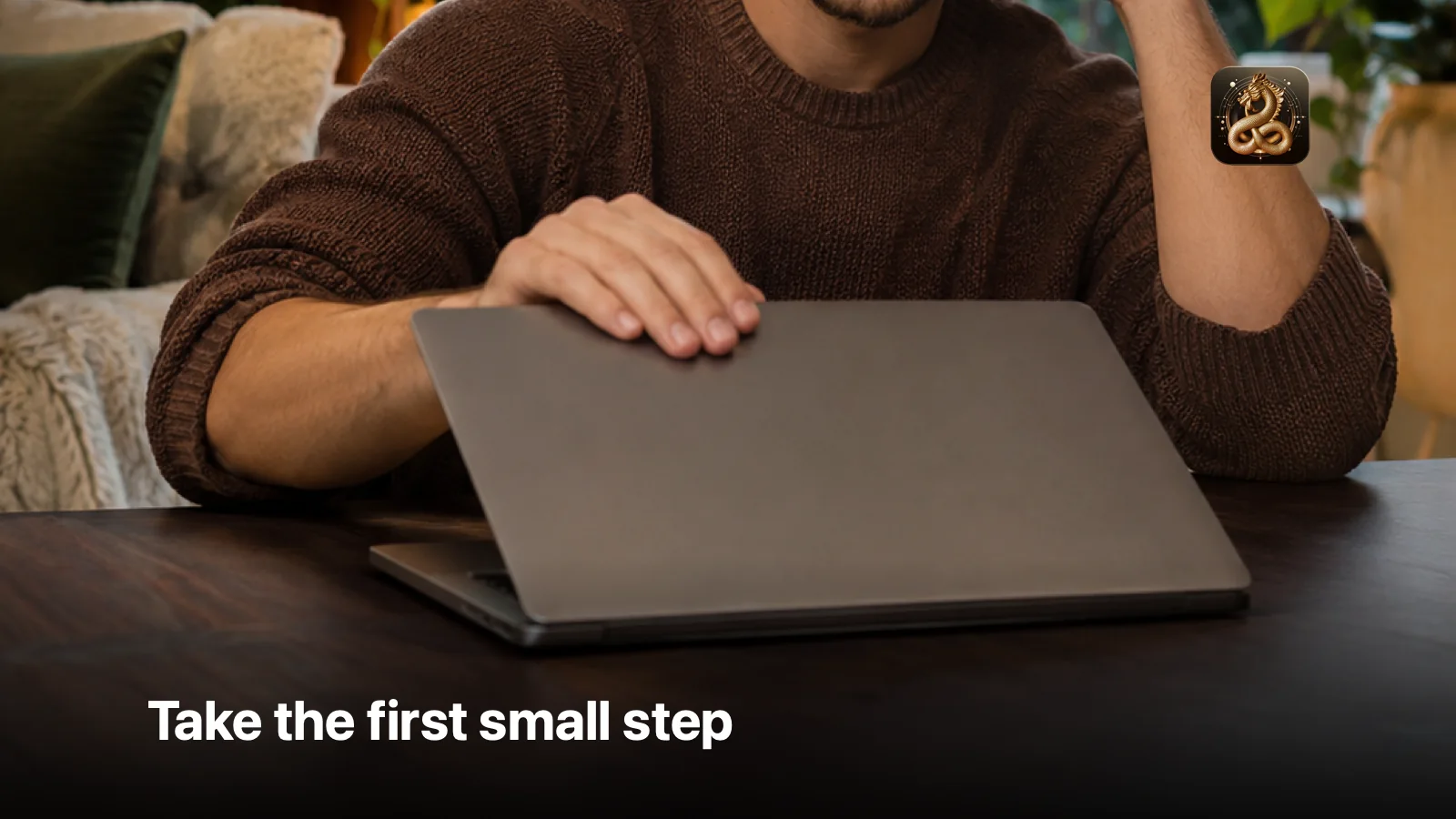
If you miss the planned cue, look at what happened before deciding what to change. Maybe the day was busier than expected or the action needed materials you had not found. You might move the cue, choose a smaller action or use what you already have in a different way. A missed cue is information you can use.
A short meditation may help you remember the action you chose. Imagine the actual place where you would begin and the first thing you would pick up or set aside. You can end by saying the action once in plain words. The purchase decision still happens separately, with the information you have at that time.
Review the result without turning it into a score
After the attempt, ask what became easier, what stayed awkward and what you would change next time. A successful first step could simply show that you enjoy the activity and want to make time for it. It could also show that the original idea would be more work than you want right now.

Keep any money decision tied to what you learned. If you are considering a purchase later, write down the problem it would solve and which alternatives you tried. If you decide against buying, you can still keep the original wish and choose another action. Spending less and changing your plan can both be deliberate choices.
Try revisiting the intention after enough time to see what the action involved. You can keep it, adjust it or set it aside. If a new idea comes up, go through the same steps: identify the action, name the spending boundary and choose a cue. Leave room for the result to be different from what you pictured.
If you share the intention with someone, tell them what you are trying and what kind of feedback would help. They may notice that you already have a suitable tool or suggest a free place to practise. Treat the suggestion as another option to consider. You can decide whether it fits the limits you set.
For a simple example, say you want to cook with a friend more often. A first action might be to ask what evening would suit you both and check which ingredients you already have. You can agree on a dish before buying anything. The intention is useful if it helps you take the step you chose, whether or not the first invitation works out.
Keep the next step where you can see it. A reminder at the point when you normally choose what to do will be easier to use than a note you need to search for later. Check whether the step still fits that day before committing to it.
Frequently asked questions
Can I set an intention if I cannot spend anything?
Yes. Decide what action you can try with time, space or materials you already have. A free version can be complete on its own.
What if a practice asks me to imagine already having the result?
You can choose another cue, such as picturing yourself beginning the action. Use the invitation only in a way that remains comfortable and practical for you.
Should a meditation tell me whether to buy something?
Keep the purchase decision separate. Compare the cost, what the item does, and how it fits your existing commitments.
How do I know whether the intention was useful?
Ask whether it helped you remember and choose an action you were able to take. Outcomes can depend on circumstances beyond the practice.