
You begin a voice entry about an ordinary afternoon. Halfway through a sentence, the detail you meant to describe disappears. The recorder is still running. You can hear the silence and find yourself trying to reconstruct the sentence instead of deciding what you want to say next.
A private journal can retain that moment. You may recover the thread, begin another sentence or finish without remembering it. This guide offers composition choices for an ordinary recording. It does not assess why a thought went missing or promise to improve memory, confidence or mental health.
Quick answer
Let yourself pause without supplying a detail you do not remember. Name the subject you can still identify, if that helps: “I was talking about the walk home.” Continue from a known point, say that part of the thought is missing or end the recording. Keep a new guess separate from an actual recollection, and leave repeated playback optional.

Choose a private, ordinary occasion when your attention is available. Do not record while driving, operating equipment or handling another activity that needs active attention. You do not need to recreate the original scene or record other people to make a personal account.
Notice whether you lost a word, a sentence or the subject
A missing word and a missing direction are different writing problems. You may know you are describing a chair but forget the word for its fabric. In that case, an ordinary description such as “the rough grey covering” may carry the account adequately. Precision is useful only when it serves what you wanted to record.
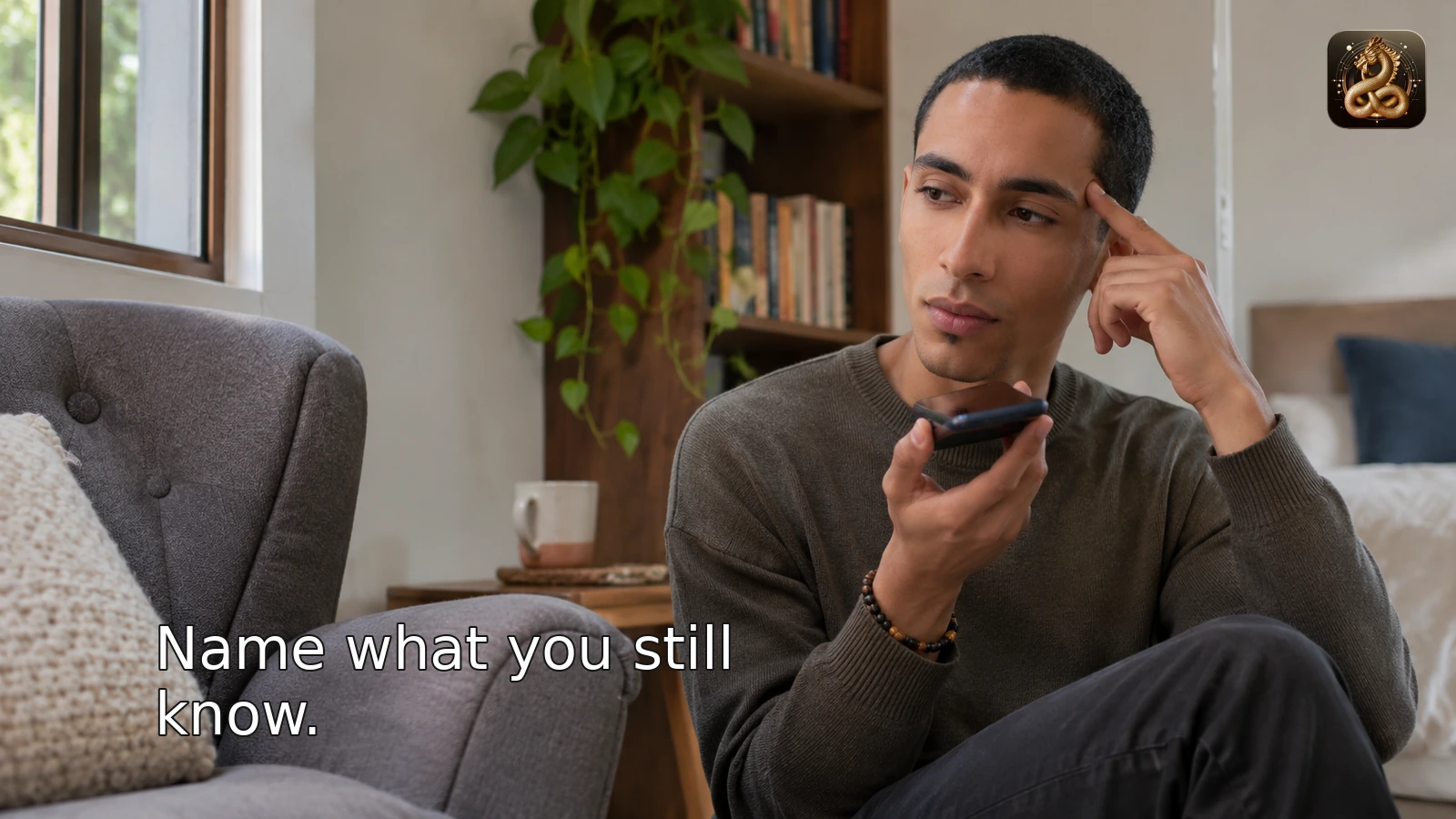
Sometimes you know the subject but not the sentence you were building. You might remember that the entry concerns meeting a neighbour, without remembering the point you intended to make. Start a fresh sentence about a detail you can actually describe. The abandoned sentence can stay unfinished.
At other times you cannot identify what you meant to discuss next. You can say that you have lost the thread and stop. A short recording with a clear limit can remain an honest record of that attempt. There is no required amount of speech after a pause.
Avoid turning these distinctions into categories you must diagnose. They are practical questions for choosing the next sentence. Use whichever description helps you continue, and leave the exercise if sorting the problem adds more work than the journal is worth today.
Give the pause room without filling it with a guess
Keep a brief silence if you want one. You do not have to talk over it with apologies, explanations or a repeated opening. A future listen can contain an ordinary pause without anyone needing to smooth it out. You are recording for your own purpose, rather than performing a continuous presentation.
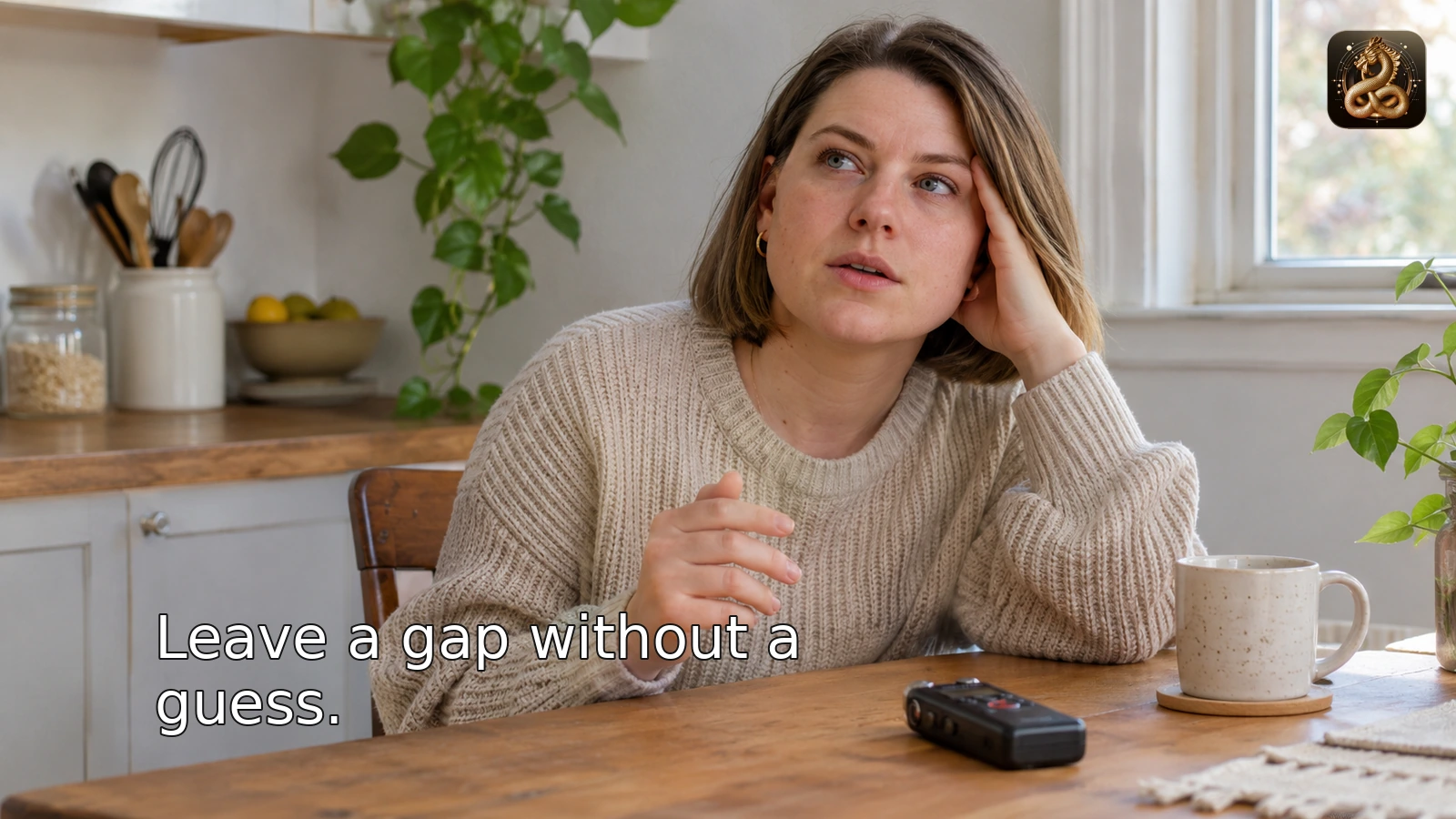
If a possible detail appears, notice whether you remember it or are constructing something plausible. “Maybe I was going to describe the shop window” marks a possibility. It should not become “I definitely meant the shop window” merely because saying it produces a smoother story.
You can leave an uncertainty in the audio. For example: “There was something else about the walk, but I cannot bring it back just now.” That sentence preserves the boundary of the account. It does not establish what the missing thought concerned or require you to recover it later.
Set the pause's length by comfort and preference, rather than a rule from this article. You may wait briefly, speak again immediately or stop the recording. A personal journal has no continuous-speech requirement and no award for keeping the microphone running.
Use one known point as a place to resume
Return to a point you can name without inventing the missing connection. That might be the room you were describing, an object you were looking at or the question you began with. Say the point plainly and continue with what is available now.
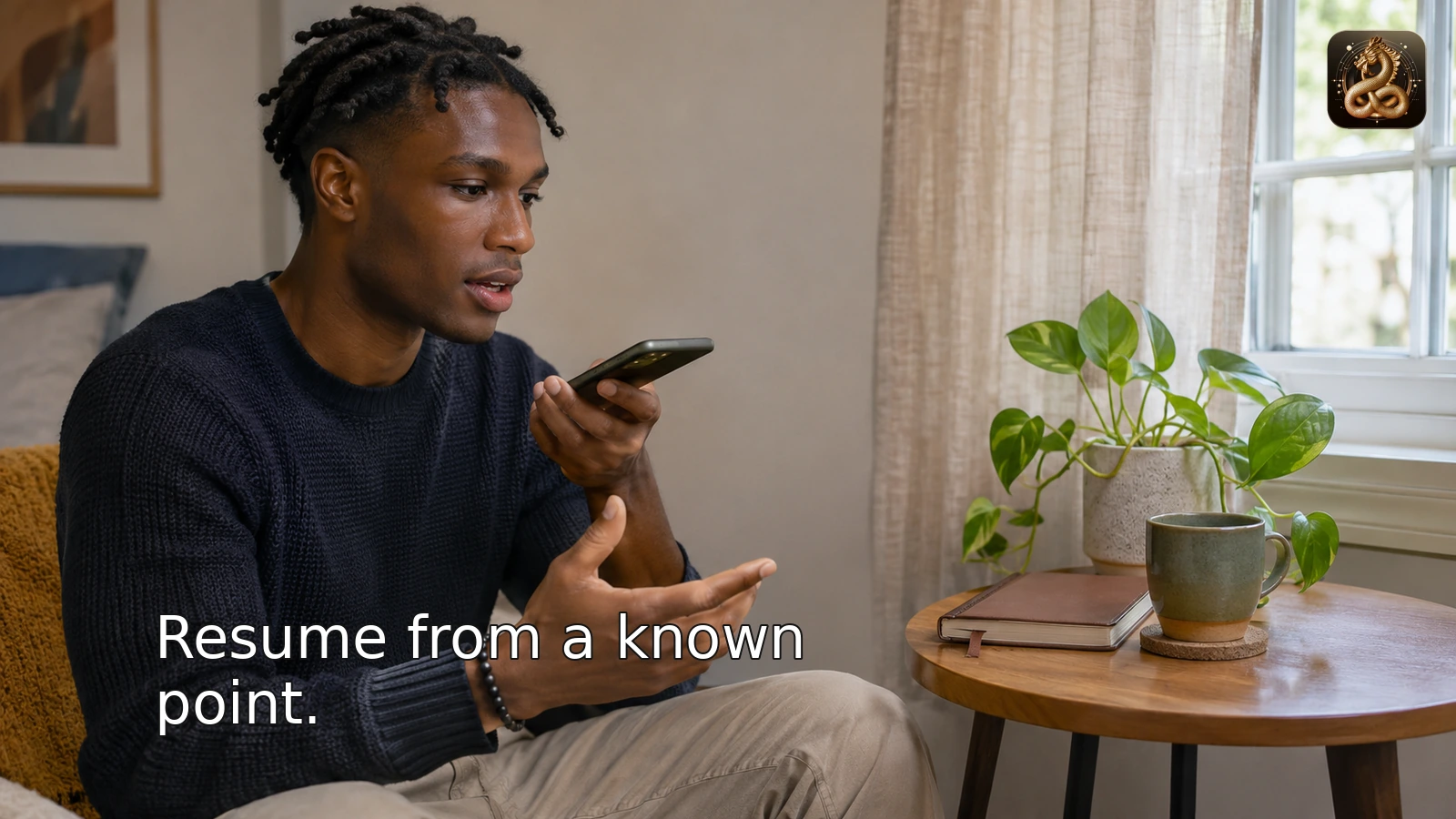
A simple transition can help: “Back to the chair by the window.” It tells a later listener where the next part belongs. You do not need to repeat everything before the pause or pretend that the new sentence completes the earlier one.
If the recovered subject differs from your original plan, allow that change to be audible. You might say, “I cannot remember the detail I meant, but I do want to note the colour of the light.” The recording then distinguishes a missing thought from a present choice.
Keep that cue small. A page of preparation can become another task to follow. If a few written words are helpful, use them as optional signposts rather than a script you must complete. Check where a paper cue will be visible before writing personal information on it.
Mark a gap without turning it into a correction
Losing a thought does not necessarily make the earlier words wrong. Perhaps the description before the pause remains accurate as far as you can tell. Leave it alone unless you have a specific reason to correct it. An incomplete account and a mistaken detail need different responses.
You can say, “I have left something out, but I do not know what it was.” Avoid promising a later explanation unless you actually want to return to it. You may keep the rest of the entry without making the gap into homework.
If you do notice a factual mistake while speaking, read SoulFul GLO's same-recording correction guide. That separate method identifies the detail being replaced. Here, the choice is how to continue when the intended words themselves are unavailable.
A missing connection is not proof that a guessed sequence is true. You may remember entering a room and later opening a parcel without knowing what happened between them. Say those two remembered moments if you wish, leaving the interval undescribed.
Choose whether to keep recording
Ask whether you still have something you want to say. If a present observation or another part of the account interests you, continue. If all your attention has shifted to searching for the missing thought, stopping may be the simpler choice.
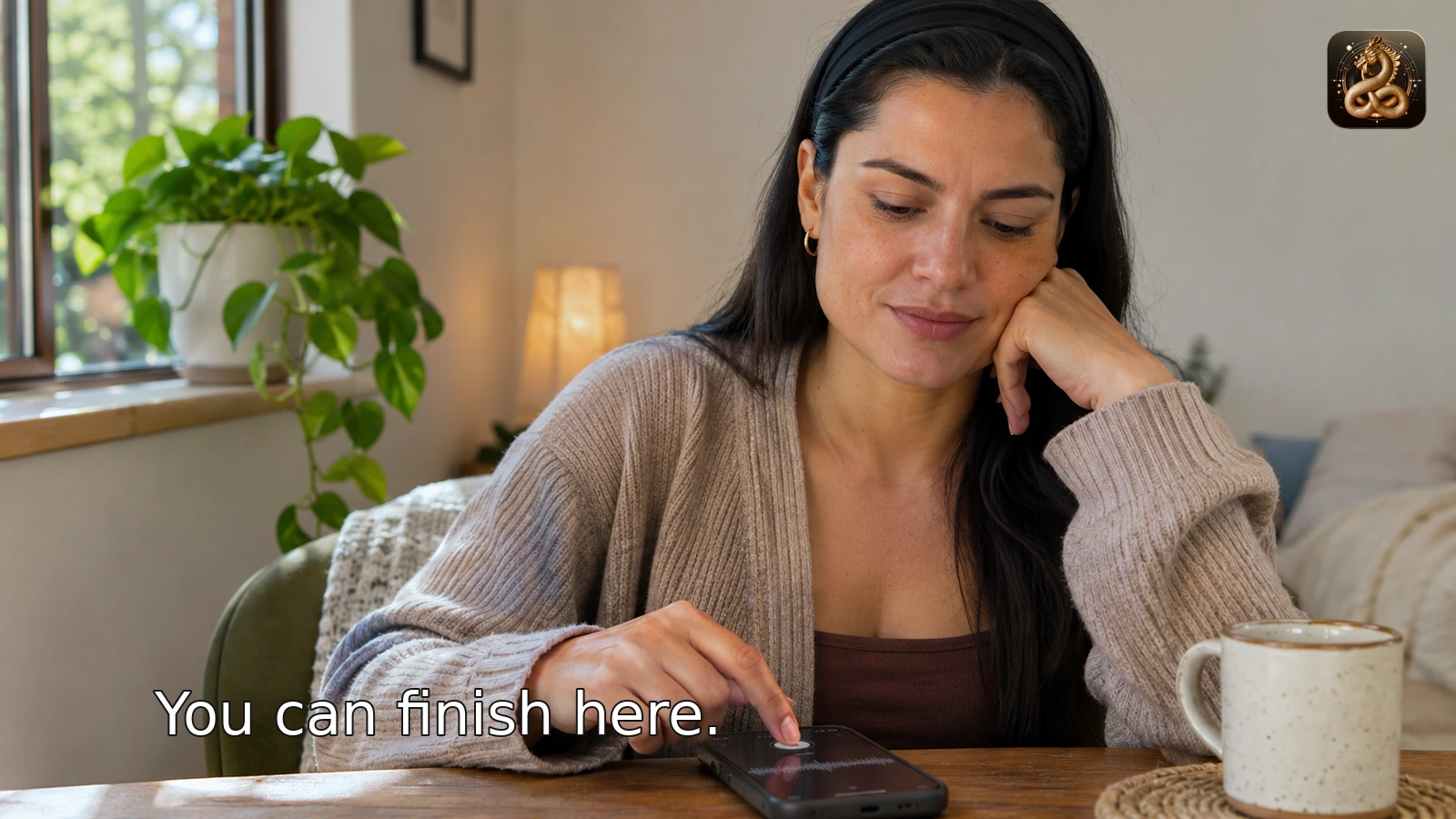
You can finish with a plain sentence such as “I will leave this entry here.” That gives the audio an ending without explaining the gap. A polished closing reflection is optional, and silence at the end does not turn the entry into a failed take.
Check the actual recorder's controls when you are ready to finish. This article assumes no automatic saving, pause function, transcript or recovery feature. If you are unsure whether an action stops, saves or discards the recording, use the tool's current guidance before relying on it.
Keep the stopping decision separate from the decision about retaining the file. You may want to listen once before deciding what to keep, or simply retain an imperfect entry. Use controls you understand and check the selected file before removing anything.
For an earlier-stage choice about hearing your recordings, explore SoulFul GLO's voice-journaling playback guide. It keeps listening optional; a lost thread creates no new obligation to review every second of audio.
Listen for continuity only if you want a check
A limited playback question may be enough: can you tell where the account resumes? Listen to the pause and the following sentence if the actual tool makes that convenient. You need not review every hesitation or judge whether your voice sounds confident.
If the new sentence changes the subject without a signpost, you can keep it as it stands. Alternatively, record a separate later note when clarification matters to you. Do not describe a later explanation as though it was present during the original take.
Repeated listening may still leave the thought unavailable. This guide sets no number of replays for recovering it. You can stop checking and use the account that exists. An incomplete private recording does not require an investigation into every unwritten or unspoken intention.
Use SoulFul GLO's dated voice-journal addendum guide for a clarification made after the recording ended. Retain the later date and its relationship to the earlier entry. That keeps two occasions distinct without pretending the original audio has changed.
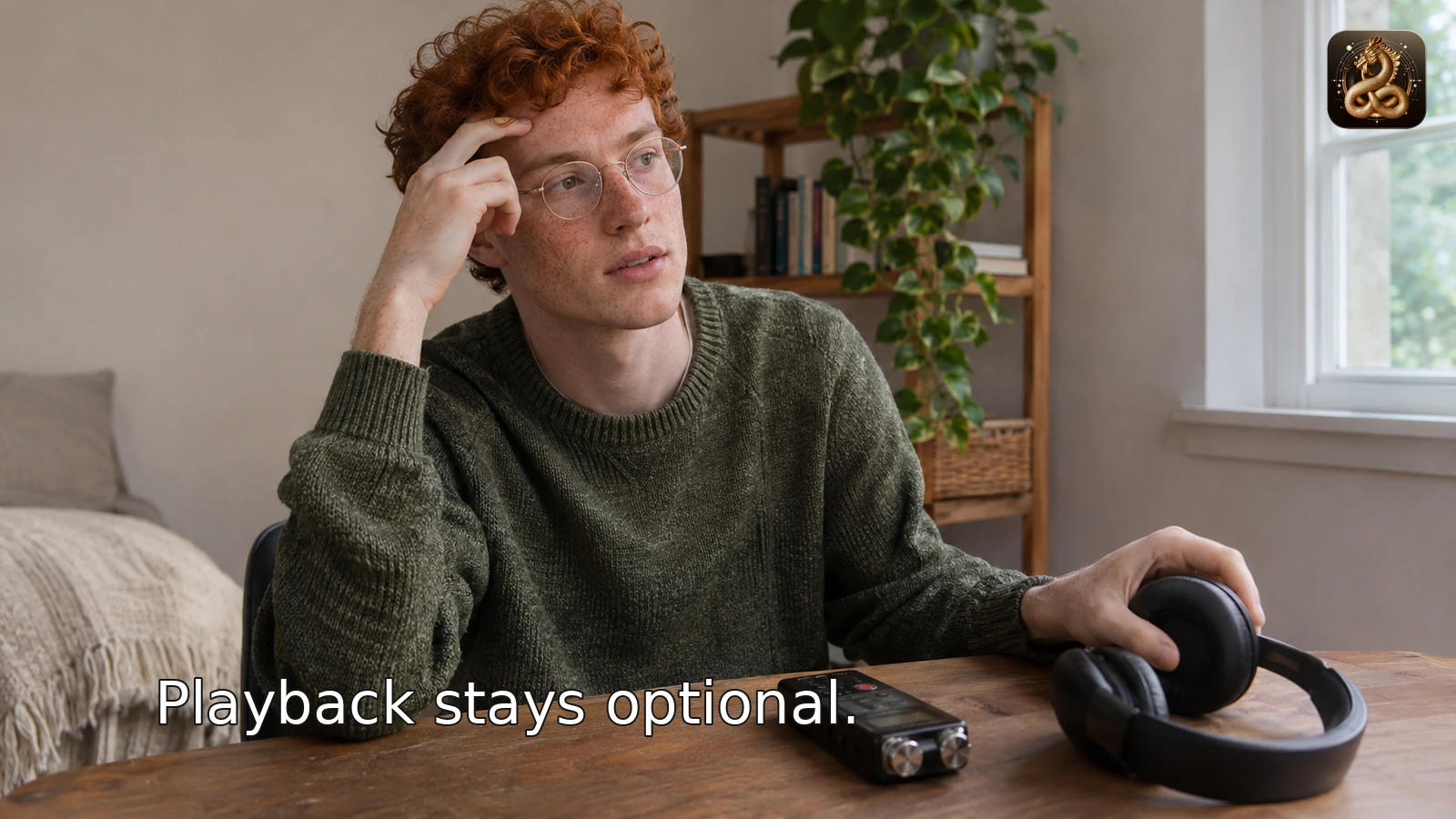
Two fictional recordings
Resuming from the scene
In this invented example, Farah is describing moving a small table beside a window. She begins a sentence about what caught her attention, then loses the thought. After a pause she says, “I do not remember that detail. The part I can describe is where the afternoon light reached the table.”
She continues with the light and the room, without supplying a reason for forgetting or deciding that the missing detail must have been important. The unfinished sentence remains in the recording. Her new sentence identifies a known part of the scene.
Farah might later remember something else, or she might never return to it. Neither possibility needs to be resolved for this entry to end. The fictional example illustrates how an account can continue while keeping its gap audible; it is not evidence of improved memory or wellbeing.
Choosing an ending
In another fictional situation, Leon starts an entry about an ordinary walk. He loses the subject he intended to discuss and notices that each new sentence is another attempt to guess it. He says, “I cannot find the point I meant to make, so I am stopping here.”
He stops using controls he understands. Later he keeps the short recording because he wants to retain the few observations at its beginning. He does not treat keeping it as a commitment to reconstruct the rest. Another speaker might choose not to keep a similar trial recording.
The difference between these examples is what the speaker wants to do next. One has an available detail to describe; the other prefers to finish. The exercise provides options for composing a personal record rather than a single correct way to manage every pause.
Keep the journal separate from records others rely on
A voice journal can be incomplete, uncertain and personal. If the missing detail concerns an appointment, payment or commitment someone else needs to know, check the appropriate ordinary record or conversation separately. A private audio note does not correct a shared calendar or tell another person that a plan changed.
Likewise, avoid presenting a reconstructed journal account as a verbatim record of someone else's words. Say what you remember from your point of view and leave uncertain dialogue open. Recording your present account is different from possessing an original recording of the event.
If memory changes are persistent, concerning or affecting daily life, seek appropriate professional advice. This article cannot determine their cause. Journaling is an optional self-care or creative practice, not a diagnostic test, treatment or a substitute for necessary support.
Make the next entry easier to begin, if you choose another
You may start next time with one subject you can name. A few cue words can be available on paper if that suits you. Use ordinary materials you already have; this method requires no specialist microphone, detailed outline or particular app feature.
Keep preparation proportionate to the recording. If the cue becomes something you must follow exactly, you can set it aside. A new entry may take a different direction, and losing one thread does not mean every future recording needs a script.
A usable personal account can include pauses, changes of subject and an explicit limit. Decide what matters for your own later use. There is no need to make the recording sound as though you knew the whole story before you began speaking.
Frequently asked questions
Should I restart the whole recording?
Only if you want a separate new attempt. A missing sentence does not require replacing the existing account. You can pause, name a known point and continue, or finish. Check what your actual tool preserves before choosing an editing or replacement action.
Must I explain why I lost the thought?
No explanation is needed for an ordinary composition choice. You can say the thought is unavailable without attributing a cause. Avoid turning one pause into a claim about your abilities or using the journal to assess a health concern.
Can I leave silence in the saved entry?
Yes, if you want to keep it and your recorder supports the saved result. Silence may simply mark where you paused. It does not have to become a meditation exercise, an editing problem or a reason to repeat the whole account.
What if the missing thought returns tomorrow?
You can make a dated later note if it is still useful. Describe it as today's recollection about the earlier recording, retaining any uncertainty. A later memory does not prove what you would have said during the original pause.
Leave a clear place to continue or finish
For your next optional recording, read SoulFul GLO's spoken-title guide if a simple subject at the beginning would help you recognise the entry. Let the recording remain ordinary, including a pause or an unfinished sentence when that is what happened.