
A book you lent a friend comes back with the old bookmark still tucked inside. You remember reading at the kitchen table when you decided to lend it. Now you put it back on the shelf and notice that you are not ready to start it again. Those two moments are enough for a journal entry, even if you have no idea what happened to the book while it was away.
Choose an ordinary object you know first-hand. Your subject is the way it fit into your day before it left and the way it fits now. The result can be a small account of lending, receiving and using something again. It need not settle what the borrower thought, whether they used it well or what lending says about your relationship.
Quick answer
Write two short scenes around the same object: one from when you lent it, and one from when it came back. Give each scene a concrete detail you remember noticing. If you know little about the time in between, leave that stretch unwritten. End with what you actually did next or what you noticed was different. You can finish without drawing a conclusion about the other person.

Choose an object small enough to keep in view
A book, tape measure, mixing bowl or bag for carrying groceries can hold the two scenes together. Choose something you recognise and can describe without looking up a price or reconstructing the whole history of owning it. An object you remember clearly from one moment and can see now is enough.
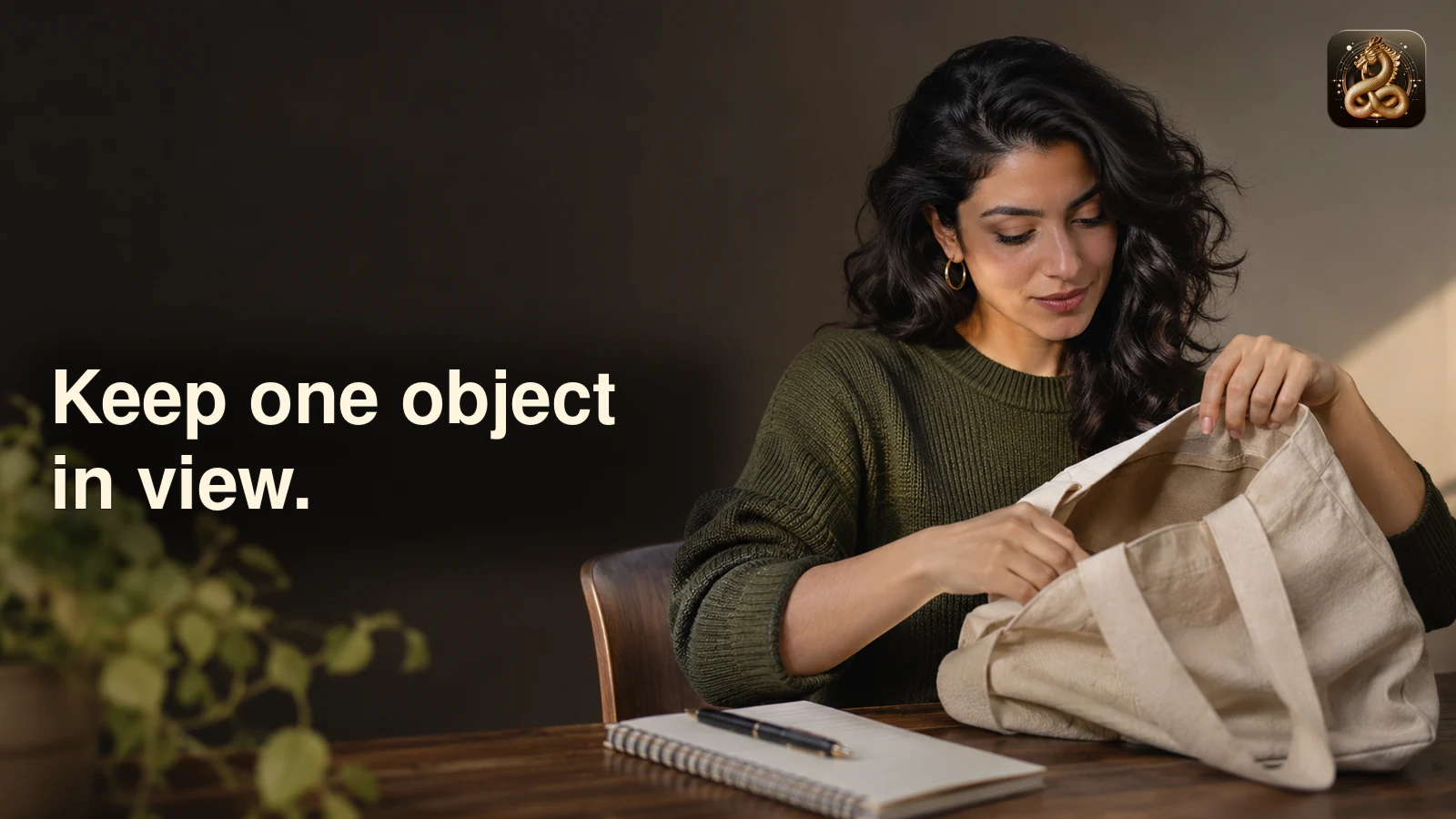
Begin with a short working name for the object. “The round tin with the loose lid” may help more than “the tin I lent.” The description gives you something to return to if your entry starts following other details. A familiar name also makes the passage recognisable when you read it again without the object in front of you.
If the loan involved money, a disagreement or a serious problem, decide whether you want to write about that at all. This guide concerns a small personal entry. A journal is not a substitute for any record you actually need to keep elsewhere. You can choose a less consequential example and still try the same form.
Give the departure its own scene
Start close to the moment the object left your use. If you remember walking to the front door with a covered dish, write that before explaining why you offered it. The door, the weight of the dish and the cloth you used to cover it can make the scene understandable without a long account of the day.
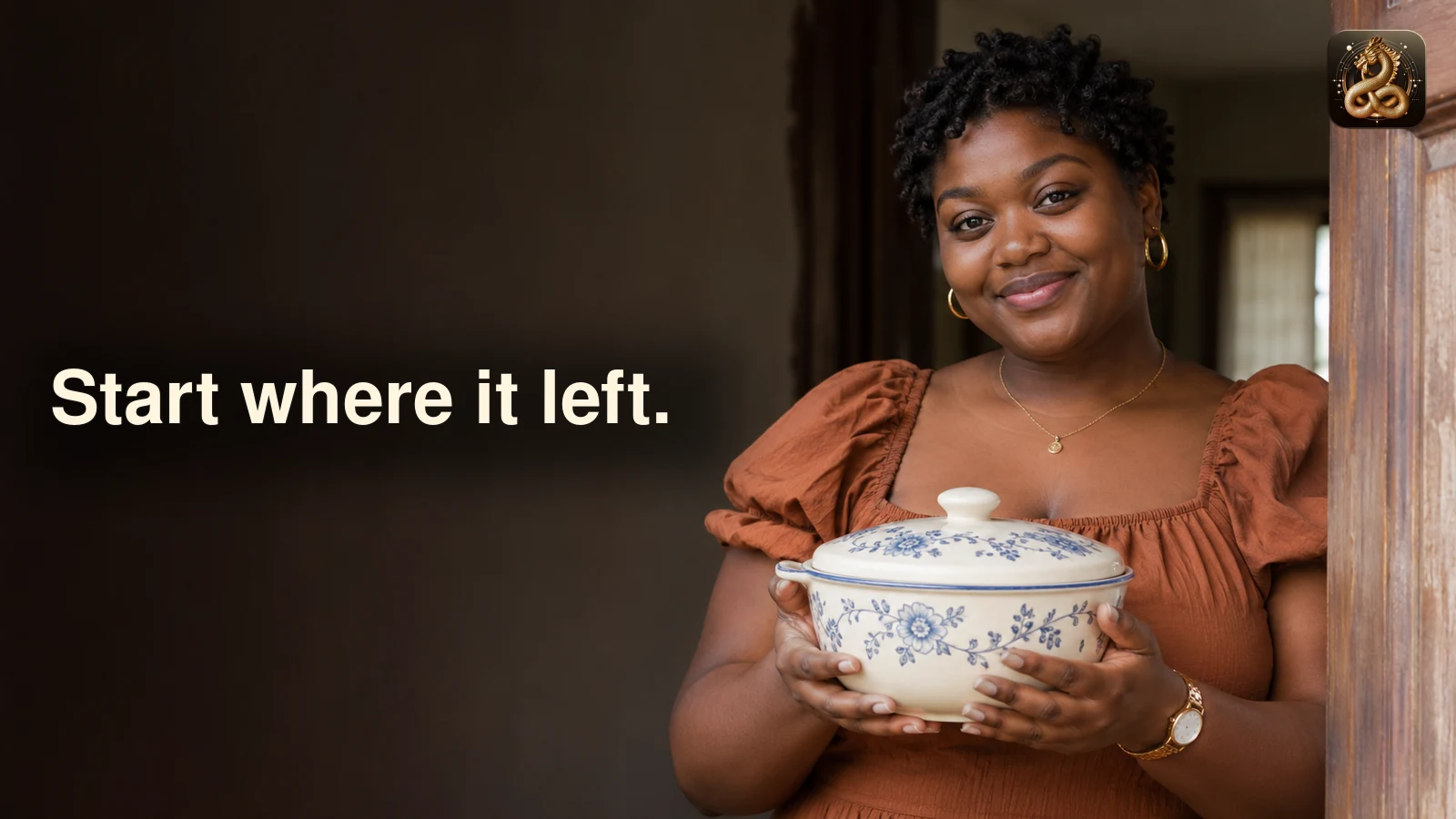
Choose one detail that came from your own attention. You might remember checking that a lid was secure or taking a receipt out of a book before you handed it over. You do not need to recover exact dialogue or name the person who took it. If all you remember is putting it on a table to be collected, begin with that.
The departure can include what you expected at the time. Keep the expectation beside the scene rather than in place of it. “I thought I would use it again the following weekend” says what you remember expecting. “It was always going to be back by then” says something stronger. Your page can keep the difference visible in ordinary words.
Leave a gap when the object was out of view
You can move from the first scene straight to the return. That jump is part of the form. You are writing the parts of the object's journey that intersected with your day, and the time you did not see may have nothing to add to this entry.

If someone told you how they used the object, decide whether that detail matters. “My friend said the bowl held apples at lunch” retains the source. The sentence does not require you to imagine the room, the apples or a conversation you were not there to hear. If the detail carries no weight in your two scenes, leave it out.
It is easy to give an unexplained mark a story. Suppose a ruler comes back with a small stain. “There was a dark spot near the end when it came back” is an observation. “It was left on a wet bench” needs evidence you may not have. You can keep the spot in the entry without solving how it got there.
Check how to label another person's account
If a detail someone told you matters to the scene, use SoulFul GLO's guide to separating firsthand and reported details in a journal. A short phrase such as “she told me” can carry the distinction without an elaborate system.
Write the return with the same care
Choose the first moment the object was available to you again. That might be when you opened a bag, found the book on a table or took the dish out of the cloth covering. Name the place and choose one detail that makes the moment particular.
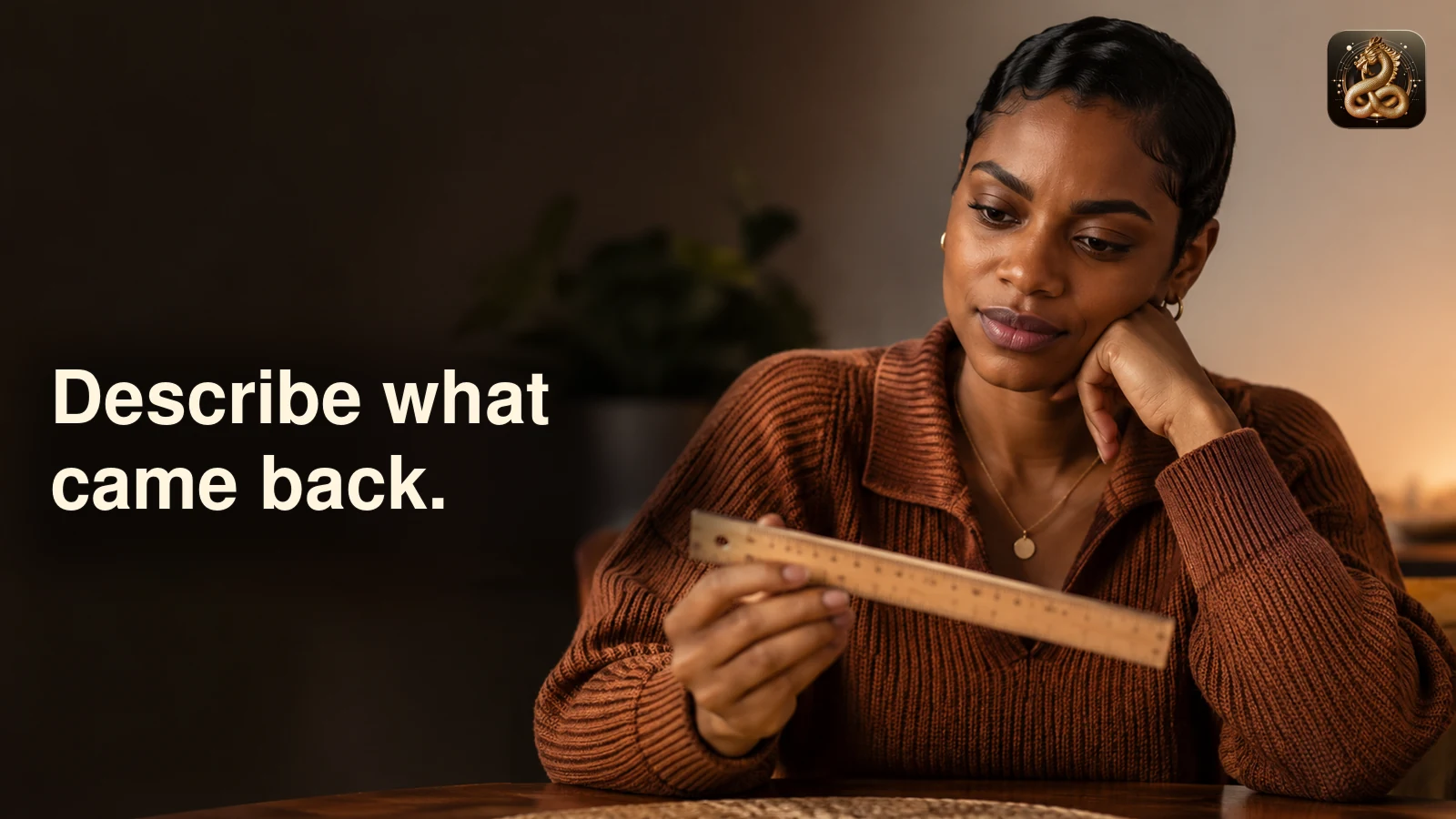
If the object has changed, describe the change at the scale you can see. The lid moves more freely. The pencil is shorter. A folded handle no longer stays flat. You do not have to decide whether the change matters before writing it. If the object seems exactly as you remember, the return can still mark a change in what you do with it.
Give the two scenes comparable space. A return often attracts more detail because it is recent. One clear sentence about the departure and one about the return may be enough if you have little to say about either. The point is to make the relation between the moments visible, without manufacturing symmetry that was not there.
Decide what to compare
You can compare condition, place or use. The book left the kitchen table and came back to a shelf. The bowl left as a container for food and came back when you needed somewhere for keys. The tape measure looked the same but you put it somewhere easier to reach. Choose a comparison you can actually support.
Notice which comparison interests you before adding another paragraph. The book going back on the shelf may be enough, even if you also have opinions about whether you will lend it again. If you want to explore that separate decision, you can start a different entry. This page can stay close to what was lent and what happened when it returned.
Keep a small space for uncertainty. “I remember leaving it by the door; I don't remember what I put it in” may be the most accurate opening you have. The uncertainty need not become the subject of the entry. It can sit beside the detail you wanted to preserve.
Another possible ending is to notice that the return did not matter much to your routine. You lent a tool, got it back and placed it in the same drawer. You can write that plainly. The account need not turn into an argument that lending is good or that you should keep more of your belongings. The object gives you a small story with a definite stopping point, even when there is no lesson to take from it.
Try two ordinary examples
Mara lends a canvas bag to someone who is carrying several loose items. She remembers emptying the small inside pocket first. When the bag comes back, the pocket is still empty and she hangs it near the door rather than putting it inside a cupboard. Her entry follows the bag from a moment of preparing it to a moment of deciding where it goes.
Mara could write that the new location will make the bag easier to remember, but she has not used the arrangement yet. A narrower line would be: “I left it where I can see it from the door.” Later, if she finds that she actually uses it more often, she can add that observation in a new entry.
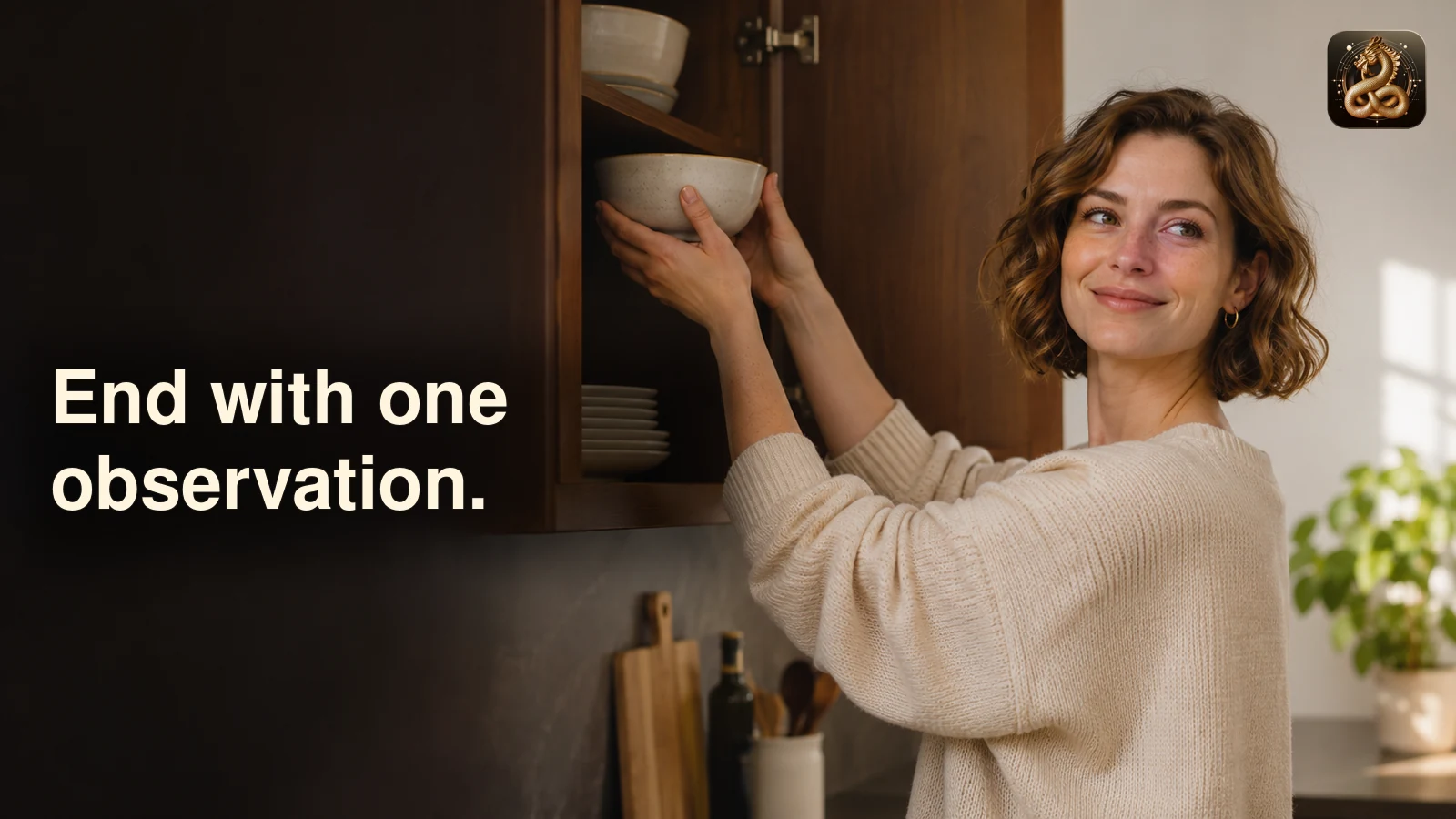
Ravi lends a plain mixing bowl and finds it on his table the next morning. The borrower says they used it to carry oranges. Ravi writes down what he was told because the use is different from his own, but he does not describe a gathering he did not attend. He ends with washing the bowl and putting it back beside another one.
These invented examples are short because the objects carry much of the connection. Each entry names a departure, a return and a present action. Only the second has a reported detail, because that is the only place where a report adds something to the particular account.
If your first version is mostly a list of the object's features, read it once and ask where your own actions enter the account. A short description of wrapping a dish or clearing a pocket can do more than another sentence about colour. Conversely, if you have written a long explanation of why you said yes, one visible detail from the return can bring the entry back to the object you chose.
Stop where the object returns to ordinary use
A final action can give the entry a place to end. You put the object away, use it, leave it on the table or decide that its next use can wait. If there is no action yet, a direct observation can close the page. “It is back beside the other bowls” tells the reader where the small story has stopped.
You can reread the two scenes and check whether the same object is recognisable in each. If the first sentence calls it “the bag” and the last one could refer to anything, add one useful detail rather than a general reflection. A mark, colour, location or use can make the connection clear.
Leave any borrower information as private as you want it to be. A relation such as “a friend” may be enough for an ordinary entry. If you later copy a passage for someone else to read, review that copy separately. This page can stay in the form you intended for yourself.
Frequently asked questions
Can I write about an object that has not come back?
You can write the departure and say that the return has not happened yet. There is no need to write an imagined second scene. If you return to the page later, date the additional note so you can tell when each part was written.
What if I do not remember the original condition?
Describe what you can see now and leave the comparison open. The detail may still give the return a concrete setting. Avoid turning a present mark into proof that something changed while the object was away.
Do I have to include what the borrower did?
No. If you have a relevant account you want to keep, attribute it plainly. Otherwise the departure and return can stand on their own. The entry does not need to reconstruct the entire loan.
Is this a system for tracking my belongings?
It can record one experience with an object, but the exercise does not require a list, dates for every loan or a record of who has what. If your task is tracking belongings, choose a tool made for that purpose rather than asking a short journal entry to do two jobs.
Keep the next entry focused
If you want to record one object at a single point in time, SoulFul GLO's guide to journaling one bag compartment offers a different approach. For the lending entry, the two scenes and one comparison are enough.