
An idea arrives while you are thinking about a small personal project. Before you have described it, you start deciding whether it would work. Another idea disappears while you explain why the first one is impractical. A voice journal can hold a different kind of entry: a spoken list of possibilities that you have not yet chosen.
This is an optional composition method, not a test of creativity or a promise to make better decisions. Its purpose is modest: keep a few recognisable ideas together while distinguishing suggestions, questions and actual commitments. You can use it for an ordinary hobby, a personal display or another manageable subject. Serious medical, legal, financial or safety decisions need appropriate information and expertise.
Quick answer
Name the subject and say that the recording contains ideas, not decisions. Give each possibility a short spoken boundary such as “another idea,” then add enough detail to recognise it later. Mark assumptions as assumptions. You can finish after a few suggestions, leaving feasibility checks and selection for a separate occasion. Before treating anything as a plan, check the actual requirements and make that choice explicitly.
Know what kind of entry you are making
An account of a finished afternoon records something you remember. An idea list proposes things that might be done. Those statements can sound similar when spoken quickly: “a shelf near the window” could describe a real arrangement or an untested suggestion. Establish the category in the opening sentence rather than relying on remembering your intention later.
For example: “These are possible ways to display the postcards I already own. I have not chosen one.” That gives the recording a subject and a limit. It does not announce that every suggestion is affordable, available or suitable. You can keep the ordinary facts you know without pretending that everything named in an exploratory list is already possible.
The University of Houston-Clear Lake Writing Center's idea-generation handout describes listing as an approach in which ideas need not begin in order and can be reconsidered later. That is writing instruction. The spoken journal method and examples here are editorial adaptations, not a studied wellbeing programme or proof that recording is better than paper.
Choose a subject small enough to recognise
Pick an ordinary subject you actually want to explore. “Ways to arrange these postcards” has a clearer boundary than “how to change my life.” A subject can remain playful or practical. You need not attach it to a large personal goal, discover a hidden ambition or use every free moment to generate new projects.

Give the entry one main subject. If an unrelated idea appears, you can name it briefly as something for another entry and return, or choose to change the topic. Make that shift audible. A recording can contain a detour without becoming wrong, but a simple boundary helps a later listener distinguish the new subject from another option for the original one.
If you already need to choose among available alternatives, a comparison may be the more relevant task. SoulFul GLO's guide to journaling before an everyday decision starts with a bounded decision and workable options. This entry starts earlier, when you are collecting suggestions without selecting them yet.
Prepare an ordinary recording arrangement
Use controls you already understand and a place where you will not record other people's conversations. Keep the device stable and make an ordinary audibility check if needed. You do not need a special microphone, background music or a performance voice. This article does not assume any app offers automatic transcription, searchable recordings or a particular storage arrangement.
Consider what you want retained before speaking. An idea about a personal display may not need other people's names, contact details or private messages. If you would rather avoid recording the subject, use writing or leave the exercise aside. Being able to say something aloud does not establish that the saved file is private or that a cloud service should receive it.
Choose your stopping point in practical terms. You might record until the few ideas you already have are expressed, or until your available time ends. A particular number of minutes or ideas is not required. If you run out of suggestions, the entry can simply end rather than turning that pause into evidence about your imagination.
Let each idea have a spoken edge
Start a suggestion with an ordinary label: “One idea is...” or “Another possibility...” Then describe enough to recognise it. “Put the postcards somewhere” may be too vague for later use. “A narrow row on the noticeboard, if there is room” preserves both the suggestion and the condition without becoming a complete installation plan.
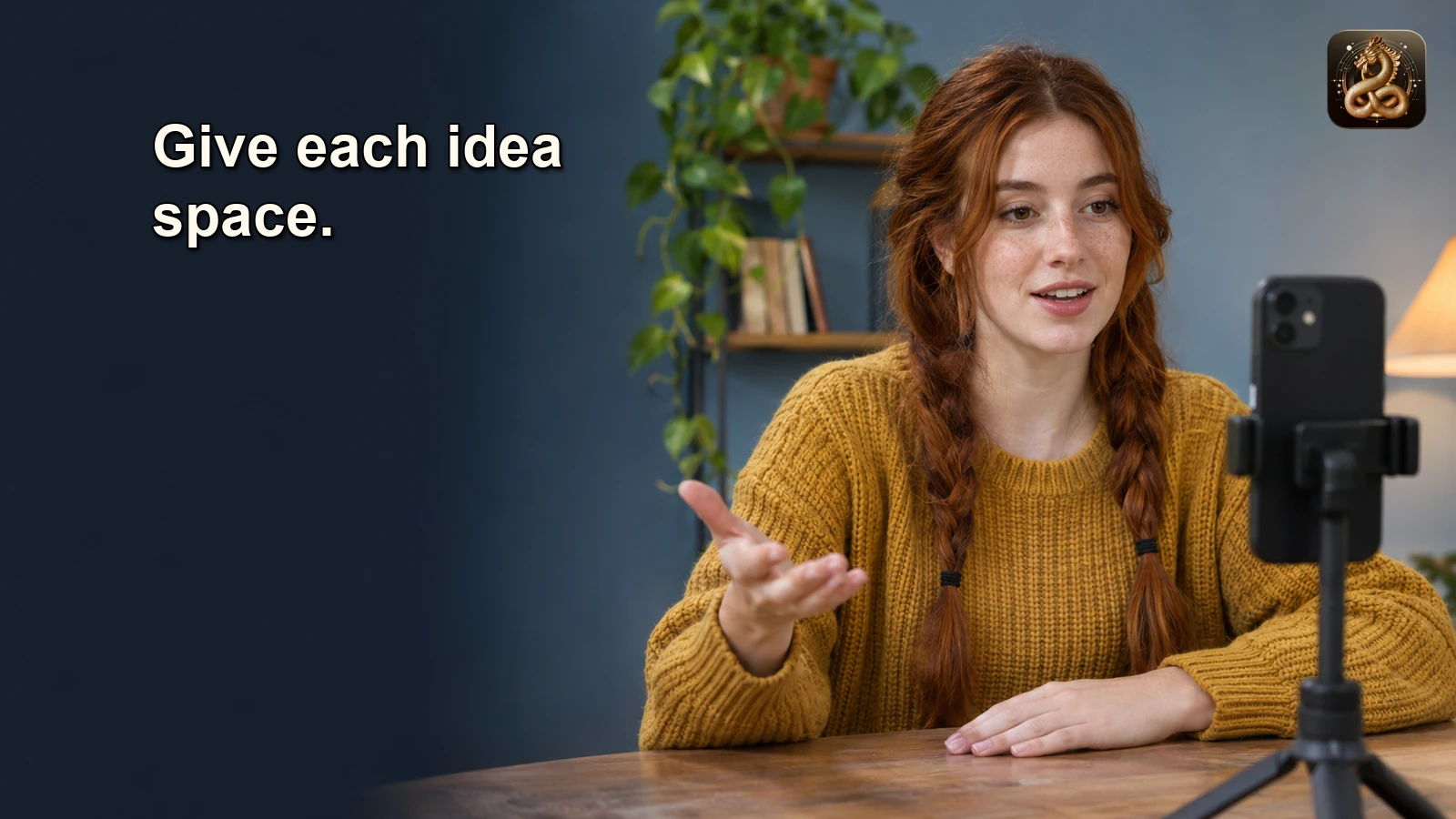
You can number ideas when that helps, but numbering is optional. If you lose count, a new spoken phrase is enough to create a boundary. There is no need to restart the recording to make the list sound polished. The distinction between ideas matters more than a perfect sequence of labels.
Keep a related variation attached to its source when useful. You might say, “A version of that noticeboard idea would group the cards by colour.” That tells a future listener that the second sentence develops the first rather than announcing an entirely separate commitment. You can also leave two similar possibilities separate until you actually want to compare them.
Keep possibilities different from promises
A sentence can drift from “I could try this” to “I will do this” while you are imagining it. If you have not actually decided, make that clear. “I am describing an option, not agreeing to start it” can be a useful ordinary correction. You do not need to perform certainty because the recording captures your own voice.
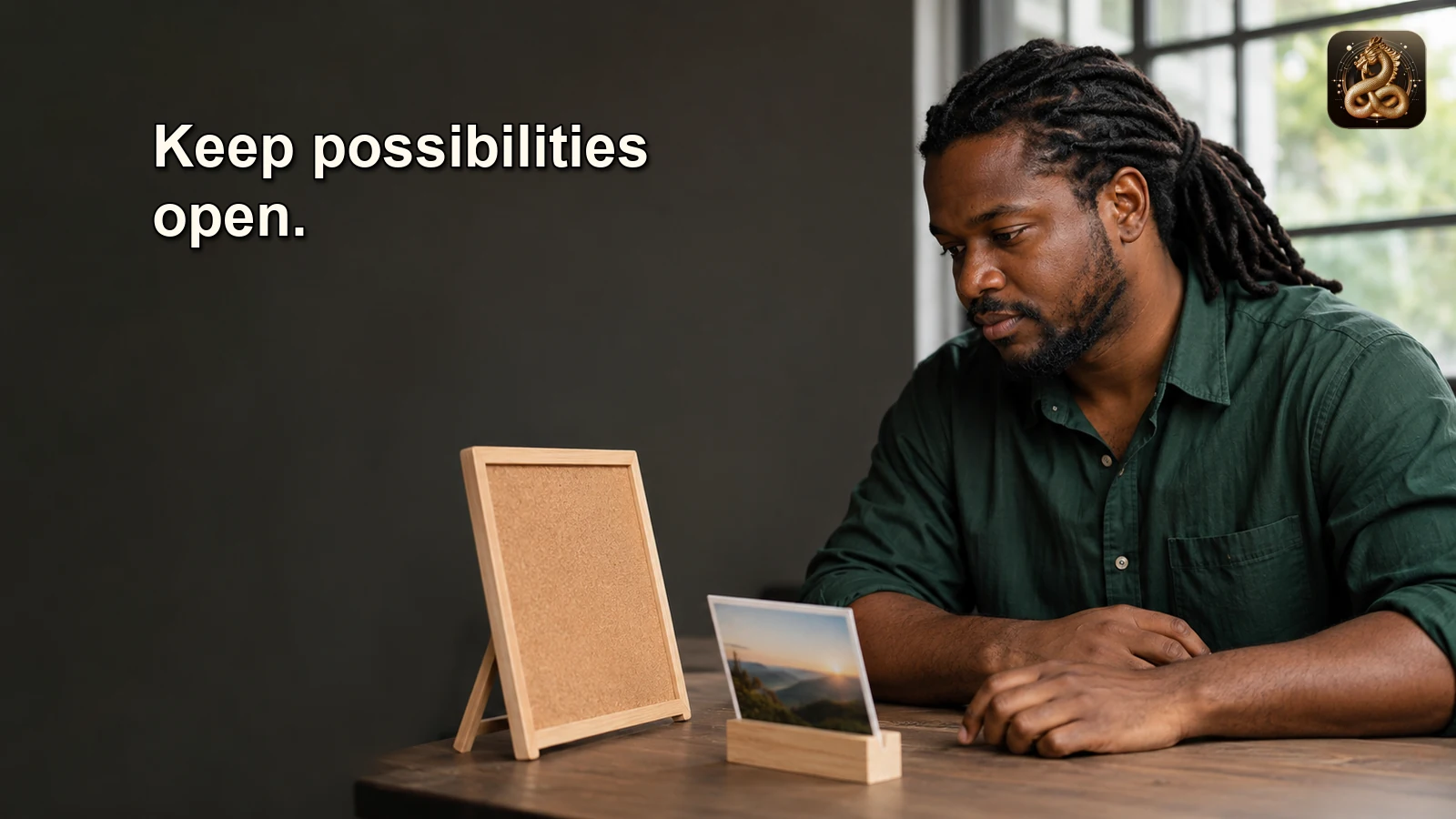
Another person's part remains theirs to choose. “Perhaps I could ask Sam whether they want to join” is different from “Sam will help.” A private idea list does not ask the question, obtain permission or establish availability. Keep proposed invitations as proposals and handle any real conversation separately.
Do the same with practical requirements. “I would need to check whether the clips fit” identifies missing information. It does not prove that the idea is unsafe or unsuitable; it shows what has not been established. Avoid inventing a purchase, booking or deadline merely to make the suggestion sound complete.
A table for hearing what each sentence does
Use this table when an idea list begins sounding like a plan. The point is not to classify every word while speaking. It is to make the differences available when they matter to understanding the recording.
| Kind of sentence | Fictional example | What remains separate |
|---|---|---|
| A possible approach | I could use the noticeboard. | Choosing to use it. |
| A known condition | The board is already on my wall. | Whether the cards and fixings fit. |
| An untested assumption | The clips might hold the cards. | Checking the actual clips. |
| A possible invitation | I could ask Jo for a layout suggestion. | Jo's agreement and response. |
| A later decision | I have now chosen one small trial. | Any further change or commitment. |
Fictional demonstration: keeping a postcard project open
Imagine Dev wants to keep some postcards visible instead of leaving them in a drawer. He has not chosen a display method. He begins: “Ideas for a small postcard display. These are possibilities, not a shopping list or a decision.” This opening leaves the recorder with a recognisable subject before he starts describing arrangements.
He says, “One idea is a row on the noticeboard. I would need to check how many fit. Another idea is to choose one card at a time for the little stand I already own.” Both suggestions use ordinary objects, but they have different requirements. He does not decide that either must be carried out before continuing.
Dev then says, “A third possibility is to put copies in a small album. I have not checked whether I actually want to make copies.” That uncertainty belongs in the account. He ends: “Those are the ideas I wanted to keep today. I will decide separately whether to try any.” He has not promised a display, a purchase or another session.
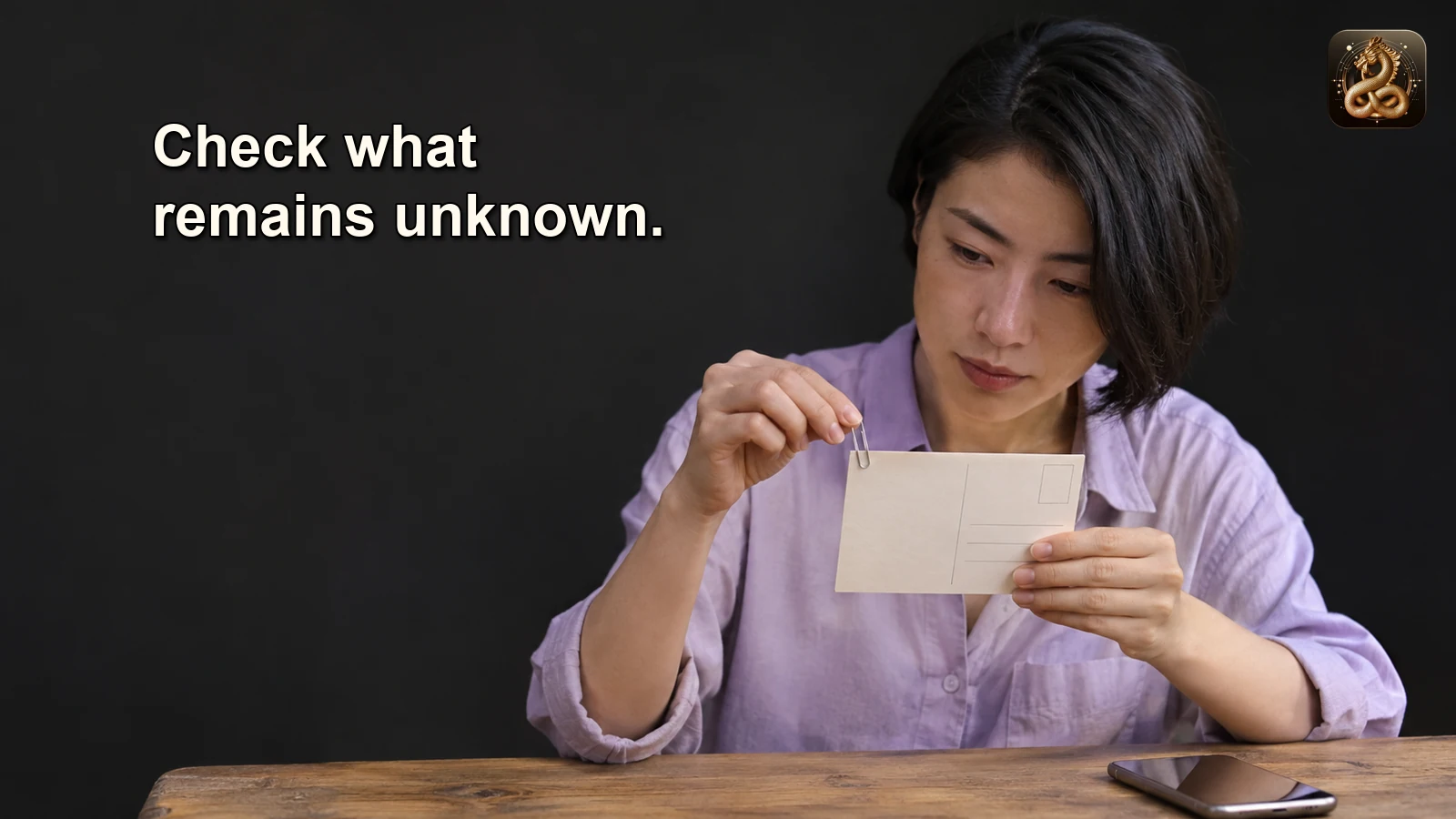
This invented example illustrates composition, not a customer result or an improvement in creativity. Dev might later prefer to leave the postcards where they are. An idea list can have served its recording purpose even when no suggestion becomes a project.
Leave selection for an actual selection pass
When you later want to use the list, listen for the particular idea or detail you need. You do not have to evaluate every suggestion or justify keeping an unused one. Pick a manageable question: what would this option require, and is it still something I want to consider? Use current information rather than treating yesterday's speculation as verified.
If an option needs another person's agreement, an actual answer belongs before a shared plan. If it requires an object or a space, check what you have. You can discard a suggestion, combine parts or decide that no action fits. The earlier recording remains a record of possibilities rather than a failed set of promises.

Make a later choice recognisable as later. You might create a separate note saying which option you selected and why, without rewriting the old ideas as if the outcome had been certain. SoulFul GLO's voice-journal addendum guide concerns linking a later update to an earlier entry while retaining the original account.
Give a practical concern the right place
Separating collection from selection does not mean ignoring information you already know. If a suggestion would conflict with an existing responsibility, state that condition. “That would overlap the arrangement I have already made” is a useful fact, not a failure to brainstorm positively. You can keep the idea as hypothetical or leave it out.
Likewise, an idea about another person's possessions or time does not create permission. Keep the possible request separate from any assumption that it will be accepted. You can explore your own contribution without describing the other person's future actions for them. This matters even in a private recording, because a fluent sentence may sound settled when you later hear it without remembering the original context.
One plain closing sentence can preserve the status of the whole entry: “These were possibilities I considered, and I have not chosen an action.” Use that only when it is true. A note about status should describe your actual decision, not conceal a commitment you have already made elsewhere.
When writing is the simpler format
A written list can be easier to glance through when you want several suggestions side by side. Choose it when that fits your actual task. Speaking is one option for composing an entry, not a requirement to develop comfort with your voice or an upgrade over a notebook.
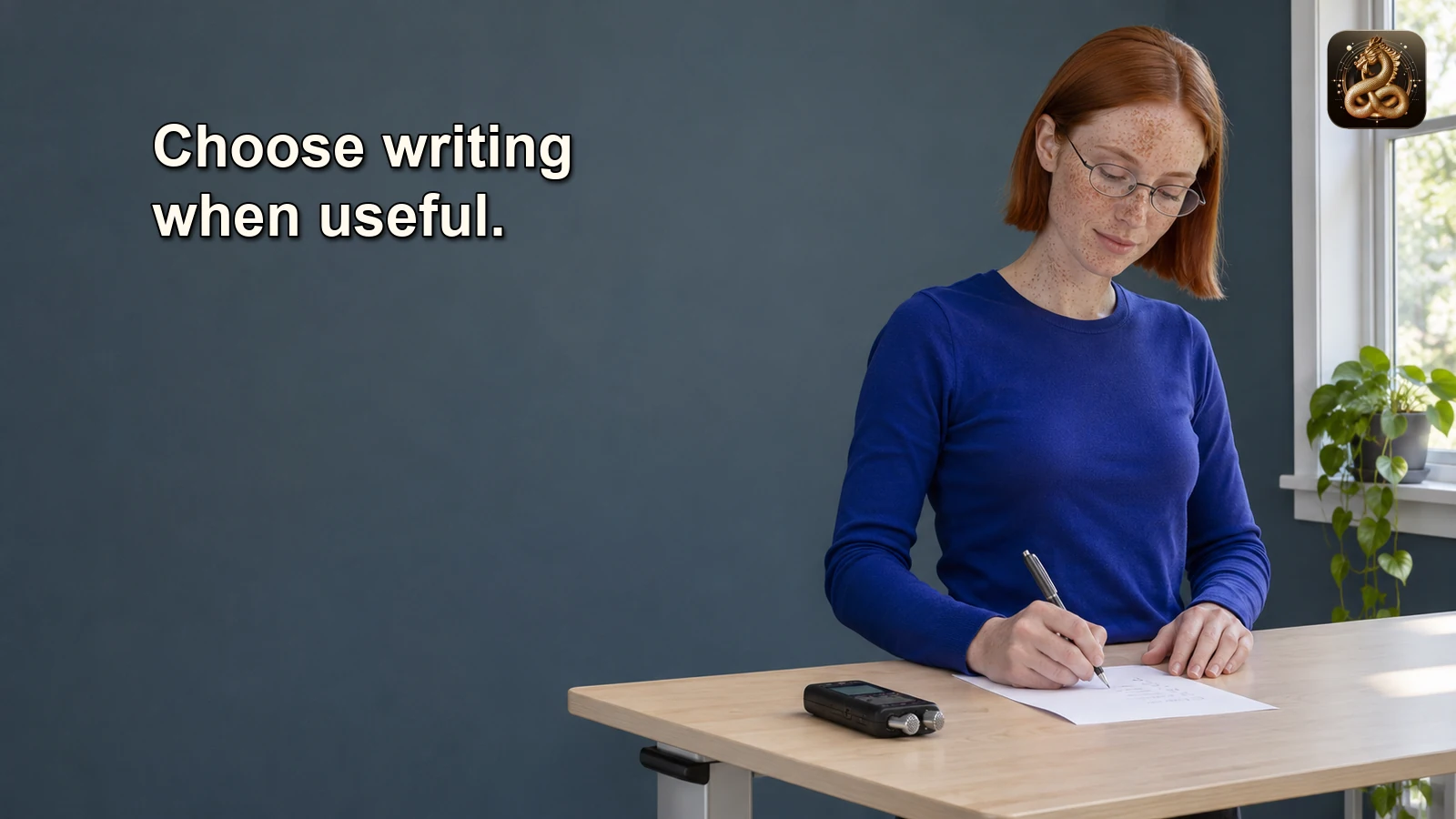
You can also keep a short written pointer to the recording without making a full transcript. If you do create a transcript, check its relationship to the audio before treating its wording as what you said. An automatic heading such as “My plan” could overstate an entry you introduced as tentative. The presentation should not silently turn possible ideas into commitments.
Questions readers often ask
How many ideas should I record?
There is no required total. Record the suggestions you want to retain and stop at a practical boundary. A small list can remain useful; an empty stretch does not require another idea or prove that you are doing the exercise incorrectly.
Can some ideas be unrealistic?
Yes, when their status is clear and the subject remains appropriate. An imagined possibility differs from an available option. Do not rely on a speculative entry as evidence that you have time, resources, permissions or an agreement that has not been obtained.
Must I choose something afterwards?
No. Collecting and choosing are separate activities. You can return later, use another format or leave the suggestions unused. If an actual responsibility needs a decision, address its deadline separately rather than assuming that brainstorming has supplied the answer.
What if I start criticising every idea?
You can note a concrete requirement and continue, switch to comparison or stop. This method does not require suppressing concerns or generating ideas through distress. Choose the kind of writing or support that fits the situation instead of treating the recording as a performance to complete.