
The recording is going along comfortably, then the guide invites you to place a hand over your chest. You understand the sentence, but you do not want to make that gesture. Perhaps your hands are comfortable where they are, self-touch is unwelcome today, or you simply prefer to keep listening without moving. The invitation does not need to become a test of whether you are participating properly.
Some guided practices include self-directed touch as part of their method. That is different from another person touching you, and different again from imagining a feeling in a particular part of the body. Knowing which task is being offered helps you decide what you actually want to do.
This guide offers a practical choice plan, a comparison table and fictional demonstrations. It does not prescribe touch, a body location or a particular emotional response. Follow only guidance you understand and willingly choose. You can pause, use an alternative actually supplied by the teacher or select another practice.
Quick answer
Treat a self-touch cue as an invitation to evaluate, not a command to override your preference. Notice whether you want the gesture and whether the guidance offers an understandable alternative. Keep your hands in a comfortable ordinary position if that is your choice, and check whether the rest of the recording still makes sense. If it depends on touch you do not want, pause or choose another resource.
Understand what the guide is asking
First separate physical action from imagined meaning. A request to place your own hand on your chest describes a gesture. It does not establish what you will feel, require you to picture an organ or show that a particular emotion is located there. Stay with the actual wording rather than adding a story about what must happen afterward.
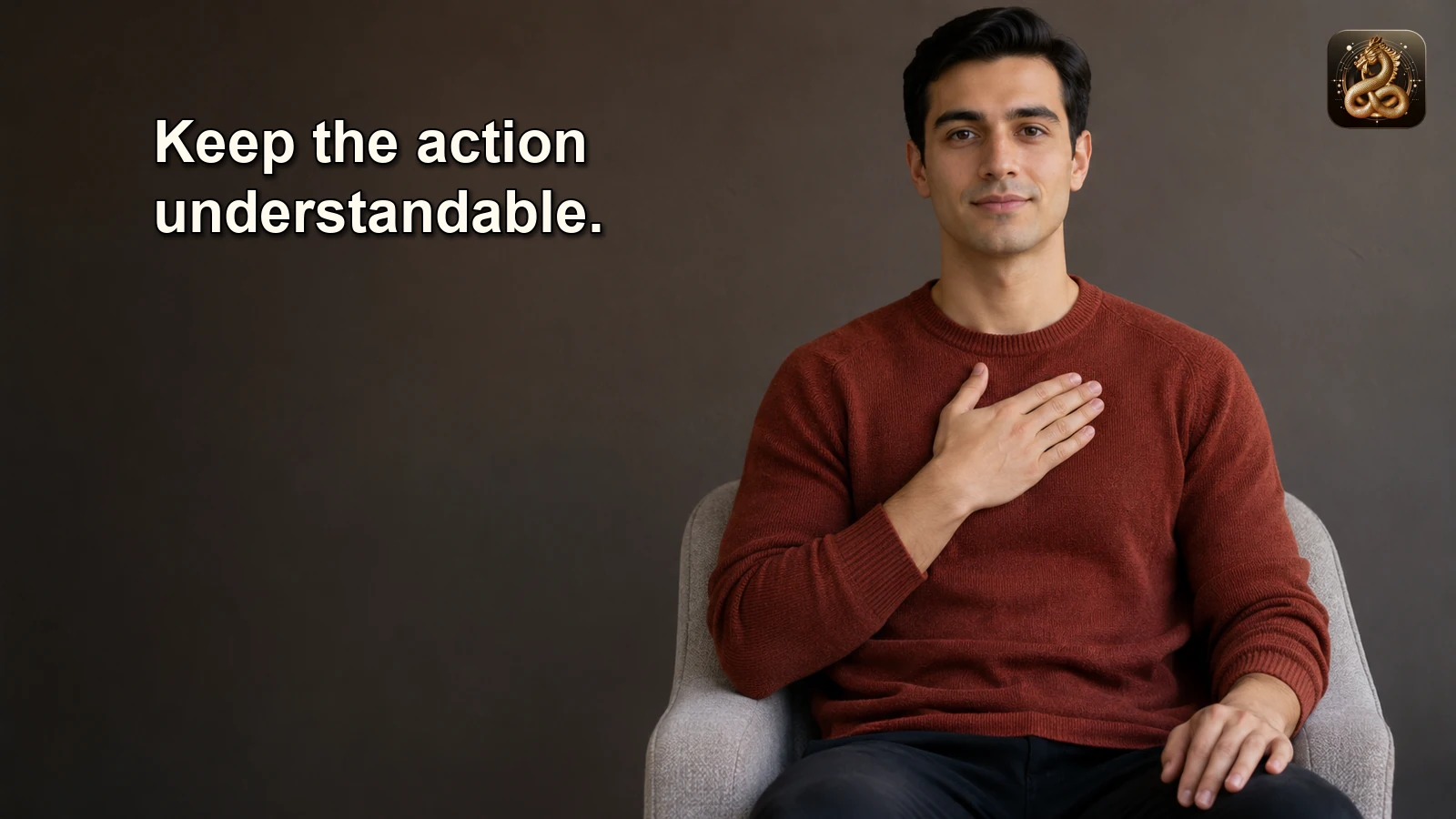
Another recording might invite noticing contact where your hands already rest. That is a different instruction from moving them. Read or hear the full cue when you can. A short phrase such as hand on heart may be a title, a metaphor or a literal instruction depending on its source.
The Self-Compassion Institute's supportive-touch exercise includes a hand-over-heart example and acknowledges that this location can feel uneasy for some people. It supplies other self-touch options within its own exercise. This is a source-specific example of choice, not evidence that every guided recording offers the same alternatives or that touch will be comforting for you.
Keep the method with its source. You can learn what a particular exercise invites without treating this article as a substitute for its complete instruction. If a resource depends on a named training programme, course or prior explanation, use that context before deciding whether to follow its physical invitations.
Let willingness be a practical part of participation
You can decide that you do not want the gesture without producing a detailed reason. Preference is relevant to an optional activity. You need not explain your private history, prove discomfort or try the cue first so that declining feels justified. A simple decision to keep your hands where they are can remain private.

Willingness can change during a session. A gesture you chose at the start may stop being comfortable or useful to you. You can move your hand, adjust your position or finish. Holding an unwanted gesture until the next cue is not required by this general guide and does not demonstrate greater commitment.

If you are willing to try a gesture, keep the action within what you actually understand. Do not press harder, hold longer or change breathing in an attempt to produce the feeling suggested by a title. This article supplies no instruction about pressure, duration, physical treatment or individual suitability.
A willing choice also does not guarantee a pleasant response. You may notice warmth, ordinary contact, distraction or little of interest. Those observations need not become a verdict about your capacity for kindness. You can follow an optional attention activity without producing a particular state to prove that it counted.
Distinguish an offered alternative from one you invent
A teacher might explicitly invite hands in the lap as another option. If you understand that alternative and want to use it, you can follow it. Another practice might depend on noticing the chosen touch, so removing the gesture could leave its later directions unclear. Keep the decision tied to the actual session.

You do not have to rewrite a whole recording while following it. If every later cue refers to a contact you declined, pause and choose a resource whose task is clearer. Selecting different guidance can be simpler than mentally translating each sentence into a new practice. The original recording can remain available for another occasion without being suitable now.
An instruction to observe naturally occurring contact is not the same as a request to make a new gesture. The chair, floor or resting hands may already provide an ordinary focus, if that is what the guide actually offers. Avoid treating any alternative as universally interchangeable across methods.
For a broader question about choosing a nonbreath focus, read SoulFul GLO's guide to a meditation anchor when breath attention is uncomfortable. Here, the narrower task is deciding whether to use a specific physical invitation and whether the remaining guidance is still understandable after that choice.
A table for the cue you actually hear
| What the recording invites | What to establish | An available choice | Keep separate |
|---|---|---|---|
| Move your own hand to your chest | Whether you want that gesture | Follow willingly, pause or decline | A required emotion or imagined meaning |
| Notice where hands already rest | Whether that existing contact is welcome | Attend as invited or stop | Assuming movement is required |
| Use a stated alternative | What that alternative actually asks | Follow the option you understand | Inventing a substitute for every later cue |
| Keep a gesture through later instructions | Whether you still want it | Adjust, pause or finish | Treating endurance as commitment |
| Accept touch from another person | Their actual request and your consent | Address that separately before proceeding | Assuming self-touch guidance grants permission |
The table keeps several different actions apart. None is a compulsory next step after another. A useful result is knowing what you are willing to do with this recording, including the decision to leave the physical cue and choose a different resource.
A small plan before and during the session
First, choose an occasion when your attention is available and the controls are accessible. Driving, road crossing, equipment use and active supervision are not appropriate settings for this meditation task. Arrange ordinary support without adding a gesture because the cover photograph makes it look expected.
Second, preview the relevant explanation if you know self-touch is a concern. Look for the actual physical invitation and any stated participation choices. You can listen without following along while deciding. A general promise of compassion or comfort does not answer what the teacher will ask you to do.
Third, when the cue arrives, decide whether you want it now. If it is clear and welcome, you may participate. If not, use the resource's actual alternative, pause or leave the practice. There is no requirement to announce a private choice to the recording or to justify it afterward.
Fourth, check the next invitation for understanding. If it still makes sense within the choice you made, decide whether to continue. If it relies on an action you declined, do not invent a new meaning to keep up. Choose clearer guidance or finish. A meditation can remain unfinished without creating a task for later.
Finally, return to the room and your next activity. Keep any observation modest: the cue was welcome, the alternative was clear or this format was not what you wanted. You do not need to record a bodily response, compare gestures or score how supported you felt.

Fictional demonstration: keeping hands in the lap
In this invented example, Ana previews a recording that includes a self-touch invitation. The teacher also says listeners can keep their hands resting comfortably. Ana chooses that stated option because it is the arrangement she wants. She continues to hear the subsequent instructions and finds their practical task understandable.
When the recording later refers to kindness, she does not search for a warm feeling to match the word. She follows the clear attention task and finishes at her chosen endpoint. The example illustrates using an offered choice, not an emotional result or evidence that one position is better than another.
The simpler version is to hear the invitation, make one willing choice and leave further comparisons aside. Ana need not explain why she declined the gesture or resolve whether she will want it another day. She can choose again from the actual situation when another opportunity arises.
Fictional demonstration: choosing another recording
Elias, another fictional listener, encounters guidance whose later steps repeatedly refer to the contact of a hand on the chest. He does not want to make that gesture. He initially tries to translate every mention into a different focus, then realises he is inventing instructions rather than following a clear alternative.
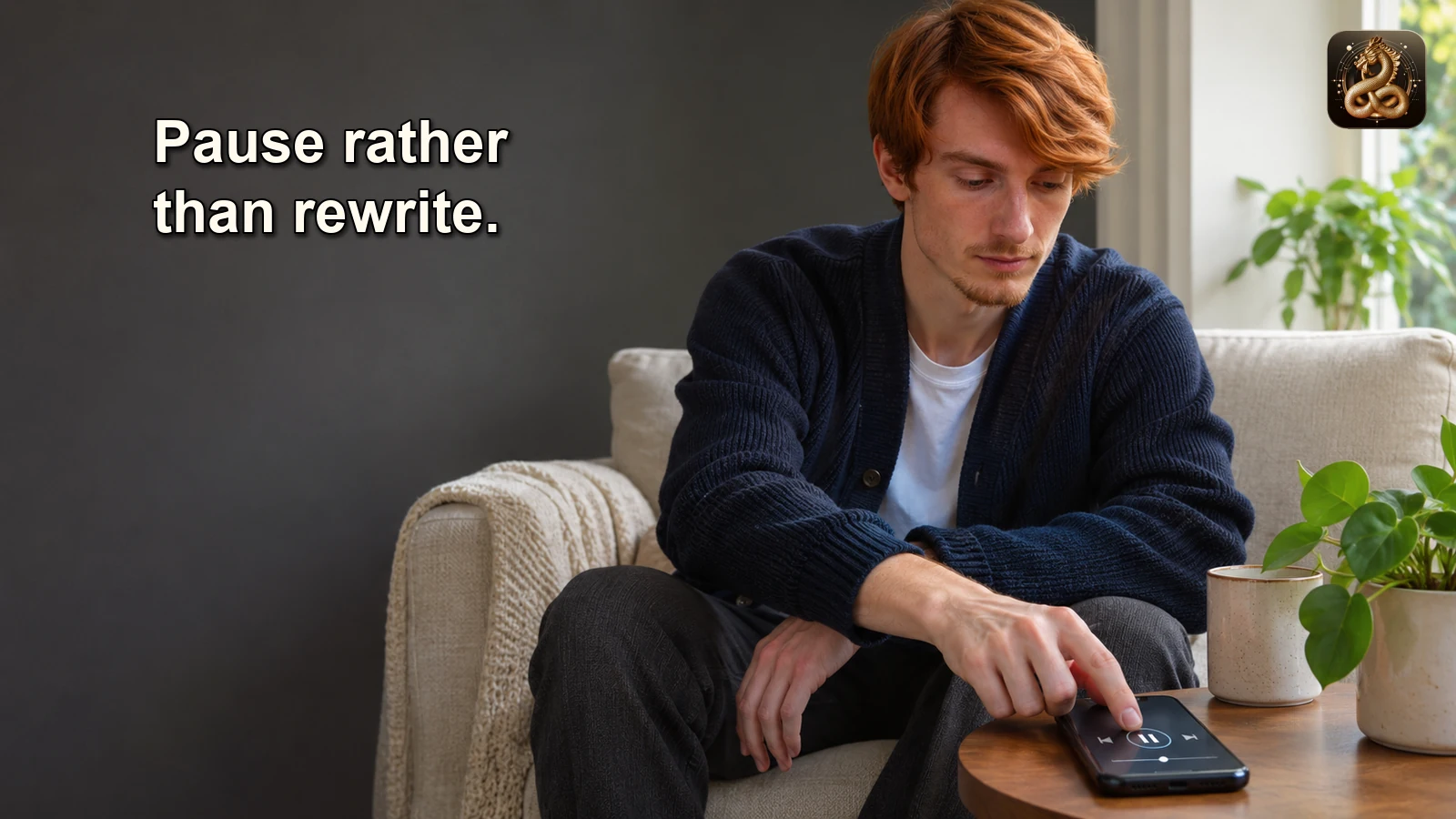
He pauses and selects another resource with a task he understands and wants. He leaves the first practice's meaning with its teacher rather than claiming to have completed an adapted version. The decision answers his current participation question without determining whether the original guidance is useful to other listeners.
Elias can also finish the break without another recording. Optional meditation does not require finding a replacement. These fictional choices provide two routes: use a clear alternative when one genuinely exists, or choose another activity when the physical cue remains central and unwanted.
Choose guidance whose invitations you can follow
Explore SoulFul GLO's current practice chooser when deciding between guided meditation, sound or movement. Check the actual recording information and its available participation options. This article does not establish that every resource includes a self-touch alternative or a particular named self-compassion method.
Do not use an emotional response as a pass mark
Touch may have a personal meaning, or it may feel unremarkable. A gesture in an image does not tell you what another person experienced. Generated pictures and fictional examples illustrate an action only; they are not evidence of a therapeutic effect, safety for an individual or a required feeling during meditation.
NCCIH's meditation overview discusses varied practices, research limitations and possible unwanted experiences. It does not validate this particular cue for every listener. Keep individual health concerns and needed care separate from an optional recording. Stop a practice that becomes unwelcome instead of treating persistence as the way to make it suitable.
You can value clear guidance even when the session feels ordinary. Knowing that you could decline a cue may matter practically to whether you want the format again. Keep that observation separate from a broad claim that a gesture regulates everyone's emotions or reproduces the results of a defined programme.
Questions readers often ask
Must I put my hand exactly where the teacher says?
You can choose whether to participate in an optional cue. If you do not want it, check the actual alternatives or pause. This article does not supply a universal replacement position. Choose guidance whose full instructions remain understandable within the participation you willingly select.
What if I feel nothing unusual?
No unusual sensation is required here. You can notice ordinary contact or little of interest without deciding that the gesture failed. Do not increase pressure, extend the gesture or change breathing to chase an expected response. Continue only while the activity remains clear and welcome.
Is this permission for someone else to touch me?
No. A cue involving your own hand does not establish consent to another person's touch. Address any separate request directly and freely. A meditation title, photograph or group practice does not remove the need to clarify what another person is asking and whether you agree.
Can I simply choose sound instead?
You can choose another activity or resource, including an understandable listening practice. That is a new choice, not proof that the original method has been completed with an equivalent substitute. Keep the source's actual guidance distinct from the activity you independently decide to use.
Keep one willing choice available
Read SoulFul GLO's guide to choosing a meditation anchor when you want a different place for attention. A clear invitation can still be declined. Choose an activity you understand, let the gesture remain optional and keep an ordinary way to finish available.