
You find a twelve-minute guided meditation before an afternoon appointment. The voice is easy to follow, but at the end the guide invites you to stay where you are for as long as you like. A soft track keeps playing. You had expected a clear signal to get up, and now you have to decide whether the practice is over while keeping an eye on the time.
The ending is something you can look for before you choose. Some recordings give an unmistakable spoken cue. Others fade into music or offer a period of rest. The ending that suits you depends on what you want to do next and how much time you have for the change.
Quick answer
Name the activity that follows your meditation and decide how much time you want between the two. Look for a recording with a closing cue you can use. If you need to be ready at a particular time, choose a clear ending or set your own stop point. If you can stay seated or resting, you may prefer a recording that ends quietly or leaves the timing open. Check whether the listed runtime includes music after the guide stops speaking.
Name the next thing in ordinary terms
“I need to get back to work” can mean several different things. You might be walking into a meeting, opening a document, or waiting until someone sends you a message. A meeting at a fixed time gives you a firm boundary. A document you can open when you are ready gives you more room. The next activity helps you decide what sort of closing cue to look for.
You may also be choosing a recording for an evening when there is nothing particular to do afterward. In that setting, a quiet fade can be enough. If you want to get up and turn off a lamp before bed, check whether the recording invites you to stay still or gives you a cue to move. Either choice can work when you know what to expect.
Ask how you want to recognise the end. Do you need the guide to say the session is complete, or would a short chime do? Would you rather decide yourself once the voice stops? A preference about the ending can be as practical as a preference for a familiar voice.
Tell three kinds of ending apart
A spoken closing may invite you to notice the room, open your eyes if they were closed, or move when you are ready. Some recordings then explicitly tell you the session has finished. If you need a clear handoff, listen for the wording of that last cue. An invitation to begin moving and an invitation to stay resting set different expectations, even if both come in the final minute.
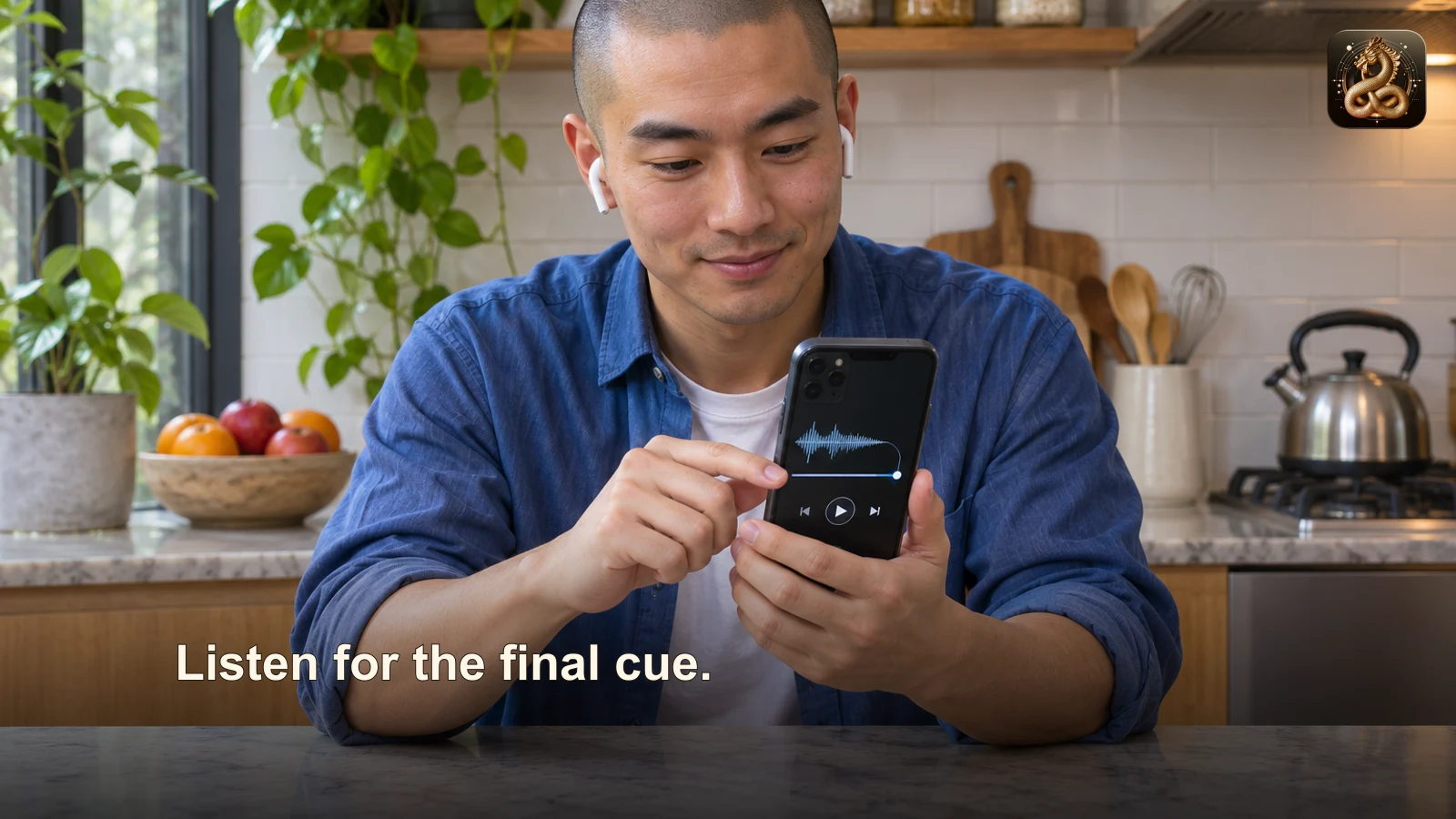
A fade can give you a softer boundary. The voice ends, the music becomes quieter, and the track eventually stops. That may be comfortable when you have time to listen through. If your next activity has a fixed start, check how long the fade lasts. The last spoken instruction might come several minutes before the player reaches the end.
An open ending hands the decision to you. The guide may invite you to stay for another breath or another few minutes. If you have time, you can follow that invitation as long as you wish. If you need a definite stop, plan to end when the voice finishes or use a reminder of your own. Knowing the ending is open lets you make that decision before the session.
Check what the description and player can tell you
Look for language about the closing. A description may say that the final minute brings attention back to the room or that the guidance is followed by quiet music. A chapter list may show a closing section and a separate music section. If the listing gives only a runtime, use that as the total length of the file. It may tell you little about when the last spoken cue occurs.
If you can preview the ending, listen to a short portion near the close. You want enough context to know whether the sentence you hear is the final instruction or a cue within the practice. If the voice seems to finish and music continues, check whether another spoken cue comes later. Once you know the shape of the ending, return the player to the start.
If the player cannot seek or you would rather hear the closing in sequence, choose based on what you know. You can pick a familiar recording for a fixed deadline and save the new one for a more flexible time. You can also allow a few extra minutes around the listed duration if your schedule permits.
Leave time for the activity that follows
If you need to be ready for a call at two, decide when you want to stop listening. You might leave two minutes to remove headphones, stand up, and open the meeting link. Count those minutes separately from the recording. A session whose final cue occurs just as the meeting starts gives you very little room to use it.

The change may take less time when you are already sitting at the desk. It may take more when you need to walk to another room or put away equipment. Use your own estimate. A short recording with a clear close can be easier to fit than a longer one whose final section you would have to interrupt.
If you have a quiet evening with no firm deadline, you can leave the time open. Consider what you would like to do once the recording finishes. You might want to turn the audio off and read, or you might want to stay seated briefly. Choose a closing that leaves you room for that decision. The goal is a usable boundary, whatever kind of boundary you prefer.
Choose a fallback for an unfamiliar ending
Sometimes you press play without knowing how the guide will close. You can still choose a stop point. If the voice invites you to rest longer and you need to leave, pause the recording when you are ready. If the guide asks you to do one last thing and you have time, you can follow it. Leave enough space around the session to make the choice without feeling hurried.
A reminder can help when you are unsure whether you will recognise the ending. Choose a sound you can notice without confusing it with a chime in the recording. Set it for the point when you want to stop, with time for your next activity already set aside. If you prefer to avoid a reminder, a familiar track may be the simpler choice on a busy day.
You can keep the controls within reach so an unexpected ending is easy to handle. If another track begins immediately, stop it when you notice. If the music continues and you want quiet, pause it. A recording is useful while it serves the occasion. You can leave the rest for another time.
Compare two ordinary situations
Imagine you have fourteen minutes before a video call and want three minutes to get ready. You compare a nine-minute recording with a spoken closing and an eleven-minute recording that ends with several minutes of music. You choose the first because you can recognise when it finishes and have time to open the call. A brief transition back to work can help you decide what to do with the minutes you have set aside.
Now imagine you are using a meditation after dinner and have no fixed time to stand up. You pick a recording whose voice ends softly and leaves a little music. You know the player will stop when the track finishes. When the music fades, you can stay seated or get up and turn on a light. The same ending that would have been inconvenient before the call works well in this setting.
You might also choose a different recording for a session in a shared room. A clear chime can be easy to recognise through headphones, but a spoken closing at low volume may be more suitable if you are using a speaker. Think about how you will hear the signal and how it will affect the people nearby. If you cannot hear comfortably in that setting, save the session for another occasion.
Make a note about a recording you might use again
After listening, jot down the ending in a few words if that would help you choose later. “Clear goodbye at eight minutes” or “voice stops, then two minutes of music” gives you information you can use next time. You do not need a rating or a full account of what the meditation felt like.
If the ending worked, remember the occasion it worked for. A track with a distinct closing cue might be useful between calls. A fade might suit a longer evening session. Over time you may find that one or two recordings cover the occasions you actually have. You can still try something new when the end time matters less.
Frequently asked questions
Should I always listen through the closing?
If you want to hear the full session, choose a recording whose closing fits your window. If you need to stop sooner, you can pause when you are ready. A familiar ending may be useful when you want to know how the teacher will close the exercise before you begin.
What if the teacher ends the guidance and the music keeps playing?
Check whether the music is part of the track or another recording has started. If you want a little more listening time, let it continue. If you need to move on, pause at the end of the spoken guidance or use a stop point you chose earlier.
Can I preview the end without spoiling the session?
If hearing a closing cue beforehand helps you choose, listen briefly and return to the beginning. If you prefer to hear the full recording in sequence, look at the description or leave extra time for an unknown ending. A familiar track is another option when the closing needs to be predictable.
What if I have no particular activity afterward?
Choose an ending that suits how you want to spend the next few minutes. You can listen through a fade, stay seated for a moment, or turn off the recording when the voice ends. If you want to get up promptly, a clear closing cue can still be useful even without a deadline.
A useful preview can be as short as the last spoken sentence and the few seconds that follow it. If you hear “take your time,” check whether the player then falls quiet or immediately starts something else. Both can be workable endings, but they ask you to handle the transition differently. Save the detail that changes your choice, such as “quiet after the voice” or “turn autoplay off first.”
If you move between recordings in the same app, check each one on its own. Two tracks by the same teacher can have different endings. You can mark the one that works before an appointment without treating it as your only option for a quiet evening.
Pick a closing you can use
Before pressing play, think about what happens next. Choose a clear cue, a fade, or an open ending that gives you enough room for that activity. If you cannot tell how the recording ends, leave a buffer or decide when you will stop. A small choice before listening can make the final moments easier to use.