
A familiar mug can give you something to speak about when a broad question such as “How was your day?” feels too large. You can describe its handle, notice a mark and follow one personal association. The entry can stay with that object without turning into its complete history or a polished story about your life.
This guide concerns what to say in an optional spoken journal entry. It starts with something ordinary you already own and feel comfortable considering. It does not teach recording setup, file organisation or transcription. Use a recording arrangement you already understand, and choose another format if speaking privately is not practical.
An object may prompt a recollection, but its presence does not verify every detail that comes to mind. Keep present description, personal association and known history distinguishable in your speech. This is a creative reflection format, not a memory-recovery technique, treatment or promise of emotional change.
Quick answer: describe, associate and keep the limits audible
Choose one nonsensitive everyday object. Say what you can observe now, then follow an association you want to express. Use ordinary phrases such as “I notice,” “this reminds me of” and “I do not know” to make the source of each statement clear. Finish when you have said enough about that object.
You can stop after description. An entry does not need a meaningful memory, a lesson or a decision to keep the object. Speak only your own reflection, without capturing other people's conversations. If the occasion does not allow that, leave the entry for another time or choose a private written format.
Choose an ordinary object already within reach
Start with an item whose consideration feels manageable: a plain mug, a fabric pouch or an old keyring with no sensitive details exposed. The object needs no financial value or unusual story. You are choosing a starting point for speech, rather than proving that the item deserves a place in a collection.

Prefer something you can look at without special handling. Leave fragile, hazardous, valuable or otherwise unsuitable materials alone. This exercise supplies no conservation or handling instructions. A familiar object resting on a table can be sufficient; picking it up is optional when looking serves your purpose.
Set a small boundary for the entry. You might want to describe what has changed through use or explain why the object catches your attention today. That choice can keep a mug from becoming an account of every kitchen you have known. A different subject remains available if this one begins to feel too personal.
Consider what identifying information the object carries. A label, key tag or document may reveal more than you want to say aloud. Choose another item when that information is unnecessary. Speaking without a name does not guarantee anonymity if the surrounding details identify a person or place.
Describe what you can observe in the present
Begin with a few details you can actually notice. Describe a shape, colour, material you recognise or visible wear. For a pouch, you might mention its softened corners, a loose thread and the way its opening folds. Stay within what you can observe, rather than assigning an age or origin from appearance alone.
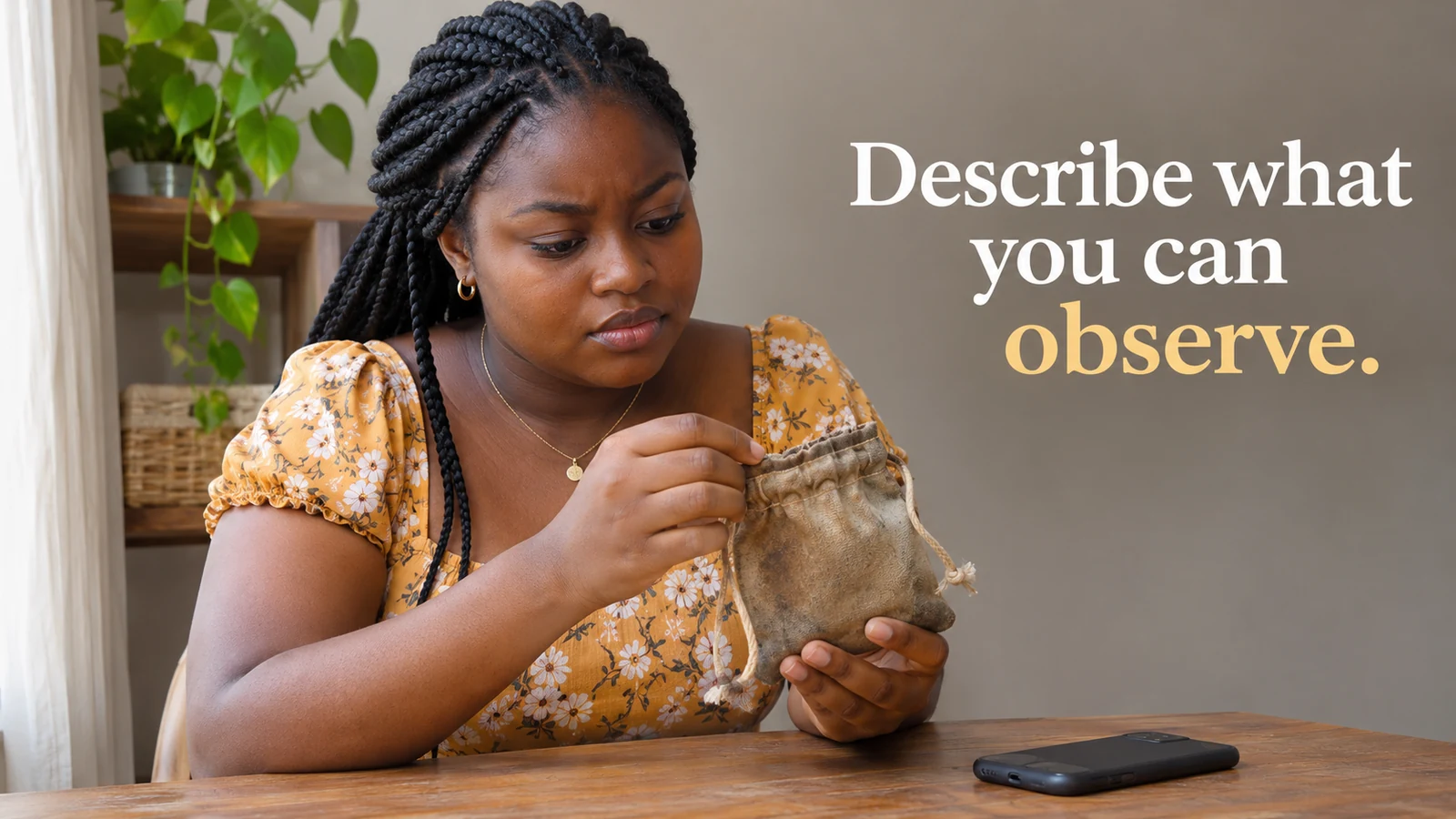
Use plain words you know. If you cannot identify the material, describe how it looks instead of guessing its technical name. “A woven surface” may express your observation more accurately than an unsupported claim about a particular fibre. An ordinary journal entry does not require specialist object identification.
You can describe an impression as an impression. “It looks well used to me” differs from knowing how often someone used it. “The blue seems faded” differs from having a reliable record of its original colour. Keep those distinctions when they affect what you mean, without interrupting every sentence with a qualification.
The description need not be exhaustive. Select details that give this entry a concrete starting point. You can leave the underside, measurements or manufacturing method unexamined. There is no requirement to transform a private reflection into an inventory or to look for evidence hidden inside the object.
Speak an association as your own response
After describing the present object, notice whether an association comes to mind that you want to follow. A mug might remind you of an ordinary afternoon. A pouch might bring back the routine of packing a bag. Say that the connection is yours, rather than treating it as the object's universal meaning.
An opening such as “This reminds me of...” can introduce that change in the entry. You can explain a small remembered detail or a current preference. You may like the mug's handle without knowing when you began using it. A preference can remain an ordinary preference, with no hidden message to uncover.
If several associations arrive, choose one you are comfortable speaking about. You do not need to pursue each one or find the oldest. Return to a visible detail when you want a clearer boundary: the pouch's loose thread is still present even if the story it prompted has become too broad.
If nothing comes to mind, keep the description and finish. The absence of a memory is not a failure or evidence that you chose the wrong object. Another occasion may invite another kind of entry. This exercise does not require you to generate an emotional response or attach personal significance to household possessions.
Explore a spoken or written journaling format
SoulFul GLO's current journaling overview describes voice and text options. Check the actual features available to you before relying on a tool. This object-led composition exercise does not establish any particular recording, storage, export or transcription function in the service.
Separate recollection from the object's wider history
Keep what you remember separate from what you know through another source. You may remember receiving a keyring without knowing who made it or what happened to it before that occasion. Say where your knowledge begins. A personal connection can be worth expressing while the earlier history remains unknown.
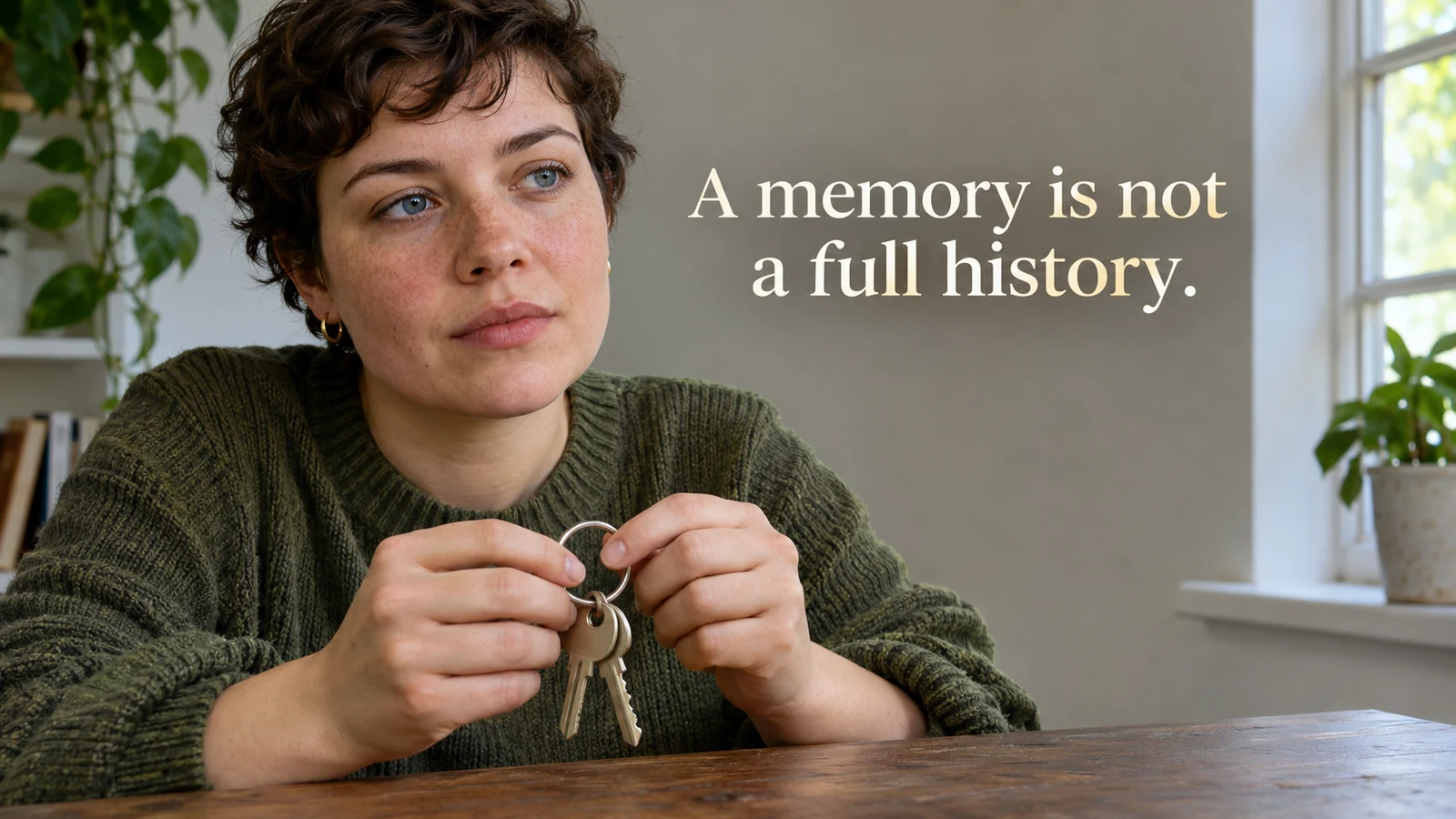
A mark is not a complete account of its cause. A scratch might be visible, while the event that made it is uncertain. You can say, “I remember noticing this after a move, but I do not know when it happened.” That records the recollection without making the timing of the observation establish the timing of the damage.
Attribute an explanation supplied by someone else. “I was told this belonged to...” preserves the source more clearly than presenting the claim as your own observation. You can also leave that explanation out. The entry requires neither an interview with another person nor an investigation of an object's ownership.
Avoid filling the gaps with a scene that merely seems plausible. You do not need to imagine a previous owner holding the mug or explain what a relative felt about it. Speak your own association and leave other people's unspoken experiences unknown. A personal voice journal is not independent evidence of those experiences.
Let one object provide enough material
Stay with the purpose you chose rather than adding another object whenever there is a pause. One detail, one association and one uncertainty may be sufficient. You can leave a sentence unfinished, repeat an ordinary word or take a moment to decide whether there is anything else you want to say.
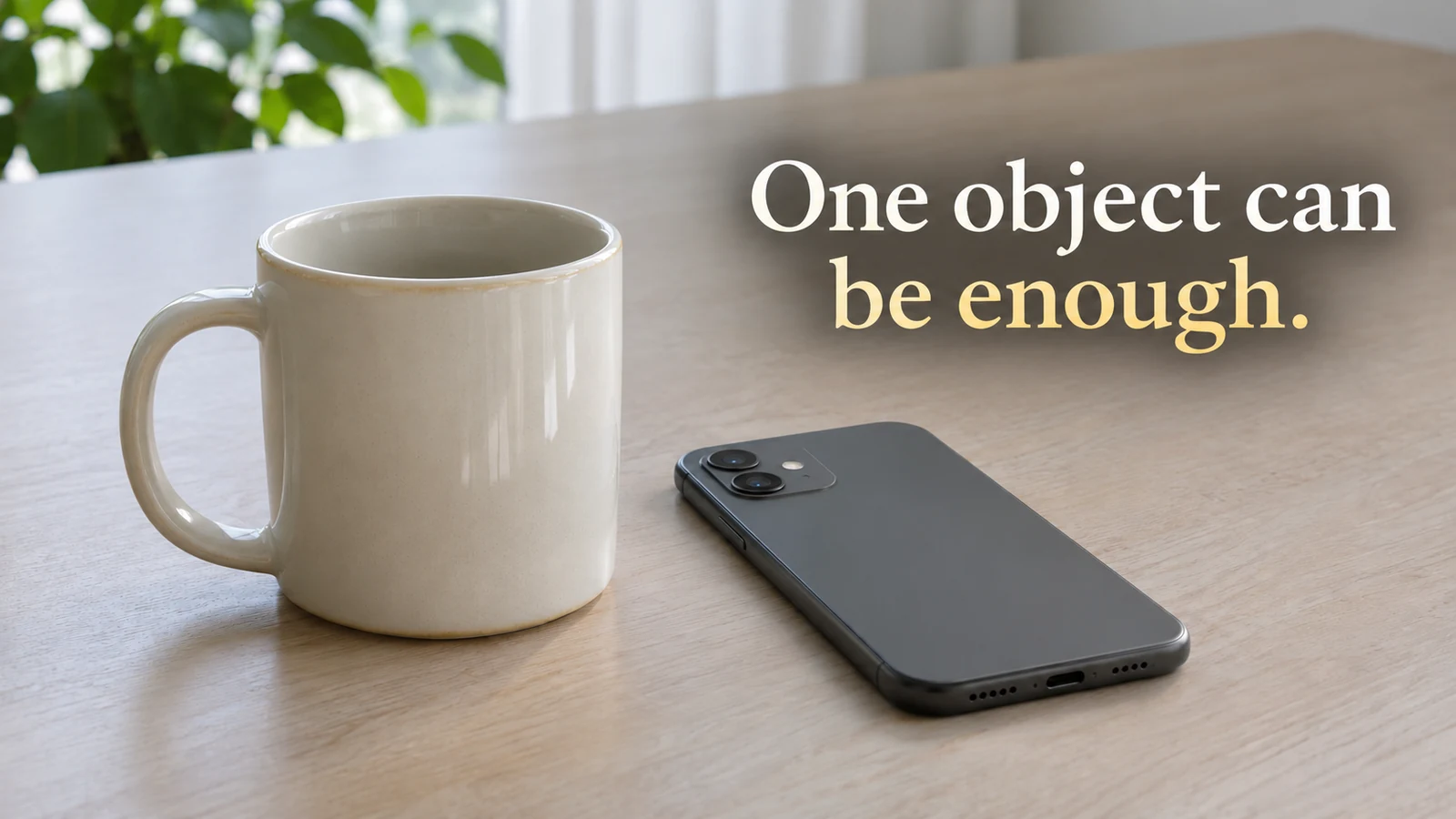
If the entry wanders, name the return in everyday language: “Coming back to the pouch, what I notice now is...” This is a suggested transition, not a script you must read. Use your own words. There is no need to perform a fluent presentation for an imagined audience or make the recording sound like a guided practice.
Keep separate decisions separate. Speaking about an object does not require deciding whether to donate it, display it or buy a replacement. If you want to consider one of those choices later, that can become a different task. The present entry can remain descriptive and exploratory.
Likewise, the object does not need to explain a whole relationship or period of your life. A familiar item can appear in many occasions. You can describe one remembered use without claiming it represents every experience associated with the person or place it brings to mind.
Two original fictional voice-entry examples
In this invented example, a fictional writer, Nila, chooses an ordinary fabric pouch. She begins: “The corners are soft, and there is a loose thread near the opening. I am not sure what the fabric is. I notice the same little fold I make when I put it away.” These are suggested original words, not a real recording.
She continues with her own association: “It reminds me of packing small things for an afternoon class. I remember using it for that, though I cannot place the first occasion.” She leaves the date unknown. The entry does not need a list of what the pouch once contained or a reconstruction of every journey it accompanied.
Another fictional writer, Tomas, chooses a plain mug. He describes the curved handle and a mark near the base, then says: “I associate this with reading at the kitchen table. I do not know whether that mark was already there when I got it.” He does not invent a cause for the mark to complete the story.
Tomas finishes with a present observation: the mug is still on the same shelf when he needs it. Neither example demonstrates improved memory, emotional relief or a customer outcome. They illustrate a change from description to association while keeping the limits of the speaker's knowledge audible.
Finish when the entry has said enough
Notice when you have expressed the small subject you chose. You can end with the last useful detail, a current preference or an unanswered question. Returning the object to its usual place can mark the end of this activity, without implying anything about the recording tool's saved-file behaviour.
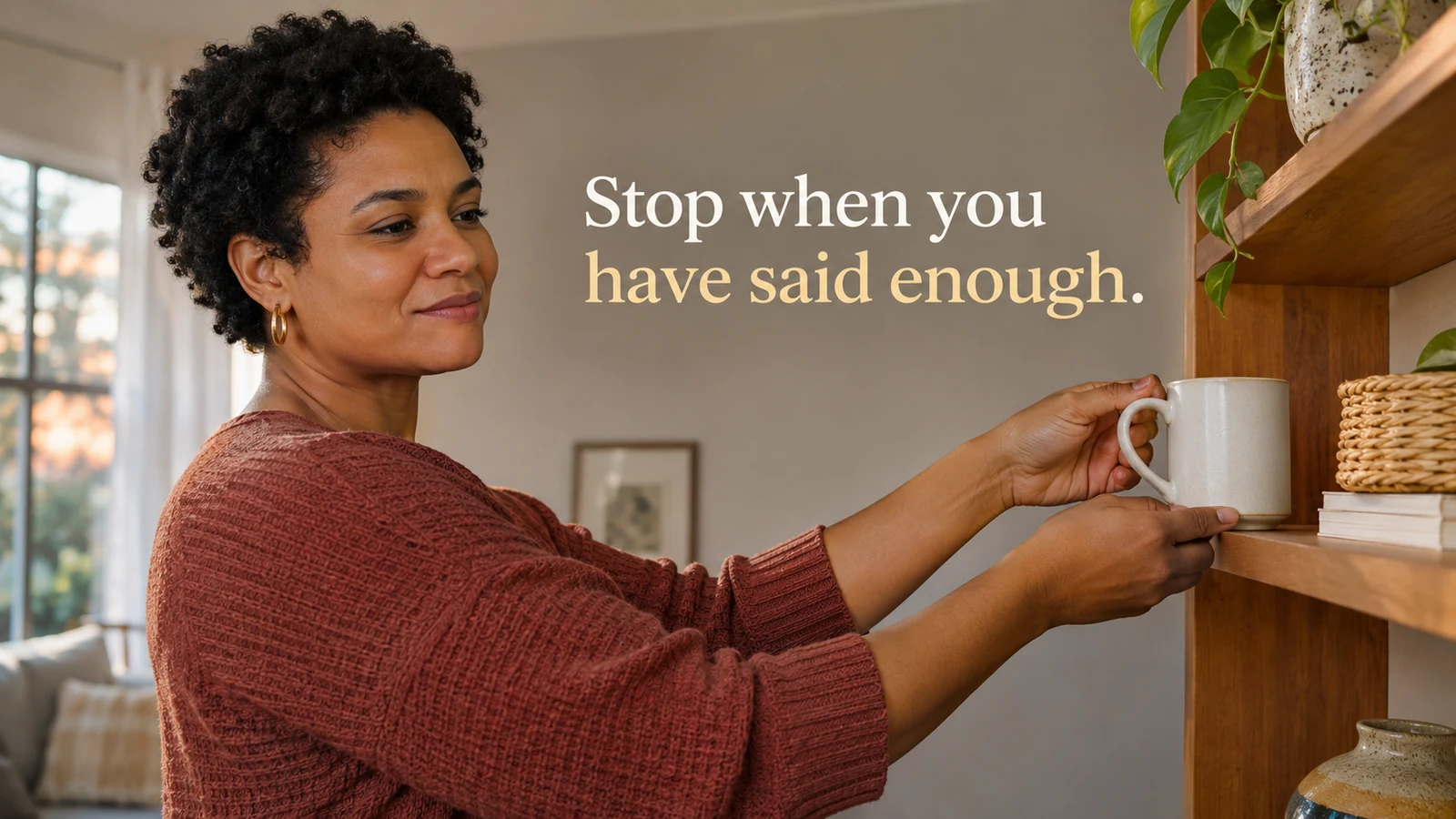
You can stop earlier, too. A subject that seemed ordinary may become uncomfortable, or you may simply lose interest. Choose another activity or appropriate support when needed. This optional exercise is not an instruction to keep speaking through distress, uncover a hidden memory or complete a difficult personal account.
There is no required spoken conclusion. “That is all I want to say about this today” is one possible ending, not a mandatory phrase. You do not need to repeat the entry until it sounds certain. Keep a tentative statement tentative rather than treating confidence of delivery as evidence of accuracy.
If you prefer another starting point next time, choose it on its own merits. A written description, another object or a different subject can all serve different purposes. The small boundary belongs to this entry; it does not set a daily rule or commit you to building an object-based journal collection.
Source context: objects invite questions as well as descriptions
The National Park Service's object-analysis resource distinguishes close examination from deductions and inferences in an educational setting. That source context does not validate this private voice-journal exercise, establish an object's full history or promise a wellbeing effect. The examples and spoken transitions here are original editorial suggestions.
Questions about an object-led voice entry
Must the object have sentimental value?
No. Something ordinary can supply enough observable detail. A plain pouch or mug can be a starting point without a special story. Choose an item you already own and feel comfortable considering; acquiring an object is unnecessary for this exercise.
What if I only remember a fragment?
Identify it as a fragment and leave the rest unknown. An object does not verify a recollection or require you to recover the missing sequence. You can return to present description, choose another subject or finish without explaining the fragment.
Should I speak for the person who gave it to me?
Keep the entry with your own reflection. Attribute words or explanations when you actually have them, and avoid inventing the other person's thoughts. A gift can prompt your association without supplying knowledge of what its giver privately intended.
Do I need a transcript or a written script?
Neither is required by this composition exercise. Use a recording arrangement you already understand or choose another format. This article concerns selecting and expressing a subject; it does not provide a technical setup, transcript workflow or instructions for reading an existing entry aloud.
Choose a small starting point for another entry
Revisit SoulFul GLO's journaling overview when comparing spoken and written options. For an object-led entry, start with a detail you can observe, follow only the association you want to express and keep uncertainty in your own words. One object can supply enough for today.